Online Reporter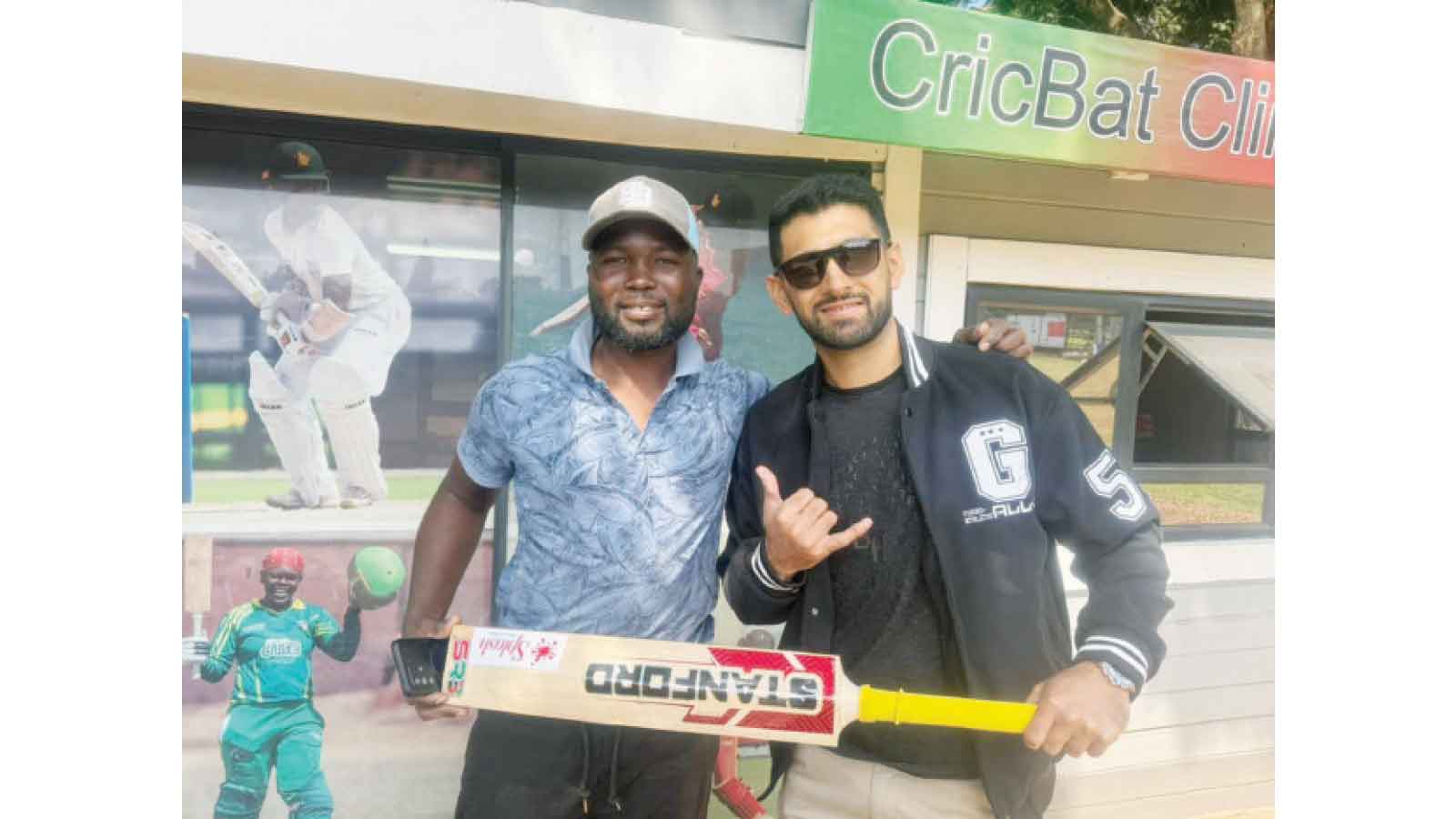
Don Makanyanga-Zimpapers Sports Hub
ON a shelf inside a small workshop at Harare Sports Club sit bats belonging to some of Zimbabwe’s biggest cricket stars.
To Sikandar Raza, Craig Ervine and Sean Williams, they are tools of the trade.
To Never Lundu, they are patients waiting for surgery.
For more than a decade, the 35-year-old has quietly become one of the most important figures in Zimbabwe cricket, repairing, restoring and preparing bats used by everyone, from schoolboy cricketers to national team players.
Affectionately known as Zimbabwe’s “bat doctor”, Lundu has built a reputation that stretches far beyond the country’s borders.
His client list includes Sikandar Raza, Craig Ervine, Sean Williams, Brian Bennett, Innocent Kaia, Brad Evans and former national team captain Chamu Chibhabha.
Growing up in Seke, Lundu wanted to represent Zimbabwe.
He played for Mashonaland Eagles B and pursued the dream with determination before eventually accepting that his playing career would not take him to the highest level.
Rather than leave the game, he found another way to remain part of it.
“The first guy whose bat I fixed was Chamu Chibhabha and from then on I have fixed bats for school kids right up to national team players,” said Lundu.
“I have fixed bats for Raza, Ervine, Chibhabha and many others. If I were to mention every national team player whose bat I have worked on, we would be here the whole day.”
His entry into bat repair was born out of necessity.
“It was my dream to represent Zimbabwe at senior level but after realising that it was not going to happen, I had to make a difficult decision,” he said.
“I stepped away from franchise cricket and focused on club cricket, which gave me more time to develop my bat repair skills.
“What drove me into fixing bats was that when I was actively playing cricket I could not afford to buy my own bats because of my financial situation, so I had to come up with a plan.”
Lundu’s rise coincided with the departure of renowned bat technician Sam Makayeni for South Africa in 2015, leaving a gap in Zimbabwe cricket.
“I remember we had one chief bat fixer in this country, Sam Makayeni, and when he left there was a gap that needed to be filled,” he said.
“I had to step up and try to fill those big shoes.”
Makayeni played a key role in helping the young technician establish himself, referring clients to him and opening doors that might otherwise have remained closed.
Even then, earning trust took time.
“At first there was a lot of resistance because people did not know me,” said Lundu.
“The first major bat I repaired was Chamu Chibhabha’s after he had been referred to me by Sam. That opened doors because people started appreciating my work and trusting me.”
Those early opportunities became the foundation of a career. Today, players from visiting international teams regularly seek him out whenever they tour Zimbabwe.
“I am grateful that my trade has grown. I am no longer only fixing bats for local players but also for visiting countries, thanks to referrals from our national team players,” he said.
Despite never wearing Zimbabwe colours as a player, Lundu says he still experiences a sense of pride every time he sees a bat he has worked on being used by the Chevrons.
“I always feel fulfilled knowing that I am serving my country in a different way. When I see players using bats that I have repaired or prepared, it gives me great satisfaction,” he said.
A major turning point came when Zimbabwe Cricket (ZC) provided him with a dedicated workspace at Harare Sports Club, allowing him to work closer to the country’s elite players and teams.
He credits ZC managing director Givemore Makoni for helping create an environment where his craft could grow.
“I would like to thank Zimbabwe Cricket and its managing director Givemore Makoni for giving me a place to do my craft,” he said.
His growing reputation has opened doors beyond Zimbabwe. It recently earned him an invitation to Pakistan, where he visited Ishan Sports, one of the world’s leading cricket equipment manufacturers.
“The trip exposed him to modern bat-making technologies and production processes used by some of the biggest names in world cricket. For me, going to Pakistan was a huge experience. It allowed me to see how some of the best cricket equipment in the world is produced and gave me knowledge that I can bring back to Zimbabwe,” said Lundu.
“It was also encouraging to see that the work we are doing here can be recognised internationally.”
Among those who trust his craftsmanship most is Innocent Kaia, who has worked with Lundu for more than a decade.
“He understands the right weight, balance, quality of wood and the type of handle that can improve your game,” he said.
“Even when my bat gets broken in England or Australia, I will keep it and bring it back to Lundu.
“I have been working with him for a decade now and he has become a master of his craft. He can even make a bat from scratch.
“The most important thing is that he knows the preferred weight and shape of each player’s bat. He understands every player’s requirements. He is a genius.”