Chronicle Editor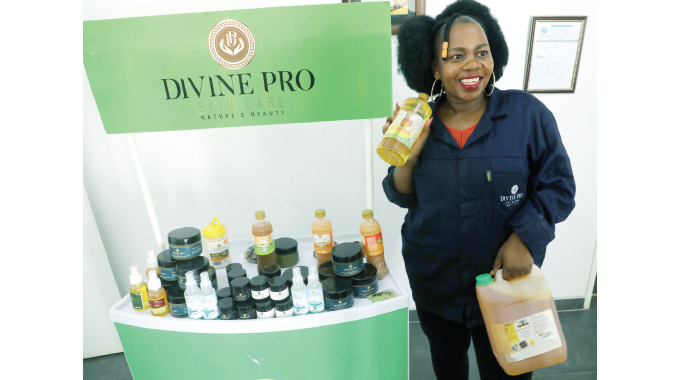
Sikhulekelani Moyo, [email protected]
This is the story of Zimbabwe’s industrialisation and rural development, which has seen an upgrade and uplifting of traditional fruits from being just fruits to finished products found in established shops.
Growing up, baobab, amarula, tamarind and umviyo were just traditional fruits found mostly in agricultural regions four and five where there is little rainfall.
Some children in urban areas didn’t even know about the fruits because no one cared about them except rural people who used to make different dishes out of them or ate the fruits raw.
The pulp, leaves and seeds of the baobab fruit have been associated with many health benefits and are a staple in various recipes and cuisines.
As things evolved and more people saw the need to uplift rural communities, promote rural industrialisation and create employment for women and youths, those with creative minds did some research and found out that besides being a traditional fruit, baobab has some health benefits including skin care.
According to research, baobab fruit contains vitamins and minerals which help reduce inflammation, and balances blood sugar levels.
That’s how the fruit found itself on the shelves of different shops in town.
From being traditional fruits to finished products for domestic and export markets, baobab products which include essential oils and juices are now trending, with more and more people showing interest in the products.
Some are making homemade smoothies which are being sold on the streets while those with established manufacturing plants are processing the product, mixing with other ingredients to come up with a commercial product, which is branded.
This has given women in rural areas jobs and improved livelihoods as they are now picking baobab and processing it to powder, which is then sold to processors.
These are some of the inward-looking solutions, which are meant to uplift rural communities as the nation moves towards the attainment of an upper-middle income economy by 2030.

Communities are using locally sourced raw materials to produce quality products.
The French Agricultural Research Centre for International Development (CIRAD) under the Sustainable Wildlife Management (SWM) programme in Binga is promoting growth in the value chain of non-timber products, which is honey, baobab and tamarind.
This has seen the organisation bringing community representatives to Bulawayo to engage with processors and establish markets for these non-timber products.
CIRAD business and market development officer Mr John Siyambare said now that these products have a growing demand, this will see livelihoods of communities being improved.
“You would realise a situation where these communities grew up in areas where these fruits are in abundance and they would be using them for porridge or anything else including juices but not so processed. But now that we have a high demand such that we can make juices that can last for long, it means there is a market,” he said.
“Trying to sell tamarind to someone in Binga doesn’t make sense but for someone who only knows tamarind through a nice juice or baobab cascade, it now makes sense and we can supply these to the now available market.”
Mr Siyambare said the most important thing is they now have a market for the non-timber products, which gives communities hope and a source of livelihoods.
CIRAD empowers local communities to unlock the full potential of their natural resources such as baobab, tamarind, and honey.
In Bulawayo, there are women who have become influential businesswomen through value adding these locally found fruits and vegetables.
One of them is Ms Providence Moyo, the director of Devine Pro brand, which produces juices, essential oils, beauty soaps and creams from amarula, baobab, tamarind and other traditional fruits.
Her products are available in local retail shops as well as in South Africa.
In an interview, Ms Moyo said natural resources can improve rural livelihoods when fully exploited.
She said communities were being exploited by middlemen who would buy from them at cheap prices
She however said linking communities with processors would help boost their earnings.
“I will engage the National University of Science and Technology (Nust) and see how best we can collaborate in value addition on non-timber products like baobab, tamarind and honey at the same time empowering rural communities where these products come from,” she said.
Nust has a food processing plant and intends to produce baobab juice and process honey.
Baobab, amarula, umnyi, umviyo and other traditional fruits are now processed into smoothies, essential oils, yoghurts and juices among other products.
At Yanaya, a local food outlet, umviyo, umnyi and other traditional fruits are being used to make smoothies and milk shakes, creating a niche market.
This is also becoming helpful in reducing post-harvest losses in fruits such as bananas and mangoes as rural communities have started producing dried fruits and vegetables, which are then commercially packed to sell to domestic and export markets.
The Covid-19 pandemic saw the uplifting of zumbani/umsuzwane as the herb found itself on the shelves as green tea.
Rural women are also processing traditional vegetables such as pumpkin leaves into dried vegetables which can be stored for a long time and sold to urban markets.
Under the rural industrialisation drive, communities are capitalising on locally available endowments such as minerals, wildlife, land, and water resources, and traditional foods including fruits and vegetables among others to set up commercial industrial activity including localised value-addition projects that generate incomes for many households.
President Mnangagwa under the National Development Strategy 1 (NDS 1) said all of Zimbabwe’s 35 000 villages are set to undergo a massive transformation.
The programme is anchored on creating agriculture value chains through horticulture, aquaculture, and commercial livestock rearing to boost rural industrialisation.Big companies like Dairibord Holdings have also joined the bandwagon as they have introduced cascade baobab. – @SikhulekelelaniM1.



 derick.khumalo