


 Online Reporter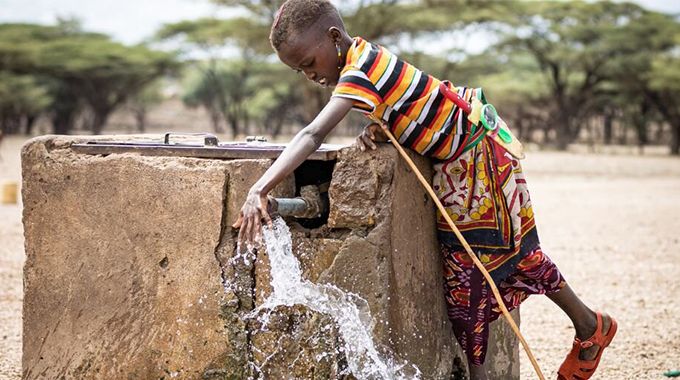
Patrick Chitumba, Zimpapers Reporter
FOR years, Ms Sofie Moyo (53), a mother of six from Bungwe Village under Chief Bvute in Mberengwa District, struggled daily to meet her family’s basic needs.
The once-reliable river that supplied water for her garden and household dried up and became a distant memory leaving her to sift through the sand in search of the slightest trickle during relentless dry seasons.
Her family’s plight deepened when a local mining company reclaimed its chrome mining claims on the land they had long used for pasture and farming. The eviction left Ms Moyo and 36 other households without a means to sustain themselves.
Originally relocated to Bungwe in 1998 from Mataga to make way for the expansion of Mataga Growth Point, the families were settled on land acquired by the mining company in 1923.
The community’s fears intensified as negotiations between villagers, Mberengwa Rural District Council (MRDC), the mining company and the Centre for Conflict Management and Transformation (CCMT) — a local NGO — began.
Through persistent dialogue and mediation, the community voted to accept the company’s compensation offer. Instead of eviction, the company agreed to allocate one hectare of land per household on alternative land nearby, allowing residents to continue farming without interfering with mining operations.
Additionally, each household was set to benefit from a ground-breaking piped water scheme for irrigation, compensating for the lost farmland.
A formal Memorandum of Understanding (MoU) between MRDC, Bungwe community, and the mining firm, facilitated by CCMT, underscored the commitment to the Second Republic’s vision of economic transformation—highlighting the vital roles of mining and agriculture.
Recently, during a ceremony at Headman Mike Bakos’ homestead, the company handed over solar-powered boreholes to each of the 37 homesteads — a significant milestone in transforming community life.
In an interview, Ms Moyo expressed her renewed hope.
“The water project has sparked new life into my family. We are already preparing land for horticulture. Thanks to CCMT’s mediation, the mining company installed solar-powered boreholes that now bring crystal-clear water right to our doorstep. Our children can play and laugh without the burden of fetching water from distant streams.”
Headman Garikayi Chikava, who was among those relocated, recalled the long-standing conflicts.
“In 2017, the mining company claimed ownership of our fields, causing disputes. But CCMT stepped in, and today, we have signed a MoU that benefits our families. The availability of water is a game-changer. We are grateful for this development.”
Ms Sarudzai Ngwenya (47), a mother of five, shared her experience.
“We used to fetch water from the river, which was a tiring task. Now, water is in our homes. With this new access, we are growing vegetables and fruits, which will support us both nutritionally and financially.”
Mrs Millicent Nyathi expressed her excitement about horticulture.
“Before, we only grew maize in the summer. Now, with year-round water, we can do horticulture all year. We had feared losing our fields, but CCMT’s efforts brought us together. The solar boreholes are a blessing — no more long walks for water and the project will create jobs for our community.”
MRDC chairperson, Councillor Garisikayi Moyo, praised the partnership that led to these achievements.
“Our contribution, alongside the community’s, helped fund this vital project. CCMT’s role in mediating conflicts and fostering co-operation has been instrumental. Today is a great day for Bungwe villagers.”
He urged residents to care for the infrastructure and take pride in their new resources.
“This water project is your opportunity to start income-generating activities. It’s your project — look after it.”
Since 2013, CCMT has facilitated numerous initiatives across Midlands Province, addressing conflicts stemming from development projects like town expansion, infrastructure, mining and irrigation schemes. Their work aims to promote peaceful co-existence and sustainable development.
Chief Bvute welcomed the progress, commending the Second Republic’s support for empowering local communities.
“CCMT brought villagers, the district and the mining company together. Working collaboratively, we can balance economic growth with social and environmental responsibility — aligning with Zimbabwe’s Vision 2030 and leaving no one behind.”
MRDC District Development Co-ordinator Mr Vafias Hlabati reaffirmed the Government support for the Bungwe water infrastructure project, emphasising that the agreement ensures affected families are compensated with water infrastructure, enabling them to sustain farming on their plots while ceding their fields for mining.
“This initiative fosters coexistence and offers a sustainable resolution to conflicts, promoting win-win outcomes for all parties involved,” he said.


