Ivan Zhakata-Features Correspondent
GROWING up in Hwange, on the doorstep of Zimbabwe’s largest national park, Liomba-Junior Mathe had little idea that a childhood encounter with wildlife would one day shape his career and take his conservation work onto the international stage.
A primary school trip to Hwange National Park exposed him to elephants, giraffes, zebras and antelopes in their natural habitat for the first time.
The experience left a lasting impression.
As he left the park, he remembers thinking that one day he would return.
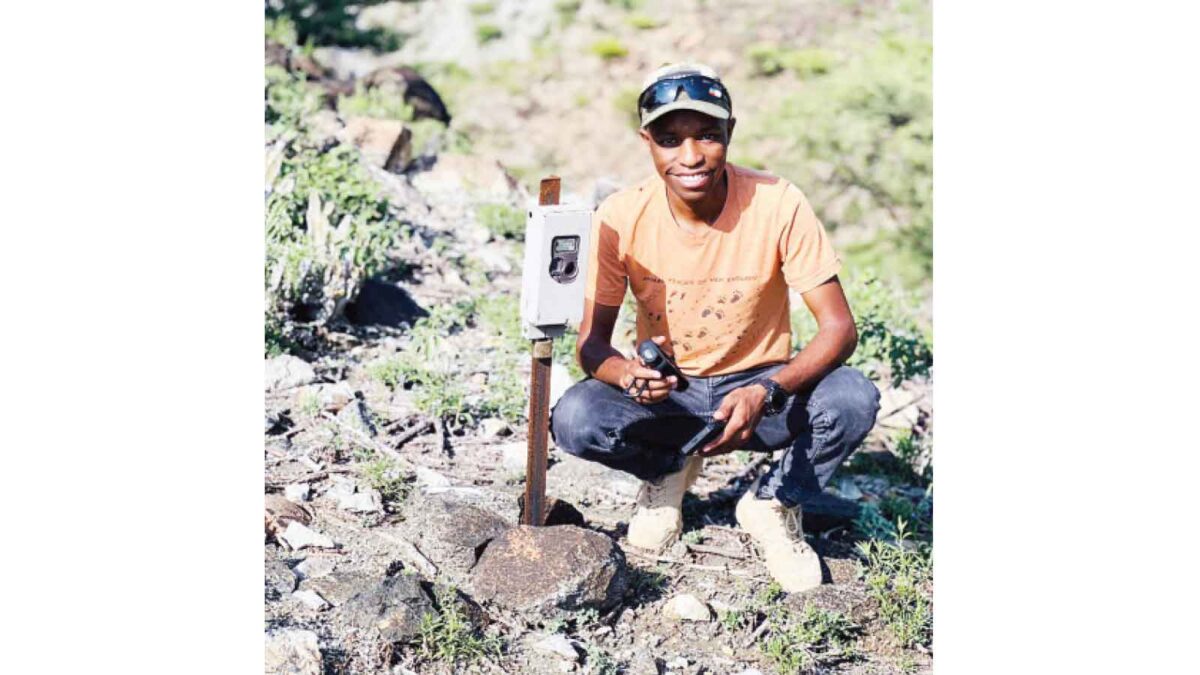
Years later, Mathe fulfilled that childhood ambition, returning not merely as a visitor but as a wildlife biologist determined to find practical solutions to one of conservation’s most persistent challenges: helping people and dangerous wild animals share the same landscape.
Today, his work has earned him international recognition, with the Zimbabwean conservationist named a 2026 International Fund for Animal Welfare (IFAW) Animal Action Award winner for more than a decade of efforts to protect lions, livestock and rural livelihoods.
He will travel to London to receive the award, which celebrates individuals and organisations making an extraordinary contribution to animal welfare and wildlife conservation.
For Mathe, however, the recognition goes beyond personal achievement.
It reflects years of working with communities that often bear the costs of living alongside wildlife.
In areas surrounding Hwange National Park, lions sometimes venture beyond protected areas and kill live-stock, leaving families facing economic losses.
In some cases, the losses provoke retaliation, with lions poisoned, speared or shot.
For communities whose livelihoods depend on livestock, protecting wildlife can be difficult when the same animals threaten their sources of income.
Mathe and his colleagues recognised that studying lions inside protected areas alone would not solve the problem.
Conservation also has to address the realities confronting people living beyond park boundaries.
That understanding became central to his work with the University of Oxford’s Wildlife Conservation Research Unit (WildCRU), where he spent 11 years under the Trans-Kalahari Predator Programme in Hwange.
He rose from field assistant to lead the Long Shields Lion Guardian Programme, which sought to prevent conflict before it occurred by working directly with communities.
Rather than relying on lethal methods, the programme introduced practical ways of keeping lions away from livestock and settlements.
Community-based Lion Guardians helped monitor wildlife movements, while early — warning systems gave communities opportunities to respond before encounters escalated.
Another intervention involved predator-proof mobile bomas, portable livestock enclosures designed to prevent lions from attacking animals.
The opaque structures block lions’ view of the livestock inside, reducing opportunities for predation.
Their mobility also provides an agricultural benefit: when moved between fields, the enclosures allow manure to fertilise the soil naturally, supporting crop production and food security.
Then there was the vuvuzela.
Best known for its deafening sound at African football matches, the plastic horn became an unconventional tool in Mathe’s conservation work, used to deter lions and move them away from livestock and settlements without killing them.
The interventions demonstrated how relatively simple, locally adaptable solutions could help reduce conflict while protecting both wildlife and rural livelihoods.
For Mathe, conservation is not simply about keeping animals alive.
It is also about ensuring that the people who share their environment have a meaningful role in protecting them.
IFAW Country Director for Zimbabwe Alleta Nyahuye said Mathe’s approach represented the kind of leadership needed to secure Africa’s wildlife future.
“Liomba represents a generation of African conservation leaders who understand that protecting wildlife cannot come at the expense of people,” she said.
“His work starts by listening to communities and understanding what it means for a family to lose livestock and then finding practical solutions that protect livelihoods while keeping lions alive.”
She said his work demonstrated co-existence in practice, showing that wildlife protection and community welfare did not have to be competing priorities.
Mathe’s journey from Hwange also reflects a sustained investment in scientific training and practical conservation experience.
He graduated with first-class honours in Biological Sciences from Midlands State University before studying International Wildlife Conservation Practice through WildCRU at the University of Oxford under a Recanati-Kaplan scholarship.
His work has since expanded beyond lions to include cheetahs and hyenas, protected-area management, landscape connectivity, community engagement and the training of conservation practitioners in non-lethal approaches to human-wildlife conflict.
He estimates that he has trained about 150 rangers and community guardians, sharing practical approaches developed in Zimbabwe with people working in other landscapes facing similar challenges.
Professor David Macdonald, founder of WildCRU at the University of Oxford, strongly endorsed Mathe’s nomination for the award, describing him as “an absolutely perfect and highly deserving recipient”.
Despite the international recognition, Mathe is quick to emphasise that his achievements have been shaped by collective effort.
“This award may have my name on it, but I have never worked alone. There have always been people walking alongside me — communities, colleagues, mentors and conservationists who have shaped my journey,” he said.
“Everything I have learned has come from working with people and wildlife, listening, adapting and finding solutions together. This recognition belongs to them too.”
Mathe is currently pursuing doctoral research focused on biodiversity monitoring and large-carnivore conservation with the Cheetah Conservation Fund.
He is also pursuing doctoral studies in natural resource management and ecology at the Namibia University of Science and Technology.
His ambitions extend beyond fieldwork.
He hopes to return to southern Africa and contribute at a strategic level to conservation policy and planning across the Kavango-Zambezi Transfrontier Conservation Area, which connects important wildlife landscapes across the region.
The work aligns with IFAW’s Room to Roam approach, which seeks to protect and connect critical wildlife habitats while supporting communities living alongside animals.
For Mathe, the guiding principle remains that communities should not be treated merely as beneficiaries of conservation projects, but as partners whose experiences and needs must shape the solutions.
“We need to involve the communities that bear the cost of living next to wildlife. We should not consider them simply as beneficiaries; we should consider them as partners,” he said.
“Conservation works when we come to the table with communities, understand their challenges and work together to find solutions.”
His message carries particular significance in landscapes where the future of wildlife depends not only on protected areas, scientific research and enforcement, but also on the willingness of neighbouring communities to coexist with animals.
The 2026 Animal Action Awards, marking the 26th edition of the programme, recognise contributions to wildlife conservation, animal rescue and welfare.
For the boy from Hwange who once left a national park determined to return, the award marks a significant milestone in a journey that began with childhood wonder and grew into a career built around finding common ground between people and wildlife.
His work offers a powerful reminder that protecting lions does not begin and end at the park boundary. It also depends on helping the people who live alongside them find practical reasons and ways to share the landscape.