Online Reporter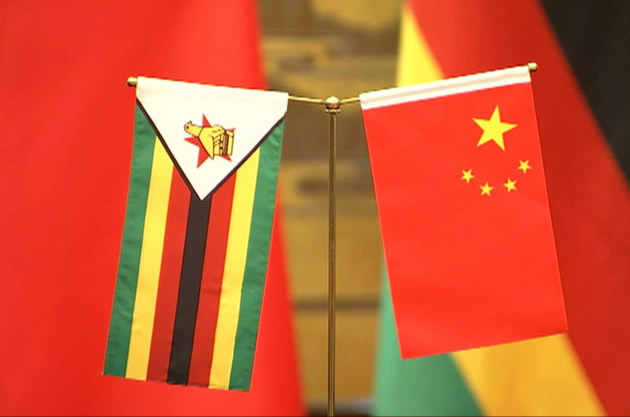
By Panashe B. Jeke
Zimbabwe gained full independence on 18 April 1980 after decades of colonial subjugation and a protracted armed liberation struggle. The People’s Republic of China stood among the very first nations to formalise diplomatic ties with the newly sovereign state, building on political and logistical support Beijing had extended to Zimbabwean anti-colonial movements throughout the 1960s and 1970s.
Forty-six years on, this once purely ideological alliance has matured into a multifaceted partnership spanning cross-border trade, critical mineral extraction, large-scale infrastructure, agriculture, healthcare, education and technological exchange. Against a shifting multipolar global order and receding Western development financing across Africa, the Zimbabwe–China bilateral framework stands as a landmark case study of South–South cooperation.
This deep economic integration has delivered tangible national development gains for Zimbabwe. Yet civil society groups, environmental watchdogs and international analysts have raised persistent questions around mining ecological safeguards, project transparency, external debt management and equitable distribution of resource wealth. A balanced, dispassionate evaluation of the bilateral relationship requires moving beyond one-sided praise or blanket criticism, weighing measurable progress against structural challenges and outlining actionable bilateral solutions aligned with Zimbabwe’s long-term national development agenda.
1. Historical Origins: Revolutionary Solidarity to Institutional Bilateral Diplomacy
The roots of Zimbabwe–China engagement predate national independence. During white minority Rhodesian rule, China aligned with global anti-colonial movements as a core pillar of its Cold War foreign policy, offering ZANU liberation factions political backing, military training and operational supplies. This shared anti-imperial foundation laid unshakable diplomatic trust that continues to anchor ties today.
Official diplomatic relations were inaugurated immediately upon Zimbabwe’s independence in 1980, establishing a formal channel for sustained state-to-state collaboration. Throughout the 1980s and 1990s, bilateral activity remained modest and narrow in scope, centred primarily on small-scale agricultural technical aid, limited medical outreach and routine diplomatic exchanges. No large-scale commercial investment or infrastructure financing materialised in this era.
A defining inflection point arrived in 2003. Following the Fast Track Land Reform Programme, unilateral sanctions imposed by the United States and European Union severely restricted Zimbabwe’s access to Western capital and export markets. Harare responded by adopting the Look East Policy, deliberately diversifying its external partnerships away from traditional Western powers. China swiftly emerged as Zimbabwe’s primary economic and diplomatic anchor, shifting the bilateral dynamic from symbolic political camaraderie to transactional, growth-focused economic cooperation.
2. Economic Cooperation: Complementary Trade Flows and Resource Value-Chain Evolution
Natural resource endowments and divergent industrial capacities create inherent economic complementarity that has driven explosive bilateral trade growth over the past decade. Zimbabwe holds abundant untapped mineral reserves and competitive agricultural commodities, while China supplies capital, full-spectrum industrial manufacturing capacity and the world’s largest consumer base.
Official statistics released during the 2025 Forum on China–Africa Cooperation (FOCAC) implementation review quantify this expansion: total bilateral trade reached approximately US4.39billionin2025,anearly15720 million trade surplus, generated chiefly from exports of tobacco, lithium, chrome and ferrochrome. Tobacco remains the country’s dominant agricultural export; 2025 tobacco shipments to China were valued at US$790 million, cementing Zimbabwe’s position as a core supplier within China’s global tobacco supply chain.
China consistently ranks among Zimbabwe’s top three trading partners and its most reliable offshore export destination. It is critical to contextualise primary commodity exports not as a permanent structural flaw, but as a necessary transitional phase for an industrialising economy with limited domestic processing capacity. Concurrently, Chinese investors have begun constructing local mineral refining facilities to gradually reduce Zimbabwe’s reliance on unprocessed raw material shipments overseas.
3. Infrastructure, Critical Minerals and People-to-People Cooperation
3.1 Flagship Infrastructure: Filling Africa’s Chronic Financing Gap
Infrastructure construction represents the most visible and widely felt outcome of Zimbabwe–China collaboration. The African Development Bank has repeatedly identified underinvestment in public works as the single greatest barrier to African economic expansion, a gap widened by sustained declines in Western development lending. Chinese concessional financing and engineering firms have delivered landmark national assets, including the Mount Hampden New Parliament Complex, expansions to Robert Gabriel Mugabe International Airport, nationwide road rehabilitation schemes and major energy generation upgrades.
The Hwange Thermal Power Station Units 7 and 8 expansion, commissioned in 2023, added 600 megawatts to Zimbabwe’s national grid, easing crippling power shortages that had stifled industrial output for decades. Beyond energy and transport, cooperation extends to telecommunications backbone upgrades, rural water infrastructure, donated medical equipment for public hospitals and annual Chinese government scholarship programmes for Zimbabwean tertiary students.
3.2 Lithium Mining: Redefining the Bilateral Resource Partnership
No sector better illustrates the evolving nature of ties than critical mineral development, with lithium emerging as the new frontier of bilateral investment. Zimbabwe hosts one of Africa’s largest lithium deposits, an indispensable input for electric vehicle batteries and renewable energy hardware. Since 2021, major Chinese resource conglomerates — Zhejiang Huayou Cobalt, Sinomine Resource Group and Chengxin Lithium — have collectively poured more than US$2 billion into Zimbabwe’s lithium sector.
These capital inflows have transformed Zimbabwe into Africa’s fastest-growing lithium producer. Integrated processing plants in Goromonzi and Bikita have expanded domestic beneficiation capacity, while the 2026 launch of lithium sulphate exports marked a landmark shift away from low-value raw concentrate sales. Aligned with Harare’s industrialisation agenda, the government plans to ban exports of unrefined lithium ore from 2027 onward, a policy that aligns neatly with Chinese corporate plans to scale local smelting and processing operations on Zimbabwean soil.
3.3 Education, Healthcare and Cultural Exchange
Economic collaboration constitutes only one dimension of bilateral engagement. Educational exchanges have expanded steadily over two decades, with hundreds of Zimbabwean scholars receiving Chinese state scholarships to pursue degrees in engineering, medicine, agronomy, information technology and international relations.
Chinese medical teams have operated alongside Zimbabwean healthcare practitioners since the mid-1980s, delivering specialist clinical training, free medical hardware donations and on-site patient care. Cultural diplomacy further deepens grassroots mutual understanding through Confucius Institute language programmes, joint university research partnerships and coordinated tourism initiatives, creating civil society links that operate independently of formal state diplomacy.
4. Structural Challenges: Balanced Analysis of Shared Governance Responsibilities
While cooperative gains are substantial, legitimate concerns raised by local communities, environmental organisations and transparency advocates warrant rigorous, impartial analysis. Crucially, these issues are not inherent failures of China–Zimbabwe partnership, but growing pains requiring coordinated bilateral mitigation rather than one-sided blame assignment.
First, environmental and labour concerns within mining operations demand nuanced differentiation. Poor water stewardship and inadequate land rehabilitation have surfaced at a small subset of smaller private Chinese mining ventures, yet large, state-aligned Chinese mineral operators maintain comprehensive on-site wastewater treatment, post-mining reclamation frameworks and formal local procurement and hiring policies.
China has codified binding standards for outbound investment via its Green Development Guidelines for Overseas Investment and Compliance Rules for Foreign Enterprises, with joint China–Zimbabwe mining environmental inspection mechanisms established to enforce uniform operating rules. When measured against the long history of severe ecological degradation and exploitative labour practices by Western mining multinationals in Zimbabwe dating back to colonial rule, Chinese operators maintain comparatively stronger community and environmental safeguards.
Second, debates over investment transparency require clear delineation of legal accountability. Civil society groups have pushed for greater public disclosure of bilateral investment contracts, yet confidentiality clauses within commercial agreements are enshrined under Zimbabwe’s domestic commercial law, with full public release unworkable given proprietary corporate commercial data.
China has already instituted regular bilateral economic dialogue rounds and joint oversight committees for flagship projects, which share quarterly progress and expenditure reports with both national governments. Meaningful transparency improvement requires parallel domestic reform in Zimbabwe to build official public project disclosure platforms, paired with continued voluntary data sharing from Chinese investors.
Third, external debt sustainability cannot be simplistically attributed to Chinese lending alone. Zimbabwe’s multi-layered debt crisis stems from overlapping pressures: inherited colonial-era sovereign liabilities, decades of Western sanctions cutting foreign exchange revenue, and historical domestic fiscal mismanagement. Chinese infrastructure financing consists of low-interest, long-tenor concessional official loans, distinct from high-rate commercial private credit.
Beijing has consistently participated in G20 debt relief frameworks, negotiating extended repayment timelines and restructuring terms with African borrowing nations without imposing political conditionalities. Mitigating debt risks requires joint technical assessment of project revenue projections and coordinated industrial growth to generate sustainable export income for repayment.
Fourth, overreliance on primary commodity exports must be framed as a transitional rather than permanent economic model. Zimbabwe’s limited industrial base means mineral and agricultural exports provide vital foreign exchange to fund infrastructure and manufacturing incubation. Current Chinese investment in onshore mineral processing and technical workforce training directly complements Harare’s 2027 raw ore export ban, creating a phased pathway toward higher-value domestic production over time.
5. Institutional Framework and Future Strategic Trajectory
5.1 FOCAC as the Cornerstone of Bilateral Coordination
Launched in 2000, the Forum on China–Africa Cooperation serves as the primary institutional architecture governing Zimbabwe–China collaboration. Zimbabwe has participated fully in every FOCAC summit, utilising the platform to secure targeted investment and formalise cross-sector cooperation memoranda. Recent FOCAC commitments prioritise green growth, renewable energy deployment, agricultural modernisation and digital innovation — priorities that align perfectly with Zimbabwe’s Vision 2030 upper-middle-income development roadmap.
Leading international development think tanks, including the China Africa Research Initiative at Johns Hopkins University, Chatham House and the African Development Bank, identify a clear distinction between China’s partnership model and traditional Western aid frameworks. Chinese engagement prioritises market-aligned infrastructure finance, state-coordinated commercial investment and strict respect for host-nation sovereignty without political preconditions. Researchers uniformly caution, however, that foreign capital alone cannot deliver inclusive development; success hinges on robust domestic governance, consistent regulatory frameworks, enforceable environmental safeguards and predictable public policy in Zimbabwe.
5.2 The Next Phase: Shifting from Scale to Quality Cooperation
Moving beyond 2026, Zimbabwe–China ties will pivot from rapid quantitative expansion to high-value, integrated strategic collaboration. Priority growth sectors will centre on downstream critical mineral processing, renewable energy buildout, digital public infrastructure, integrated agricultural value chains and joint manufacturing ventures.
Maximising mutual benefits demands parallel policy adjustments from both sides. For Zimbabwe, key domestic reforms include strengthening local content legislation, scaling vocational technical training to absorb transferred industrial expertise, stabilising mining and environmental regulatory rules, and launching official public project transparency portals.
For bilateral joint action, governments can advance shared lithium and renewable industrial parks, build cross-border technical transfer training hubs, formalise permanent joint environmental compliance task forces, expand green agricultural value chain cooperation under FOCAC’s climate agenda, and establish standing working groups to evaluate project profitability and manage long-term debt sustainability.
Conclusion
Zimbabwe–China relations have undergone a remarkable generational transformation, evolving from wartime anti-colonial solidarity into one of Africa’s most robust South–South economic partnerships. Joint cooperation has delivered tangible, community-focused progress across infrastructure, cross-border trade, strategic mineral industrialisation, medical care and education, cementing Zimbabwe’s position within global renewable energy supply chains.
Persistent challenges around environmental governance, contractual transparency, debt management and industrial value addition represent developmental hurdles, not irreconcilable flaws in the bilateral model. Judging the success of this partnership cannot rest solely on aggregate trade volumes or headline investment figures. Its lasting legacy will be defined by the two nations’ collective capacity to build equitable, sustainable industrialisation mechanisms, strengthen institutional governance capacity, and generate widespread, intergenerational prosperity for Zimbabwe’s population.
At a broader continental level, the Zimbabwe–China model offers African states a viable alternative to exclusive Western economic dependency, demonstrating how sovereign nations can forge equal, non-coercive development partnerships tailored to their unique domestic priorities within a multipolar global landscape.
Note: The author, Panashe B. Jeke, is a Full Stack Developer and IT Technician based in Harare, Zimbabwe. Email: [email protected]