Chronicle Editor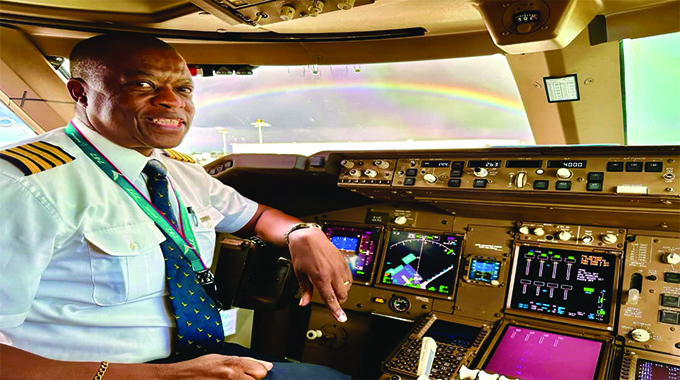
Francis Mpazviriwo
Since time immemorial, humans have migrated to new lands, commonly in search of the proverbial greener pastures. While migrating to neighbouring countries has often been the natural choice owing to cultural similarities, shared histories and proximity to home, the advent of globalisation has opened new frontiers, as individuals have nestled in distant lands.
Regardless of the varying fortunes of Zimbabwe’s diaspora, the decision to plunge into new societies with their own cultures and value systems has characterised an enterprising spirit. In 1989, celebrated Zimbabwean pilot, Captain Obet Mazinyi (CM), joined Air Hong and later on, its parent company, Cathay Pacific in 1991. Since then, he has been at Cathay, Hong Kong’s flagship carrier and one of the world’s biggest airlines covering more than 200 destinations globally.
The decision to relocate to Hong Kong in 1989 was uncharacteristic, given the underlying communication deficiencies of the pre-digital age and the divergent cultures. As the adage goes, the rest is history, as Captain Mazinyi, a veteran pilot, renowned Instructor and Senior Member of the Cathay Pacific Flight Operations Training Establishment, has spent an impressive 45 years commanding the skies in his decorated career.
During a recent working visit to Hong Kong, I (FM) sat down with Captain Mazinyi at the Regal Hotel, in Central Hong Kong in a wide-ranging interview in which he recounted his desire to become a pilot from a young age.
He also spoke about air connectivity, his yearning to return home on retirement, the role of the diaspora in propelling national economic development and also gave priceless advice to young people intending to join the aviation world. Read on.
FM: Let us start with your time at Air Zimbabwe and your upbringing in Zimbabwe in general.
CM: I was born in Mbare in 1961. My story was, however, largely scripted in Zambia, where I went to school before we attained our independence. My relatives left for Zambia while others left for Mozambique and South Africa – as was typical during those years. My father worked at a hotel in Marondera, although he stayed in Wedza, where we originate. He is late now and is interred there (Wedza), just like most of my uncles. He left and went to Zambia when I was a little boy.
I have scant recollections of my early years in Zimbabwe. However, I was told that my father used to stay in the Red/Old Bricks section of Mbare during those days. But then in Lusaka (Zambia) that is where I went to school. Our school was close to the airport, so the common sight of seeing aeroplanes in the skies inspired me to become a pilot. Here I am living the dream.
I finished secondary school in Zambia, Lusaka in 1977. Since Zimbabwe was not independent then, I could not return home. Fortunately, in 1979, I secured a sponsorship through Zambia Airways, which enabled me to train at the British Airways School in Southampton, in the United Kingdom. I returned to Zimbabwe at the end of 1982. Essentially, it was a two-year programme, because I had worked at the Zambian airways for a short period.
FM: What was your role at Zambia Airways?
CM: I was a Systems Pilot on the Boeing 707. Air Zimbabwe eventually got the 707 as well. But before I came to Zimbabwe I flew for Ethiopian Airlines as a co-pilot. I eventually left Ethiopia at the end of 1982, which is the year I joined Air Zimbabwe, again as a co-pilot on the Viscount. They used to have quite a lot of them back in the day. I stayed on the Viscount between 1982-86. In 1987, I flew the Boeing 737 after Air Zimbabwe had made an acquisition. I flew that for a little bit before training as a Captain on the BA 146, which had been bought for the former President Mr Robert Mugabe through the Airforce of Zimbabwe. I was the first Captain of that aeroplane.
FM: At what point did you leave Air Zimbabwe?
CM: I left Air Zimbabwe at the end of 1989. I just thought that I had reached the end of the line with Air Zimbabwe because I was flying the 707 and of course, they had just bought the 767 then, but then there was an offer to fly the 747, which was the biggest jet at the time. I wanted to fly the 747 and an opportunity arose for me to come to Hong Kong, where I would be able to fly that aeroplane.
Everyone asked me why l was leaving, since everything was fine! Some (white) Zimbabweans who were with Air Zimbabwe told me about how it was going here (in Hong Kong) and I expressed my interest to come to Hong Kong. The person who trained me at Air Zimbabwe had been here. He is the one who was instrumental in my relocation to Cathay Pacific.
FM: Who was that person?
CM: Captain David Warburton. He is the one who said I trained you, I know you are a capable pilot. He was the Chief Pilot of ‘Air Hong Kong’, which I joined before transferring to Cathay Pacific mainline. Cathay Pacific owns Air Hong Kong.
Captain David Warburton was the former Chief Training Captain at Air Zimbabwe on the Boeing 707. I would later be promoted to become the Chief Training Captain on the B747 ‘Jumbo jet’ on secondment to my previous company Air Hong Kong. He had all the confidence in my abilities. I have been here since 1989.
FM: That is a long time ago. We did not have many Zimbabweans in this region, maybe you are their “dean” here?
CM: No, I don’t know how many were here. I do not think there were any black Zimbabweans, maybe they were here but I highly doubt it.
FM: How was life in Hong Kong in the late 80s/early 90s? How did you cope with the vast cultural differences, given the remote contact with the continent in general?
CM: Fortunately, I was in Hong Kong with a lot of other colleagues that I knew in the aviation world. It made the transition from Zimbabwe easier. I will tell you this though- Zimbabwe is such a beautiful place that it is not easy to detach yourself from home. For six to eight months, even though I had all these people around me, I struggled with not being home- it was so hard. At one point I would think- maybe I should go back. But then I put myself in the position where I thought…think of the reasons you left. Focus! I left because I knew my career would be limited professionally in the long term. Somehow, I was prescient of the future.
FM: Given the nostalgia, did you ever consider relocating to the region or Europe?
CM: Europe and the Middle East were possible places to go and work but, in those days, there were a lot of connections needed for reasons I will not say, to get a position there. Europe itself had the barrier of needing to have the right to live and work in their countries.
FM: What is your current role at Cathay Pacific?
CM: I am a Base Training Captain. This means I am the top-top tier of an Instructor and Training Captain on the Boeing 747. That is the highest you can go in that field. So, it means that somebody who has never flown the Boeing 747 for example, the first flight that they go on an aeroplane would be with me (or somebody like me).
To be continued tomorrow
FM: What is the total number of your flight hours?
CM: I have just under 23 000 hours of flying time on an aircraft. Flying time is counted from the time an aircraft moves under its power to the point when it stoops and parks at a destination.
FM: You are one of the notable Zimbabweans in Hong Kong. Do you have an association of Zimbabweans here?
CM: It is not so much an association but there is a group where we meet up sometimes. We have get-togethers and things like that. It is a small group. Most of the time , we get together through events organised by the Zimbabwean Consulate. Whenever anything comes up, they normally involve me. In 2017, I held a function at my home. All the Zimbabweans came for Independence Day Celebrations and we had a great time. So, things like that. I try and involve myself.
FM: I guess the group comprises professionals?
CM: Yes. We have a lot of Zimbabweans in the banking sector. Three more Zimbabwean pilots are also joining us (at Cathay Pacific). In total, we now have eight Zimbabweans at Cathay.
FM: (Interjects)… By next year it will be 40 of you here.
CM: (Chuckles)…Yes, why not? Yes, I keep encouraging them to come.
FM: Are there any programmes that you are conducting back home in aviation?
CM: When I go home, I often meet young Zimbabweans. I do some talks. Recently, during a visit to Zimbabwe, I gave career advice to young people at Charles Prince Airport, on what steps they should take to further their careers, whether they should stay put or explore other avenues. Things like that, I have mentored many young people aspiring to become pilots. And of course, I run my Instagram page where I just post.
FM: I must commend you for being active on social media. You have nearly 200 000 followers on Instagram @pilot_obet and are also active on many other platforms including YouTube. Any word of advice to young people who intend to join the aviation field?
CM: For young Zimbabwean girls and boys, remember everything starts with a dream, then you make it a reality. The aviation field is not just being a pilot. It includes Air Traffic Control, Aircraft Maintenance Engineering, Flight Operations Dispatch Officers, Meteorologists, Aviation Medical Doctors, Aircraft Catering and many other fields. Do not discount joining the Airforce of Zimbabwe too when they recruit. You will gain excellent training in whatever stream you choose and at the end of your contract period, you can join airlines, after having served your country.
FM: Having been here for the greater part of your life, do you have any plans of relocating to Zimbabwe upon retirement?
CM: I know it’s a cliche when people proclaim ‘home is home’- but it is true. I cannot wait to be home full-time. My wife and I have a lovely home in Harare.
I kept my home connections and in 1992, I came back home to Zimbabwe to marry my beautiful wife Persy also from Zimbabwe and was born in Chirumanzu. We wedded at the Reformed Church of Zimbabwe in Highfields. For those who are football fans, Persy is the sister to the late great Zimbabwean football commentator Evans Mambara. Anyway, we have raised a lovely family. My wife always returned to Zimbabwe to give birth back home. So there you have it!
We visit frequently and enjoy our time at home. Importantly, it is essential to maintain your home connections in your community. Zimbabwe is tops- we are out here for professional reasons but will be home soon.
FM: In 2022, Zimbabwe received US$2 billion worth of remittances channelled officially, indicating the massive Diaspora contribution to economic development. How can Zimbabwe realise more impactful investment from its nationals, beyond livelihood sustenance?
CM: As for the impact of diaspora contributions to the country, there needs to be a high degree of protection for them in their remittances and contributions. Diasporans (if such a term exists), need confidence so that they have protection of their investments back home. I have been in Hong Kong for 30 years and there are several nationalities of different Asian countries that remit money back to their countries. One thing is universal- they have ‘VIP’ status in their countries due to their contributions. They have easy methods of starting businesses even while abroad.
FM: Any parting shot?
CM: Yes, aviation and travel by air should not be seen as a preserve of the wealthy. It should be accessible to all. The world needs much air travel and Africa is catching up. It is also important to relax rules for entry into aviation and make the country thrive.
•Francis Mpazviriwo is with the Public Diplomacy, Communication and Advocacy Department in the Ministry of Foreign Affairs and International
Trade. He can be contacted on his LinkedIn-francis-mpazviriwo-628875180/


 Online Reporter