Online Reporter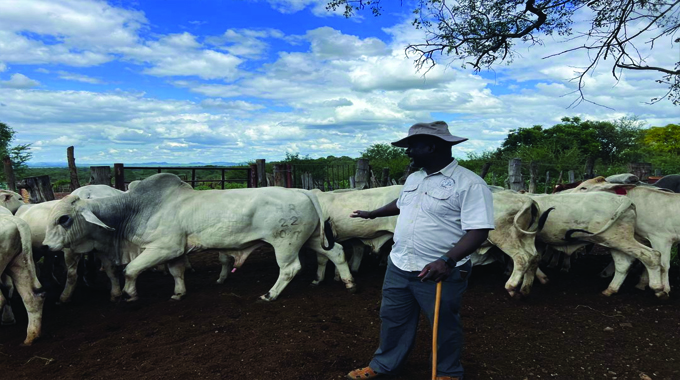
Sukulwenkosi Dube-Matutu, [email protected]
HAVING started with just one cow at the age of 14, Umzingwane-based farmer Mr Jairos Mahlangu has built an impressive herd of 400 Brahmans, establishing himself as a key player in the country’s rural industrialisation drive.
Mr Mahlangu began his journey with commercial beef cattle before transitioning to pedigree breeding. His decision to introduce high-quality bulls into his herd laid the foundation for his success.
Farming in a communal area has not hindered his ambitions. To accommodate his growing herd, he has secured additional grazing land in Shangani, Matabeleland South Province and Nyamandlovu in Matabeleland North Province.
“When I started livestock farming, most farmers were focused on commercial beef production. At that time, pedigree bulls were scarce and expensive, costing between US$10 000 and US$15 000 each,” he explained.

Seeing an opportunity, Mr Mahlangu invested in pedigree bulls to improve his herd and eventually become a supplier of high-quality livestock.
By 2008, Mr Mahlangu had about 30 cattle. Using profits from his furniture business, he gradually expanded his herd, prioritising the purchase of heifers to boost productivity. Over the years, he has gained extensive experience in breeding Brahmans and ensuring their well-being.
To maintain the health of his herd, Mr Mahlangu has established a dedicated dipping point at his kraal, where he applies tick grease and sprays his cattle every Sunday. He also takes them for further dipping at the communal dip tank every Wednesday to ensure effective disease control.
“Brahmans require careful handling,” said Mr Mahlangu. “They are intelligent but can become aggressive if mistreated or exposed to excessive noise. They respond better to calm environments and gentle handling. I have built a bond with my animals, and they recognise my voice and follow instructions without force.”

Mr Mahlangu hopes to secure a larger, consolidated piece of land to house all his cattle in one location, reducing costs and improving livestock management.
He emphasised the importance of controlled breeding, stating that when heifers reach a certain weight, they are ready for mating.
“If not secured, they may mate with any bull they encounter, which can affect the quality of the breed,” he explained. He also pointed out that expecting cows need to be kept in designated maternity pens to ensure their safety and proper feeding.
Mr Mahlangu’s passion for livestock farming was cultivated in his teenage years under the guidance of his father. He fondly recalled how he acquired his first cow at the age of 14 after exchanging it for maize he had grown.
“My father was a livestock farmer, and his teachings shaped my understanding of the trade. He loaned me maize seed and after a successful harvest, he accepted the maize in exchange for a cow. That was the beginning of my journey,” he said.

To sustain his herd, Mr Mahlangu has expanded into fodder production. He cultivates two hectares of fodder crops, including sorghum, barner grass, maize and sunflower, which he processes into silage and bales.
“Sunflower is particularly rich in protein and essential for livestock nutrition,” he added.
The El Niño-induced drought taught him valuable lessons about feed security. During that period, he had to spend large sums of money on supplementary feed, which reinforced the importance of growing his own fodder.
Mr Mahlangu believes stud breeders play a crucial role in expanding the provincial cattle herd and improving genetic quality. He urged fellow livestock farmers to prioritise animal health from birth by providing proper nutrition, timely vaccinations and consistent dipping and spraying schedules.
“Raising quality cattle requires dedication. From birth, calves need proper nutrition and care to develop into strong, productive animals. Regular health checks, dipping and vaccinations are essential in preventing disease outbreaks,” he concluded.