Vusumuzi Dube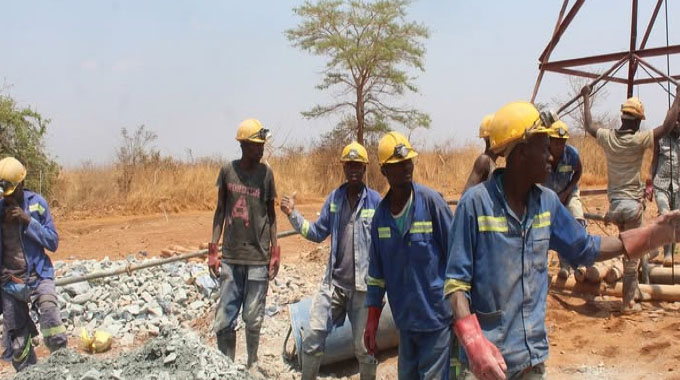
Oliver Kazunga, Features Writer
WHEN the final gold delivery figures for 2025 were tallied, they revealed more than a production milestone.
They told a story of survival, adaptation, and thousands of Zimbabweans quietly transforming hardship into opportunity.
Zimbabwe officially delivered 46,7 tonnes of gold to Fidelity Gold Refinery (FGR), the country’s exclusive buyer of yellow metal in 2025 — the highest output in the country’s history, surpassing the previous record of 36,5 tonnes set in 2024.
Behind the record-breaking numbers lies a powerful reality: artisanal and small-scale miners were responsible for nearly three quarters of the gold that powered this achievement.
Small-scale miners, national impact
Small-scale producers delivered 34,87 tonnes, accounting for 74,5 percent of total gold output.
From the gold belts of Midlands, Mashonaland Central and East, Manicaland, Matabeleland North and South, to Mashonaland West, their shafts, pits and processing plants formed the backbone of Zimbabwe’s gold revival.
For Ms Jescah Mazivazvose, a small-scale miner based in Shurugwi, the record output reflects a deeply personal journey.
“Before, mining was just survival
“Some days you worked the whole week and came home with nothing,” she said.
That changed after she began attending Government-led gold mobilisation workshops, which trained miners on pricing, compliance, environmental management and formal delivery systems.
“Now I understand pricing, how to protect my gold, and where to sell it safely. Mining feels like a real business. It has put food on the table and sent my children to school,” she said.
Her experience mirrors that of thousands of miners who have transitioned from informal, hand-to-mouth operations into more structured enterprises.
Zimbabwe Miners Federation (ZMF) chief executive officer Mr Wellington Takavarasha said the figures confirm what has long been evident on the ground.
“Small-scale miners are the backbone of Zimbabwe’s gold industry.
“Their resilience, energy and growing professionalism are driving national production,” he said.
Rebuilding trust in the formal system
For years, mistrust of formal buyers pushed many artisanal miners into informal markets.
That began to change with the rollout of gold mobilisation workshops spearheaded by the Ministry of Mines and Mining Development, in partnership with agencies such as the Environmental Management Agency (EMA) and FGR.
Mr Ishmael Kaguru, advisor to the Bubi Small-Scale Miners Association, said education was the turning point.
“In the past, many miners sold gold illegally because they did not trust the system,” he said.
“Now they understand that compliance protects their earnings and strengthens the economy.”
Faster payments, improved retention thresholds and clearer pricing structures have helped restore confidence, resulting in increased official deliveries and reinvestment into operations.
Large-scale miners:
stability and scale
While small-scale miners drove volume, large-scale producers contributed 11,8 tonnes, providing stability to the sector.
Their access to capital, modern technology and skilled labour helped sustain production during periods of price volatility and operational disruption. Large-scale mining also anchors long-term investment through exploration, infrastructure development and skills transfer.
Gold Miners Association of Zimbabwe chief executive officer Mr Irvin Chinyenze said the balance between the two sectors proved decisive.
“Large-scale miners bring consistency and global confidence.
“Small-scale miners bring volume and energy,” he said.
“Together, they created a resilient ecosystem that delivered the 46,7-tonne record.”
Policy, price and perseverance
Several factors aligned to support the historic performance:
a) Average gold price (2025): US$2 200 per ounce
b) Policy reforms: Faster payments and improved retention thresholds
c) Formalisation: Increased official deliveries and structured production
These conditions encouraged miners to reinvest earnings into equipment, labour and safer operations, gradually shifting the sector from subsistence mining to sustainability.
Gold as an economic anchor
Gold remains Zimbabwe’s most important mineral export and a critical source of foreign currency.
Its consistent inflows help stabilise the balance of payments, support fiscal operations and fund social services and infrastructure development.
In rural communities, gold mining stimulates local economies through employment, trade and service provision.
In a global environment marked by economic uncertainty, Zimbabwe’s gold sector stands out as a rare example of growth driven largely by domestic effort.
Challenges beneath the shine
Despite the record output, serious challenges persist.
Small-scale miners continue to face unsafe and rudimentary mining practices, limited access to finance, environmental degradation and hazardous working conditions.
The widespread use of mercury in gold processing remains a major concern.
Environmental expert Ms Nyaradzo Mutonhori warned that mercury pollution poses long-term risks to communities and ecosystems.
“Improper handling, open burning and disposal contaminate soil, rivers and groundwater,” she said.
“This threatens aquatic life and communities that depend on rivers for drinking water, irrigation and fishing.”
Land degradation, deforestation and the discharge of tailings into waterways further strain fragile ecosystems.
While gold mobilisation workshops have improved awareness, Ms Mutonhori said enforcement remains weak due to limited resources.
“That is why a collaborative, integrated and holistic approach to land and natural resource management is critical,” she said.
Towards responsible mining
In response, Zimbabwe, in partnership with international organisations, launched the US$23,7 million planetGOLD Zimbabwe project in 2022.
Supported by the Global Environment Facility and implemented with the United Nations (UN) Environment Programme, the initiative aims to reduce mercury use in artisanal and small-scale mining.
According to planetGOLD, more than 24 tonnes of mercury are released annually from artisanal mining activities in Zimbabwe.
The project plans to support 7 500 miners across 11 districts, promoting safer alternatives and responsible supply chains.
Training programmes aligned with the Minamata Convention are expected to improve environmental compliance and protect both miners and communities.
A defining moment
For now, the numbers speak for themselves. The 46,7 tonnes delivered in 2025 are not just a statistic — they are a testament to the endurance of Zimbabwe’s miners and the quiet transformation taking place in the country’s shafts and stopes.
The challenge ahead is clear: to convert historic achievement into lasting prosperity, ensuring that wealth drawn from the earth translates into sustainable development above it.
In 2025, Zimbabwe struck gold. The task now is to ensure it keeps shining.


 Online Reporter