Robin Muchetu Health and Gender Editor
WHEN Godknows Ncube joined the Zimbabwe Prisons and Correctional Service (ZPCS) in 2011, his responsibility was to maintain order and supervise inmates.
However, years of interacting with prisoners, particularly those battling mental health conditions, gradually made him realise that some behaviours could not simply be understood through the lens of discipline.
He needed to understand the people behind the behaviour.
That realisation would eventually take him from the prison service to the psychiatric wards of Ingutsheni Central Hospital, where he trained as a Registered Mental Health Nurse, adding a new dimension to his role as a correctional officer.
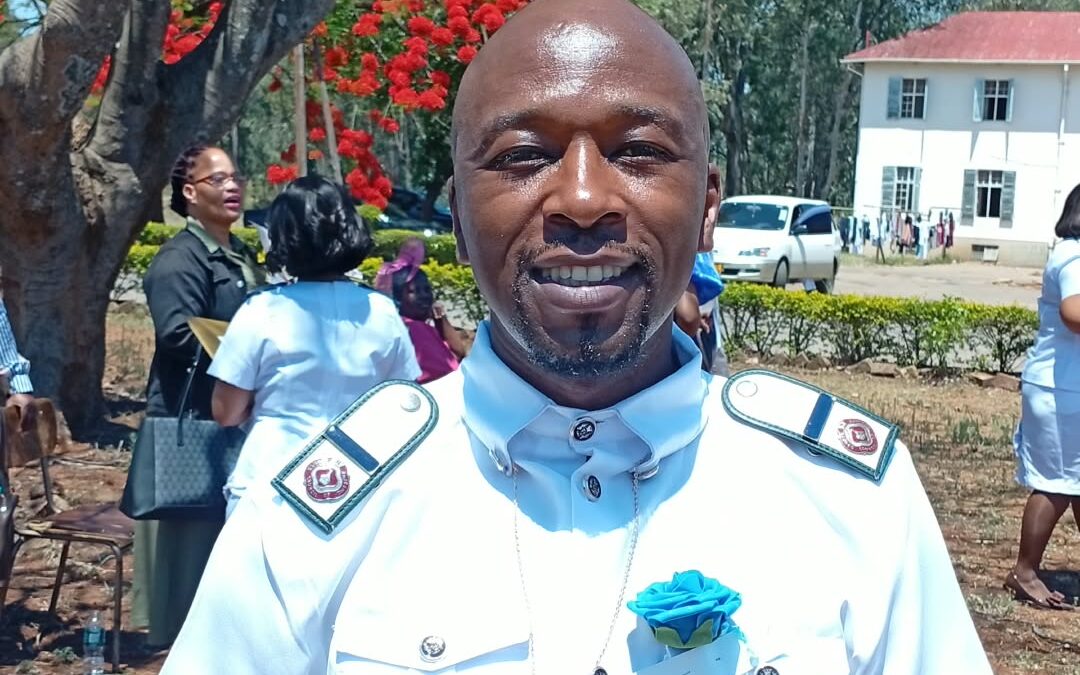
Ncube, now an Assistant Principal Correctional Officer based at Mlondolozi Prison in the Khami Prison Complex, was among the nurses who graduated at Ingutsheni Central Hospital yesterday.
His journey into mental health nursing was shaped by both a childhood ambition to become a nurse and the experiences he accumulated while working with inmates, some of whom required specialised psychiatric care.
“I started at ZPCS as a prison officer in 2011, then I trained as a medical assistant class three. I then upgraded myself to a State Certified Traumatology Nurse, then did my Registered General Nursing.
“Now I have graduated as a Mental Health Nurse. The journey has indeed been long but I am here today, it has not been easy,” said Ncube.
Although his career began in the correctional service, Ncube said nursing had always been a childhood dream.
“I was not entirely motivated by being in the prison service and seeing the inmates, but as an individual I had that passion of being a nurse growing up. I chased that passion until I trained at ZPCS,” he said.
In 2018, an opportunity to pursue healthcare training arose within the Zimbabwe National Army, allowing him to advance his nursing qualifications.
His professional journey later brought him to Ingutsheni Central Hospital for his Registered General Nursing internship, where he began to recognise similarities between the psychiatric hospital environment and the correctional setting in which he worked.
“I saw that the setup at Ingutsheni was just the same as in prison and I was familiar with that sort of environment.
“Again, in prison, we spend a lot of time talking to inmates and getting to know them better, understanding how and why they behave in the manner that they do, so being at Ingutsheni was a familiar setting and I blended well and chose this career path,” he said.
However, familiarity with inmates did not necessarily mean he fully understood their mental health needs.
Ncube said his experiences at Mlondolozi made him realise that, although he spent considerable time interacting with inmates, he lacked the professional knowledge to identify and respond appropriately to psychiatric conditions.
Rather than remain limited by this knowledge gap, he decided to specialise.
“So, I took it upon myself to train in 2024 in the specialised area. I realised that this training will enable me to identify their challenges and needs and understand them better,” he said.
“Now I am equipped with the best therapies that work for inmates with mental health problems. I can help them better now with this training I now possess.”
For Ncube, one of the most important lessons has been the value of listening.
He said people experiencing mental health challenges often needed someone willing to give them time, listen without judgement and understand what they were going through.
“I really enjoy conversing with people and that is one of the key therapies that patients need. They want to be heard and to be spoken to. That is one of my strengths so it has not been very difficult dealing with mental health inmates,” said Ncube.
His training also transformed how he interprets behaviour within the correctional environment, where mental illness can sometimes be mistaken for indiscipline.
“Working in a correctional setting, the biggest challenge is that mental illness is often misunderstood as indiscipline. Before my psychiatric training at Ingutsheni Central Hospital, I also looked at it that way. Training at Ingutsheni changed everything. I learned to assess, not judge,” said Ncube.
“I learned that hallucinations, aggression, withdrawal are symptoms, not character. It taught me the Glasgow Coma Scale, mental status examination, de-escalation and most importantly empathy.
Now I understand that a prisoner can be both an offender and a patient who needs assistance.”
His experience has reinforced his belief that mental health training should be an integral part of correctional services, where officers routinely interact with people who may have psychiatric or substance-use challenges.
“The psychologists and psychiatrists we work with always emphasise that prisons are now the largest mental health institutions. About 60 percent of inmates have some form of mental health or substance use problem,” said Ncube.
“What they say is: Every correctional officer and nurse needs basic psychiatric training — mental health first aid, how to identify early relapse, how to de-escalate without force. Mental health care in prisons is not a luxury; it is security. A stable inmate is a safe prison.”
Beyond the prison walls, Ncube believes mental health education must also reach communities, particularly as Zimbabwe continues to grapple with drug and substance abuse.
He said stigma and discrimination often prevent people experiencing mental health challenges from receiving the understanding and support they need.
Ncube believes greater public awareness would help communities recognise mental health conditions, understand those affected and encourage them to seek appropriate assistance.
At the graduation ceremony, Ncube also received an award for being the smartest-dressed male nurse in the 2024 cohort, a lighter moment in a journey marked by years of study, professional
advancement and a growing commitment to patient care.
For a man who began his career enforcing prison rules, his latest qualification represents a deeper understanding of the people behind the prison gates: some need more than supervision; they
need care, treatment and someone prepared to listen.