


 Online Reporter
Gibson Mhaka
Zimpapers Politics Hub
HISTORICALLY, missionaries, in the course of their activities, often wittingly or unwittingly served as agents of colonialism in Africa.
They were powerful instruments towards the establishment of colonial rule, giving rise to assertions like “the flag followed the cross”, signifying that politicians and colonisers often arrived in the wake of missionaries, or that “missionaries came with a Bible in one hand and a sword in the other”.
However, in Zimbabwe’s compelling narrative of liberation, the struggle for independence was far more intricate than mere armed conflict and political speeches.
Breaking from the historical pattern, the liberation struggle in Zimbabwe was not solely waged with firearms but was deeply intertwined with the Bible and the active participation of the Church.
Indeed, churches in Zimbabwe played a multifaceted and often heroic role in the liberation struggle, becoming unexpected allies in the fight for freedom by providing shelter and resources for fighters, shaping political consciousness through education and advocating for justice and human rights.
While some religious institutions were criticised for initially appearing aligned with the colonial powers, many actively supported the liberation movement.
As Zimbabwe prepares for its annual Heroes’ Day commemorations on August 11, there is a growing recognition and indeed a pressing need to acknowledge and celebrate the significant, often overlooked, role played by religious institutions and their adherents during the liberation struggle.
Media scholar Hilde Arntsen, in her article titled “Missionaries and the Fight Against Colonialism”, said during the Second Chimurenga, although the Church was criticised for not being vocal enough and appearing to be on the side of the oppressors, many churches did join or support the struggle for independence, particularly those in rural areas.
“During the liberation war, however, traditional religions were playing an increasingly important role through their cooperation with spirit mediums. Some missionaries and churches did, nonetheless, join the people in the fight against colonialism, although they were still often perceived as being on the side of the minority government,” said Arntsen.
“The Catholic Church of Zimbabwe voiced strong criticism of the minority rule and particularly through Moto, they spoke out against the oppression of the people.
“The Catholic Church is among the religious groups that have gone the furthest in ‘indigenising’ their leadership, church services and forms of worship. Many of the leaders of the Second Chimurenga had been educated at various mission schools.”
Crucibles of nationalist leaders
Catholic-run schools, among the few offering quality education to Africans, also became crucial centres for breeding future nationalist leaders.
For example, the Catholic Church educated indigenous people and trained future church leaders like the late Archbishop Patrick Chakaipa and the late Father Emmanuel Francis Ribeiro, both of whom would later play a crucial role in the liberation of Zimbabwe.
Archbishop Chakaipa notably blessed the Zimbabwean flag well before independence.
Indeed, many different leaders of the Second Chimurenga received their education at various mission schools.
The late President Cde Robert Mugabe, for instance, was educated at Kutama Mission.
Notably, Jesuit missionary Father O’Hea reportedly had a significant influence on his early life and education.
These different leaders, through the education they received, formed a significant part of the intellectual backbone of the struggle.
Mission hospitals and clinics also provided medical care to injured fighters, with figures like Dr Simon Mazorodze, who became the first Health Minister of independent Zimbabwe, playing a key role.
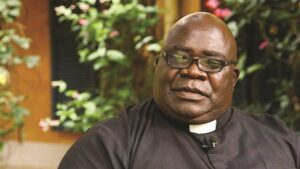
In a recent interview, Father Fidelis Mukonori of the Roman Catholic Church, who was a young seminarian at the height of the liberation struggle, recalled the deep tension that hung over Catholic missions.
He emphasised that the Catholic Church played a critical role in the liberation struggle, despite the dangers.
“Before the liberation struggle, the Catholic Church was already voicing discontent, especially when Ian Smith declared the UDI (Unilateral Declaration of Independence).
“Not only Catholic missions, but any Christian missions were the first places where the guerrillas would arrive. They needed food, water, clothes and the basic supplies. As soon as they arrived, they dressed like ordinary people.
“The women and girls did the cooking, while the boys and some girls did military intelligence. They were the mujibhas and chimbwidos going where guerrillas could not go. They informed guerrillas about enemy movements, numbers and weapons.
“My work involved youths. I taught them discipline because some thought it was a joy to be in the war without realising that war kills. Guerrillas survived because people hid them, even beneath ladies’ skirts.
“I was given a young female guerrilla to work with me, to raise money, clothes and medicines for Manicaland, where supplies were scarce,” Father Mukonori narrated.
While acknowledging the role of religious institutions during Zimbabwe’s liberation struggle, Zimbabwe Synod Secretary Reverend Sikhalo Cele said it was both multifaceted and complex.“As a religious leader, I believe that the moral guidance, humanitarian support and advocacy for the oppressed, including support and legal representation for some of the leaders of the liberation war,” said Rev Cele.
“Many religious leaders and institutions spoke out against the injustices of the colonial regime, advocating for human rights, dignity and freedom.”
Rev Cele further explained the Church’s practical contributions: “The Church also provided a safe haven for many who were fleeing persecution, offering shelter, food and medical care. In addition, religious institutions played a significant role in mobilising international support for the liberation struggle, raising awareness about the plight of the Zimbabwean people and advocating for international action.”
He emphasised that in contemporary Zimbabwe, the Church continues to play a critical role in promoting good governance, human rights and social justice.
“The Church remains committed to advocating for human rights, dignity and justice, particularly for the most vulnerable members of society. This is reflected in the Church’s continued engagement with issues such as poverty, inequality and good governance,” he noted.
“The Church’s experience during the liberation struggle has equipped it with a deep understanding of the importance of community and solidarity.
“Today, the Church continues to play a vital role in bringing people together, fostering a sense of community and solidarity, and providing support to those in need. The Church’s role in the liberation struggle has also given it a prophetic voice, enabling it to speak truth to power and challenge unjust systems and structures.”
He further said that as a result of the struggle, many churches in Zimbabwe underwent significant transformation, including a shift towards greater contextualisation and enculturation.
“The struggle also led to a greater emphasis on the Church’s role in promoting justice and peace, and many churches became more actively engaged in advocacy and community development work.
“Today, the Church in Zimbabwe continues to grapple with the legacy of the liberation struggle, seeking to promote healing, reconciliation and justice in a post-conflict society,” he said.
President of the Council of Churches in Africa (CCA), Bishop Dr Rocky Moyo, emphasised that churches played a multifaceted role in Zimbabwe’s liberation struggle.
“The Church has been instrumental from the start of the liberation struggle. It provided food, shelter and safe houses for the freedom fighters. Education was also among the crucial provisions, as was the mobilisation of resources.
“Beyond material aid, the Church offered spiritual guidance and moral support and bravely challenged the unjust authority of the colonialists. Some even transported ammunition for the fighters,” he said.
He added that many freedom fighters also consulted prophets for spiritual guidance on strategy and outcomes.
“Prophets would guide them on how to go, where to go and what was going to happen, thus providing them with a way forward.”
As Zimbabwe once again prepares to commemorate Heroes’ Day on August 11, the nation must broaden its gaze beyond the conventional narratives of armed struggle to fully embrace the overlooked, yet profoundly significant, role of religious institutions.
The churches, through their diverse contributions – from providing sanctuary and education to offering spiritual solace and advocating for justice – were an undeniable force in shaping the path to independence.
They were heroes in their own right.
Recognising their multifaceted and often courageous involvement is not merely about historical accuracy; it is about honouring the full spectrum of heroism that birthed a free Zimbabwe, ensuring that the sacrifices made in the quiet corridors of faith are celebrated alongside those on the battlefield.



 Online Reporter