Online Reporter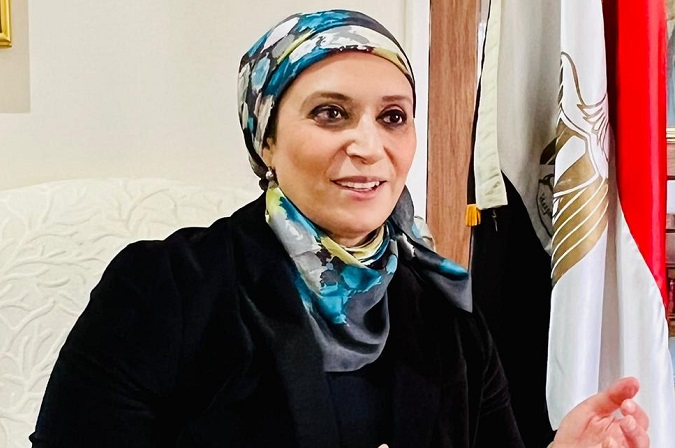
OUTGOING Egyptian Ambassador to Zimbabwe MS SALWA MOWAFI considers Zimbabwe her second home because of the historical ties between the two countries. During her tenure, Zimbabwe and Egypt opened new frontiers of cooperation in the pharmaceutical, construction, renewable energy and medical sectors. In an interview with Zimpapers Politics Hub’s GIBSON NYIKADZINO, she indicated that the two nations are currently translating their political ties into a mutually beneficial economic relationship. Below are excerpts from the interview.
************************
Q: How was your experience in Zimbabwe during your tenure?
A: This was my first ambassadorial posting and I was very lucky actually to start here in Zimbabwe.
Why? Because Zimbabwe is still on the same plateau of our dear Africa and is an African sister. It’s a country which, on the leadership level, I see we have best relations with . . . We both share almost similar views on many international and African regional issues. So, for me, it was very comforting.
Q: What significant acts of cooperation did you manage to initiate and how do they shape the Zimbabwe and Egypt bilateral trajectory?
A: It was the pharmaceutical sector. Now, we see Egyptian medicine in public hospitals here in Zimbabwe.
This is something that is impacting the life and health of Zimbabweans.
And it is something that we are very glad to do; provide help with our medicine here for the welfare and well-being of the Zimbabwean people. In remote areas and in cities, Egyptian medicine is now being administered — very effective and reasonably priced.
I would name mainly the pharmaceutical and construction sectors.
Speaking about construction, we signed an excellent agreement (MoU) for the construction of the Mt Hampden new administrative city.
This MoU (memorandum of understanding), we are looking forward to its implementation and it is something that would bring the old experience that we are ready to share with Zimbabwe, in the field of design, infrastructure, construction management, layout and everything. We are ready to share this experience.
We have done great in Egypt and we wish to share this expertise.
Q: Any other areas that Egyptian companies have shown interest in as having potential for investment or cooperation in Zimbabwe?
A: We have a big renowned and prestigious contractor and companies in Egypt that are actually working here in Zimbabwe in the field of renewable energy.
And this is a mega project coming soon in Zimbabwe.
This actually reflects the interest our companies have in cooperating with Zimbabwe. And we think that it will grow more and more . . .
Q: You have praised the strong Zimbabwe-Egypt political ties at almost every level. How have you translated this into an economic relationship? How did you do that, if it ever happened?
A: That is already being reflected. First, the trade exchange volume between the two countries has been doubled lately.
It is something that we are very proud of. We are also making connections between the businesses here in Zimbabwe and Egypt.
I tried hard to make people know about Egypt here and to connect the businesses and now they are working together and getting acquainted.
There is also interest for people to know more about Egypt as a tourist destination. This interest increased a lot from where we started.
Last year, we achieved a record in the number of tourists visiting Egypt. This year, it will be massive.
This has also increased people-to-people cooperation.
Q: How much do you think your interactions, particularly with young Zimbabwean women, helped influence them to aspire doing big things and break stereotypes?
A: As a female ambassador sent to another African country, I was widely respected over here.
In Egypt, women are very strong, highly motivated and highly empowered. I found the same here — Zimbabwean women are very powerful; they have stronger personalities. It is something that made me feel there is a very bright future for Africa; for women, men and children.
For me, my special moments of interaction came when I met some of the young female students and also women from remote areas and young girls.
It was something good for them to see that women are the ones who can achieve something, can work hard and do something to help not only their country, but also the whole African continent.
We are all sisters and brothers.
We are the children of this land called Africa that is rich in culture, rich in capabilities.
Don’t let the stereotypes and what they say about Africa discourage you.
Q: Speaking about Africa and elsewhere, there are global changes that are happening, including challenges in the Gaza Strip, Sudan and Libya. What is your country’s position on what is happening in these jurisdictions?
A: For Egypt, the main thing that we are working hard for is achieving and restoring peace and stability in these areas — in Libya, in Sudan and, of course, in Gaza.
It all has to happen through reverting to diplomatic means and solving the problems and the conflicts through dialogue.
This is the best civilised way of dealing with all these situations that do exist there.
For Gaza, we see that the only way is through a two-state solution.
The establishment of the Palestinian state and the borders on June 4, 1967 is crucial and it actually will be the only way, in our point of view, to solve this and restore peace and stability in the Middle East.
Q: How do we achieve that since we have no representation on the United Nations (UN) Security Council?
A: Like all African countries, we are keen on the reform of the UN mechanism and, of course, for the expansion of the Security Council membership and also to deal with the veto system.
This is actually the main thing that we think will deal with all the challenges that the world is facing currently.
Q: Regarding Sudan, Libya and other spots in Africa that are having challenges, what happened to African solutions to African problems, because of late we have seen some external forces or powers negotiating deals for Africans?
A: There are, of course, lots of African solutions for African problems, and Africa is working hard in order to tackle most of these cases.
The number one initiative that is very valuable is silencing the guns all over Africa. Yes, that’s very important. And again, reverting to the diplomatic ways of solving the problems.
All the problems can be solved through dialogue and good offices.
This is how we can restore peace and security in Africa, and will not give any chance for any problems to erupt afterwards. So that is, in our view, very essential.



 Online Reporter