Online Reporter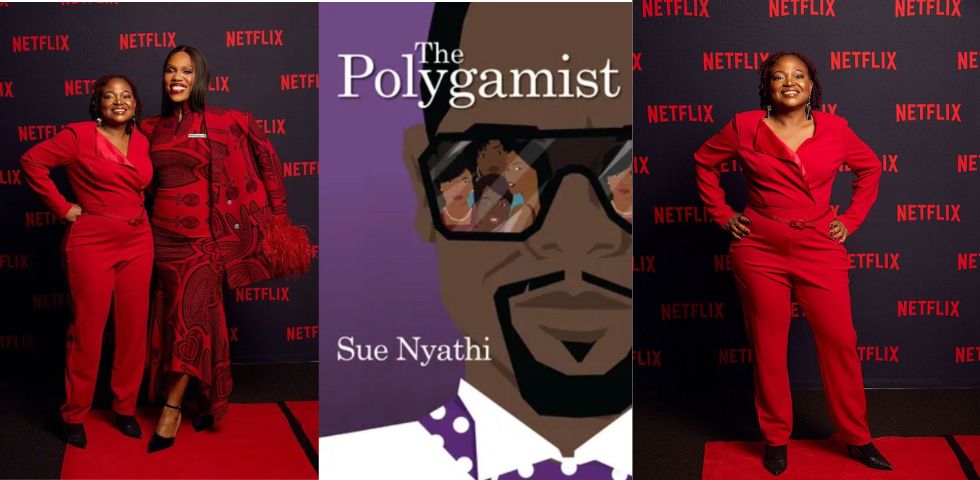
Langalakhe Mabena [email protected]
As Netflix’s latest African hit series The Polygamist continues to draw global audiences, attention is shifting beyond its star-studded cast and gripping storyline to the woman behind it all, Zimbabwean author Sue Nyathi, whose long-buried manuscript has now found international acclaim.
What once struggled to find space in publishing circles is now captivating audiences worldwide, a testament to persistence, timing and the growing global appetite for African storytelling.
The 22-episode drama, which premiered last week, has quickly become one of the platform’s most talked-about titles, charting the rise and collapse of Jonasi Gomora, a self-made CEO whose seemingly perfect life unravels amid betrayal, secrets and competing claims to his wealth.
Produced by Stained Glass Productions, the series features a heavyweight cast including Sdumo Mtshali, Gugu Gumede, Kwanele Mthethwa, Kenneth Nkosi, Luyanda Zwane and Celeste Ntuli, among others.
But behind the on-screen drama lies an even more remarkable journey, Nyathi’s own.
More than a decade ago, her manuscript was reportedly rejected by major publishers in South Africa, forcing her to self-publish the novel in 2012. Fourteen years later, that same story has been transformed into a Netflix production reaching audiences across the world.
Reflecting on the milestone, Nyathi described the Netflix adaptation as both humbling and deeply affirming.
“The idea has always been there, but it was waiting for the right moment to take shape. I truly believe that God makes everything beautiful in His time.
“What is changing now is the space being created for African stories. For a long time, books from Western markets dominated global platforms, but now, we are seeing a shift. African stories are finally getting the visibility they deserve,” she said.
Nyathi said she was not involved in the day-to-day production but was pleased with how her work was interpreted for screen.
“I read the script before filming started and I really liked it. It doesn’t follow the book word for word, but the changes made sense for the new context.
“Moving the setting to South Africa and updating the timeline to the present day helped make the story more relatable. The production quality is outstanding, and the team really brought the story to life. The book will always be the book, but I’m genuinely happy with how it was adapted,” she said.
For Nyathi, the Netflix deal represents a major turning point in her writing career, extending her reach far beyond what she once imagined.
“This has elevated my brand as a writer. Having my story streamed globally means it has reached audiences I could never have accessed before. It’s a rare opportunity for an African writer.
“This is bigger than me. It shows that Zimbabwean stories belong on the global stage,” she said.
The Bulawayo-born author also sees the success of The Polygamist as a symbolic win for the city and for women in the creative industry.
She said Bulawayo’s rich artistic heritage continues to inspire her, and she hopes the milestone will encourage young creatives to pursue their ambitions without hesitation.
“Growing up, the arts were not seen as a viable career path. But that narrative is changing. We are now showing young people that creativity can be a profession and a powerful one at that.
“We are rebranding Bulawayo as the City of Queens. I believe Queen Lozikeyi would be proud of the talent this city continues to produce,” she said.