Online Reporter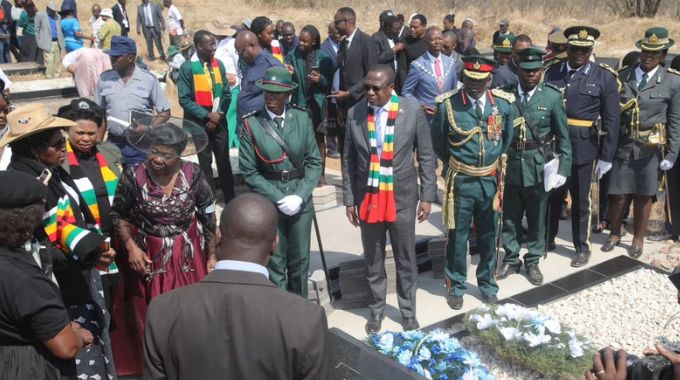
Gibson Mhaka, [email protected]
THERE is a tendency to treat Heroes’ and Zimbabwe Defence Forces (ZDF) days as two familiar fixtures on the national calendar — occasions marked by speeches, parades, wreath-laying ceremonies, military displays and colourful entertainment.
But to reduce these two days to annual ceremonial occasions is to miss their deeper national significance.
Taken together, Heroes Day and ZDF Day represent a powerful continuum in Zimbabwe’s national story: from remembering the men and women whose sacrifice gave birth to the country, to recognising the institutions entrusted with defending its sovereignty, peace and stability, and ultimately creating the conditions necessary for national development.
The sequence is neither accidental nor merely symbolic.
Heroes Day looks backwards, towards the liberation struggle and the sacrifices that made Zimbabwe possible as a sovereign state.
ZDF Day looks forward, towards the responsibility of preserving that sovereignty and ensuring a stable environment in which the country can pursue its economic and social ambitions.
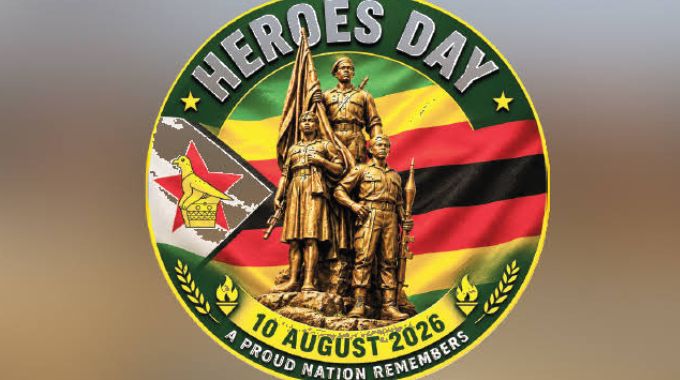
This year’s Heroes Day, commemorated under the theme, “Lest We Forget”, therefore carried a message that went beyond remembering the fallen.
Government has continued efforts to preserve the country’s liberation heritage, including the rehabilitation of liberation war sites in Zimbabwe and neighbouring countries.
The significance of remembering cannot be overstated.
Nations are built not only through institutions, laws and economic programmes, but also through collective memory.
A country that forgets the sacrifices upon which its sovereignty was established risks losing the historical consciousness necessary to understand why that sovereignty matters in the first place.
For Zimbabwe, the liberation struggle was not simply a chapter in a history book.
It was the defining political and social struggle through which the majority asserted its right to determine its own destiny.
The men and women being remembered at heroes’ shrines across the country paid the ultimate price for that objective.
Their sacrifice therefore imposes a responsibility on succeeding generations.
To remember them is not simply to preserve their names on tombstones or recite their histories during a national holiday.
It is to ask whether the country they fought for is fulfilling the promise embodied in their sacrifice.
That is where the significance of ZDF Day begins.
If Heroes Day commemorates the sacrifice that secured Zimbabwe’s sovereignty, ZDF Day recognises the institutions charged with protecting that sovereignty.
The Zimbabwe Defence Forces are not merely a military establishment parading its hardware once a year.
In the broader national framework, the defence forces have a constitutional responsibility to defend the country, its territorial integrity and national interests.
Their role is therefore inseparable from the broader question of national development.
No country can pursue sustained economic transformation in an environment defined by insecurity, instability and uncertainty. Investors need confidence. Communities need peace.
Businesses need predictable operating conditions. Farmers need security to produce. Infrastructure projects need stability to progress.
In that sense, peace and development are not competing priorities.
They are mutually reinforcing.
This year’s ZDF Day theme, “ZDF: Guaranteeing Peace and Stability for the Attainment of Vision 2030”, made that connection explicit.
The official programme placed the defence forces within the broader national development trajectory, alongside community assistance initiatives, military displays and the President’s address to the nation.
This is an important shift in how the role of the military should be understood.
The modern defence institution is expected not only to defend territorial sovereignty but also to contribute to national resilience and development within its constitutional mandate.
Zimbabwe’s experience has repeatedly demonstrated the importance of a stable environment to development.
The Government’s Vision 2030 ambition of transforming Zimbabwe into an upper-middle-income economy cannot be achieved through economic policy alone.
It requires infrastructure, investment, industrialisation, agricultural productivity, technological advancement, human capital development and, critically, peace and stability.
This is why the two commemorations should be viewed as complementary rather than separate.
Heroes Day answers the question: What did it take to create Zimbabwe?
ZDF Day asks a related question: What is required to protect the Zimbabwe that was created?
The answer to the first is sacrifice.
The answer to the second is vigilance, discipline, professionalism, national unity and institutional responsibility.
The connection becomes even more compelling when viewed against Zimbabwe’s development trajectory.
The liberation generation fought for political sovereignty.
The present generation has inherited the responsibility of converting that political sovereignty into economic sovereignty.
Political independence without economic empowerment remains incomplete.
This does not diminish the significance of the liberation struggle. Rather, it gives the sacrifices of the liberation generation a contemporary purpose.
The challenge today is to build an economy capable of creating jobs, expanding industrial production, modernising infrastructure, improving living standards and giving citizens meaningful opportunities.
That is where Vision 2030 enters the national conversation.
The journey from the liberation struggle to Vision 2030 is therefore not a break with history.
It is an attempt to give practical expression to the aspirations that accompanied the attainment of independence.
The danger, however, is that national commemorations can become routine if their meaning is reduced to protocol.
A Guard of Honour can be inspected. Wreaths can be laid. Military displays can draw applause. Speeches can be delivered and entertainment can bring crowds together.
But once the stages are dismantled and the crowds disperse, the more difficult question remains: What have we learnt from the past, and what are we doing with the inheritance we have received?
That is the question that should sit at the heart of Heroes Day. It is also the question that should inform ZDF Day.
The presence of thousands of Zimbabweans at commemorations across the country demonstrates that national memory remains important.
This year’s ZDF Day also carried a particularly significant message through the recognition of thousands of liberation war veterans, demonstrating that the contribution of those who participated in the liberation struggle remains part of the national narrative.
Yet recognition must go beyond ceremony.
The most fitting tribute to the fallen is a country that works to realise the ideals for which they sacrificed.
That means strengthening national unity, protecting peace, investing in young people, creating economic opportunities and ensuring that the benefits of development reach communities across the country.
It also means preserving the country’s liberation heritage so that future generations understand that Zimbabwe’s sovereignty was not inherited cheaply.
The rehabilitation of liberation war sites in Zambia and Mozambique, for example, is significant precisely because history can disappear when physical reminders are allowed to deteriorate.
Government’s current programme includes work at several liberation war sites in both countries, extending the preservation of Zimbabwe’s liberation heritage beyond its borders.
There is another important dimension to this national continuum: the role of young Zimbabweans.
The generation born long after independence did not experience the colonial system or the liberation war.
For many young people, the struggle exists primarily through stories told by parents and grandparents, textbooks, monuments and national commemorations.
That makes Heroes Day particularly important.
It provides an opportunity to transfer historical memory from one generation to another.
But remembrance must be accompanied by responsibility.
Young Zimbabweans should not merely be told that their forebears fought for freedom. They should also understand that every generation has its own national task.
The liberation generation fought to achieve political freedom.
The present generation must consolidate that freedom through economic transformation, innovation, productivity and responsible citizenship.
The defence forces, meanwhile, have a continuing role in safeguarding the peaceful environment in which that transformation can take place.
This is why the successful hosting of Heroes Day and ZDF Day should be viewed as more than evidence of good organisation or impressive ceremonial displays.
Their real success lies in whether they stimulate reflection about Zimbabwe’s past while strengthening commitment to its future.
The two occasions provided a rare opportunity to connect the generations: the generation that fought for Zimbabwe, the institutions that defend it and the young people who must ultimately carry its development agenda forward.
The symbolism is powerful.
At Heroes Day, the nation bows its head before those who made the supreme sacrifice.
On ZDF Day, the nation celebrates those entrusted with defending the peace and stability that followed that sacrifice.
Between the two lies the unfinished task of nation-building.
Zimbabwe’s story, therefore, should not end at the heroes’ graves. The graves represent the beginning of a responsibility.
The defence forces represent the protection of the gains of liberation. Vision 2030 represents the development ambition of the present.
And the future belongs to a generation capable of connecting all three.
That is why Heroes Day and ZDF Day matter.
They are not simply two days on the calendar. They are two parts of one national conversation, one reminding Zimbabweans where the country came from, the other asking how that country should be protected and developed.
The ultimate tribute to Zimbabwe’s fallen heroes will not be measured by the size of the crowds at commemorations, the splendour of military displays or the number of wreaths laid at national shrines.
It will be measured by whether their sacrifice continues to inspire a peaceful, secure, united and prosperous Zimbabwe.
That is the bridge from liberation to development. And that is the deeper meaning of Heroes Day and ZDF Day.
Then the successful hosting of Heroes Day and ZDF Day should therefore not be viewed merely through the lens of ceremonial protocol.
The orderly manner in which the two national events were held across the country provides an important demonstration of the peace, stability, institutional coordination and national cohesion required to move Zimbabwe towards Vision 2030.
As the country moves towards Vision 2030, Zimbabwe needs precisely the environment symbolised by the successful hosting of these national events: peaceful, orderly, stable, coordinated and united around a common national objective.
The commemorations therefore provide more than an opportunity to look backwards. They also offer a glimpse of what the country must carry forward.
Heroes Day provides the memory. ZDF Day provides the shield. Vision 2030 provides the destination.
And between them lies the unfinished task of nation-building.