Tinashe Mukono
Zimpapers Sports Hub
A SCHOOLBOY bet sounds like the kind of thing that should end with bragging rights at break time.
Not with an African gold medal around your neck.
A few days after Zimbabwe shocked the continent by winning the men’s 4x400m relay title in Ghana, team captain Gerren Muwishi sat reflecting on the journey.
The celebrations had started to settle. The noise had eased. What remained was the thought of where it all began.
Not in a stadium, not under a coach, not through some carefully planned sporting pathway, but just a bet.
“I started running because of a bet in high school,” Muwishi says, almost throwing the line away, as if he is talking about someone else’s story.
Yet that small moment somehow changed everything.
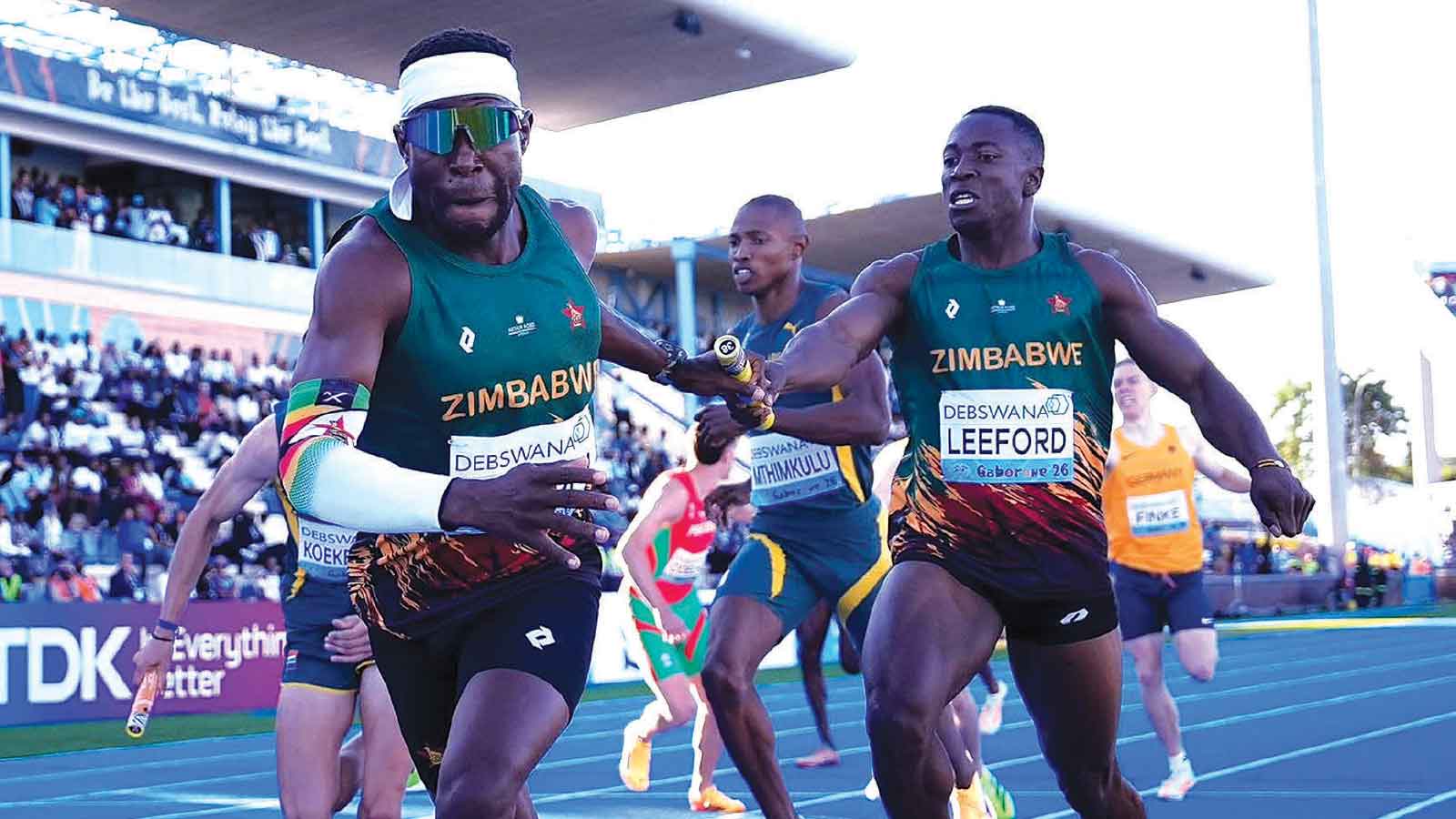
On May 17, Muwishi and his teammates — Leeford Zuze, Dennis Hove and Thandazani Ndhlovu — delivered one of Zimbabwe’s biggest athletics moments in years when they stormed to men’s 4x400m relay gold at the African Senior Championships in Ghana.
Their time of 3:01.11 left Kenya and Morocco chasing shadows behind them.
For Zimbabwe, it was bigger than a race; it felt like a statement.
For Muwishi, known to many simply as Bhiza, it felt like arriving after years spent running through closed doors.
The nickname fits.
Bhiza, meaning horse, captures the way he attacks the track, long strides and relentless energy. He is an engine that seems unwilling to stop. But the name also says something about the journey itself.
Horses keep moving.
And Muwishi had to.
“It has been a long time coming,” he said. “I’ve been on the circuit for a while now and it has taken years of training, years of racing, years of winning and losing, but we’re finally here.”
People usually see the finish line. They rarely see everything that comes before it.
Zimbabwe’s relay gold did not emerge from some polished athletics machine. It reportedly started in a WhatsApp group.
“It started out as a dream in a WhatsApp group to start a 4x400m of local athletes,” said Muwishi.
“The boys have been working together, motivating each other on and off the track, so that bond made it easier to go through the struggles and finally this triumph.”
That bond mattered.
Across bigger athletics nations, relay teams often emerge from systems built around full-time professionals, established coaching structures and deeper support networks.
Zimbabwe’s reality often asks athletes to find answers for themselves.
Funding remains one of the biggest hurdles.
“The life of an athlete is expensive,” Muwishi said. “From the kits itself to the travelling, diet and recovery, but if you love something that much, you’ll make compromises.”
The compromises started early for him.
He grew into the sport largely on his own. No coach guiding every step. No established blueprint.
Just observation, trial and error and a willingness to learn.
“I didn’t have a coach coming up, so I taught myself most of the stuff I know,” said Muwishi.
He first ran shorter races — the explosive 100m and 200m events. Then came the shift that changed his career.
“Transitioning from the 100m and 200m to the longer sprint, that’s when I started getting noticed, which opened so many doors,” he said.
The move transformed him.
But Muwishi did not stop at being an athlete.
Somewhere along the way he became something else — a guide for younger athletes trying to navigate the same difficult road.
“I became a coach to make myself better, but along the way, I started seeing guys with potential whom I could help, so I began coaching them as well,” he said.
The balancing act is not easy.
“It’s difficult because it’s a double duty, but I make it work because both coaching and running are things I hold dear to me,” said Muwishi.
The journey was not all upward.
Zimbabwe still carried the scars of disappointment from the World Relays qualifiers in Guangzhou last year when a failed baton exchange ended their campaign in painful fashion. And they had to trust that the work would eventually show itself.
In Ghana, it did.
Muwishi believes people may still not fully grasp what the team achieved.
“In football terms, our number five ranking in the world in Botswana would be the equivalent of coming fourth at the World Cup,” he explained. The 4x400m gold in Ghana would be the equivalent of winning AFCON.”
Those are big words.
Then again, African champions are not made for small conversations.
After the finish line in Ghana, after the fatigue and emotion finally caught up with them, Muwishi remembers only a few seconds.
“We were ecstatic because the 400m is a difficult event, but as fatigued as we were from running, we still had our five seconds of joy before falling back to the ground tired,” he said.
Now, the conversation moves again.
“Obviously, it’s to see the team through to the Olympic Games in LA28,” said Muwishi.
The road ahead is long, but then, Bhiza has been running long races for a while now.
And it all started with a bet at school.