Online Reporter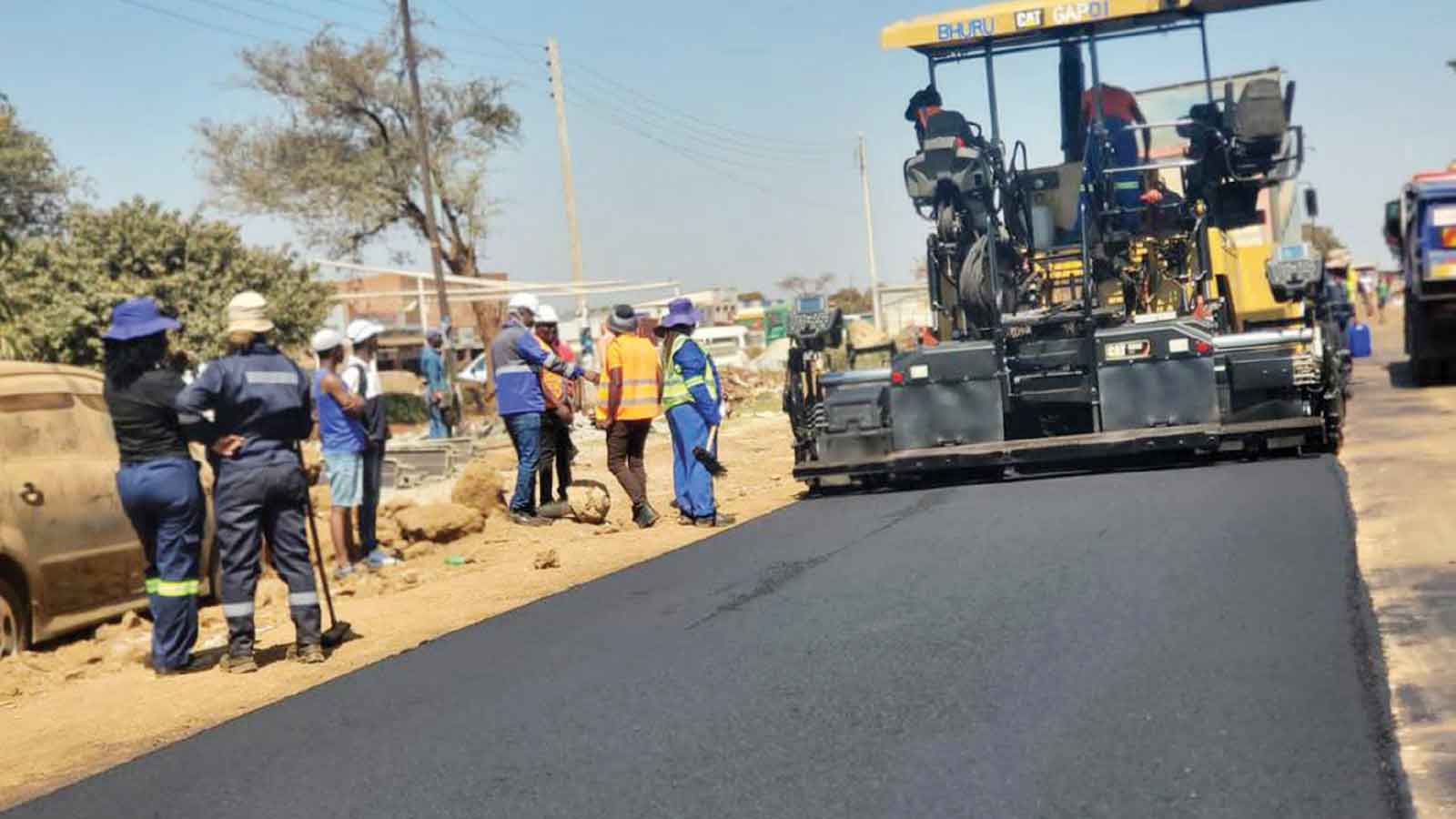
Dr Michael Musanzikwa
For more than three decades, the supply chain function in Zimbabwe has been a back office facilitating business transactions through mere paperwork.
All the roles of supply chain management — namely, procurement, warehousing, transport and logistics — were regarded as supporting activities for other functions such as finance, administration, engineering and marketing.
However, innovation and technology led to a more competitive environment among organisations and well-informed consumers to exercise their choice.
As a result, both the private and public sectors were forced to appreciate international best practices of incorporating supply chain management as a critical strategic element of business success.
From a Government point of view, supply chain was regarded as a critical enabler to excellent service provision to the populace.
The Zimbabwe Institute of Procurement and Supply (ZIPS) also played an important role in championing the recognition of supply chain management as a stand-alone discipline within organisations.
For instance, 65-70 percent of budgets in organisations is committed to supply chain through procurement.
In 2005, this led to the introduction of the Supply Chain Management degree at the Chinhoyi University of Technology.
The degree, as well as diploma, is now being offered by 10 universities and polytechnics in Zimbabwe.
The impact of climate change, natural disasters, pandemics such as Covid-19 and conflicts in Eastern Europe and the Middle East are forcing the private sector and the Government to seriously consider supply chain as integral to sustenance and survival.
This is because supply chain drives economies by providing goods and services to consumers.
Global supply chain disruptions often affect the availability of critical items such as fuel, power, pharmaceuticals, cereals and agricultural inputs.
Critical thinkers and stakeholders from both the private sector and the Government, through organisations such as the Zimbabwe National Chamber of Commerce (ZNCC); Buy Zimbabwe; the National Economic Consultative Forum (NECF); and the Africa Economic Development Strategies (AEDS), a local research group, recently held several consultative meetings to map the way forward on how Zimbabwe can come out of this quagmire.
They unanimously agreed that the only option was to pivot on local industrialisation and beneficiation, which is anchored in an efficient and effective supply chain management system capable of relaying value-added products from production processes to the final consumer.
This resonates well with the the Government’s blueprint to achieve Vision 2030, which is premised on the attainment of upper middle-income status.
Some of the resolutions by stakeholders are:
- The Government must continue to provide conducive and consistent economic policies to attract local and foreign investors in local production
- Local financial institutions must come on board to provide attractive and flexible conditions to allow local investors to borrow capital for local investment
- Local tertiary institutions to embark on a drive to innovate and offer solutions to economic challenges
- Research and development partnerships between tertiary institutions and industry must be strengthened to bring solutions for the local economy
- The Government must double down on ease of doing business reforms
The Government recognises that the successful transformation of all critical economic sectors, such as agriculture, mining and energy up to the retail sector and final consumer, needs to be backed by a sound supply chain functional system.
Procurement
In 2017, the Government enacted the Public Procurement and Disposal of Public Assets Act (Chapter 22:23). It came into effect on January 1, 2018, accompanied by General Regulations (Statutory Instruments 5 of 2018), to be administered by the Procurement Regulatory Authority of Zimbabwe (PRAZ).
This overhauled the national procurement framework.
Further, on October 23, 2023, President Mnangagwa officially launched the Electronic Government Procurement (e-GP) system at the third Annual Public Procurement Conference in Harare. Also managed by PRAZ, the platform replaced a traditional, paper-based procurement setup.
The adoption of artificial intelligence (AI) in the procurement system is also being considered to further enhance the procurement process.
Transport and logistics
Since Zimbabwe is an agro-based economy, most of its raw materials are produced from rural areas for value addition by the manufacturing sector into finished products.
The Government realised that it was imperative to have a sustainable supply chain network in all corners of the country so that Zimbabwe moves away from being a breadbasket of the region to being an agro-industrial hub.
The Second Republic has thus been on an aggressive infrastructure developmental drive to facilitate the movement of goods, services and people through the internal supply chain corridors.
The projects include the upgrade of the Robert Gabriel Mugabe International Airport, the upgrade of the Grand Reef Aerodrome in Mutare to enhance regional connectivity, as well as the planned upgrade and modernisation of Charles Prince Airport.
Signature projects on the country’s road network include the Trabablas Interchange; the Harare-Masvingo-Beitbridge highway; and the 43km Shurugwi-Mhandamabwe highway, which links the Beitbridge Border Post with Gweru, Kwekwe, Chegutu, Kadoma, Chinhoyi, Karoi and the Chirundu Border Post.
In addition, the Government has embarked on the Emergency Road Rehabilitation Programme (ERRP) to restore damaged infrastructure of roads and bridges, including all rural feeder roads and urban areas.
There has also been extensive works on the country’s ports of entry and exit.
This will obviously facilitate trade by integrated value-added supply chains that drive investment, employment and shared economic prosperity.
Rail
Plans are advanced to construct and revamp the rail network infrastructure, which is an artery of the supply chain.
For instance, the Government reintroduced passenger train services on the Harare-Mutare and Bulawayo-Victoria Falls routes, thereby strengthening regional transit logistics.
Envisaged upgrades under the National Development Strategy 2 (NDS2) include Mutare-Harare-Chirundu; Lion’s Den-Kafue (Zambia); Mvuma-Manhiza-Rusape.
The focus is to facilitate the movement of bulk cargo, particularly from the mining sector and agriculture, through a sustainable and reliable rail supply chain.
Warehousing
In an effort to maintain an interrupted flow of critical goods for service provision, the Government constructed the following storage facilities:
- New NatPharm warehouses in Harare and Mutare to enhance the efficient procurement, storage and distribution of pharmaceuticals
- AI-driven silos for the Grain Marketing Board in Kwekwe, Mutare and Macheke. Construction work is still underway in other parts of the country
Six million-litre ethanol storage tanks at the Mabvuku turn-off and a 2 000-tonne liquefied petroleum gas (LPG) depot in Ruwa to ensure constant supply of the commodity and the promotion of clear energy.
It is also noteworthy that, in line with President Mnangagwa’s February 2025 directive, ease of doing business reforms have been ongoing, which have resulted in a reduction in fees, licences and permits in various sectors such as transport, agriculture and mining.
It is, therefore, critical to note that the supply chain perspective in Zimbabwe is taking shape through robust initiatives by the Government to invest in infrastructure development and sound business policies that will foster efficient local production through a seamless web of supply chain networks in all corners of the country.
Dr Michael Musanzikwa is the chief director (procurement and disposal of public assets) in the Office of the President and Cabinet.