

 Online Reporter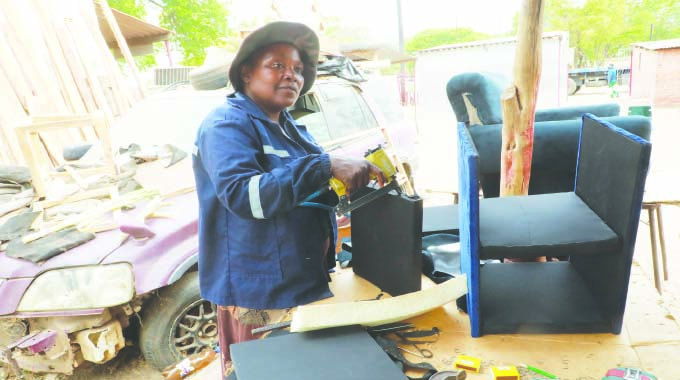
Raymond Jaravaza recently in Lupane,[email protected]
THE sprawling, immaculate homes of Johannesburg’s wealthy were Ronah Ndlovu’s workplace for more than two decades. As a domestic maid, her monthly salary — her lifeline — was dedicated entirely to sustaining her family in Lupane, Matabeleland North Province. That income was non-negotiable, ensuring her four children received an education and never went hungry. For Ndlovu, contentment lay in the simple, profound knowledge that her tireless work kept her own distant family afloat.
However, three years ago, a life-changing decision by her former employer altered the course of her life — and that of her children — forever.
“My boss was preparing to relocate to the United States and told me he wanted to empower me with a life skill so I wouldn’t have to work for anyone else again. He said that because I had worked for him and his father for many years, his family trusted me with their lives, and it would break his heart if I ended up working for someone who treated me badly,” she recalled during an interview at her workshop in Lupane.
Her employer had been researching online and found a carpentry and upholstery school offering a three-month course for R15 000. The programme included both theory and practical training, with mentorship provided by established businesses in the trade. Ndlovu initially asked for the money in cash to buy clothes and kitchenware to sell in Lupane, but her boss insisted that a life skill would serve her better in the long run.
“He was adamant that carpentry and upholstery would help me feed my family and become independent,” she said.
Despite having never handled basic tools like a hammer or handsaw — let alone power tools such as electric drills — Ndlovu found herself quickly drawn to the hands-on nature of the course.
“My classmates treated me as an equal. They expected me to do heavy lifting and operate machinery, and I found myself falling in love with the practical side of the trade,” she said.
Three months later, armed with a certificate and newfound skills, Ndlovu returned to Lupane to begin a new chapter as a professional carpenter.
“Looking back, I now understand why it’s better to teach someone how to fish than to simply give them fish. I’m forever grateful to my former boss for encouraging me to learn a life skill,” she said. “Before he left for the US, he bought me tools, and without his help, I’d probably still be in South Africa cleaning homes.”
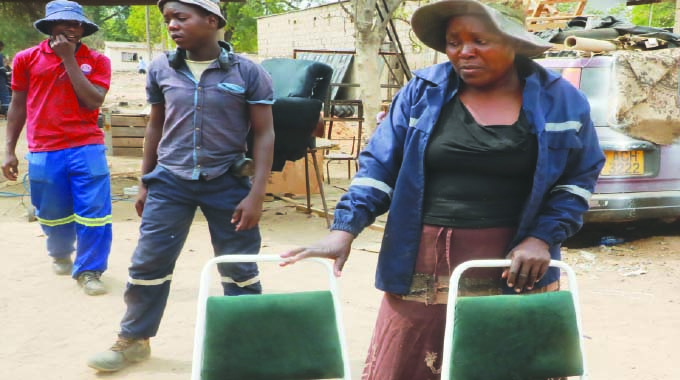
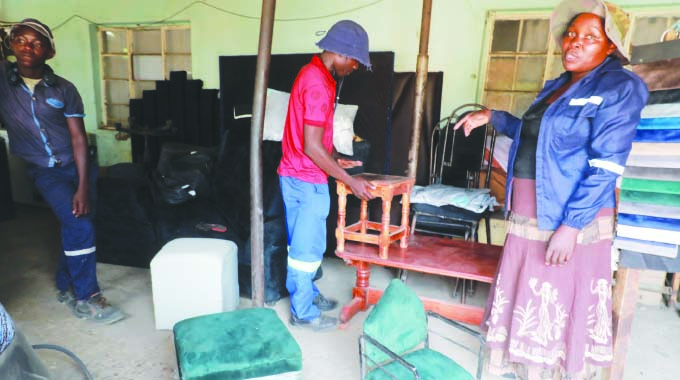
Today, she has a company that operates from the backyard of a building that houses several self-employed tradespeople, including mechanics, welders, and gas vendors. Ndlovu works alongside her two sons and a nephew, all of whom completed secondary school and chose to follow in her footsteps.
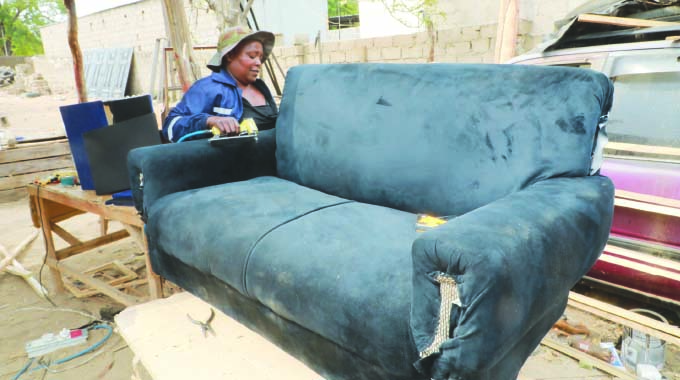
“We make sofas, headboards, chairs, and beds. The people of Lupane and surrounding areas have been very supportive, and we’ve grown steadily over the past two years,” she said.
She acknowledges the challenges of being a female entrepreneur in a male-dominated industry but believes that word-of-mouth advertising has been key to her success.
“A happy client will always tell their neighbour or relative about the good service we provided,” she said.
With Lupane Business Centre expanding and more businesses opening in the area, Ndlovu sees opportunity for growth.
“People travelling to Victoria Falls, Dete, Binga and other districts pass through Lupane. Small business owners should take advantage of this human traffic to market their services,” she said.
Her workshop has even attracted the attention of a non-governmental organisation, which has approached her to host training courses for young people.
“No job is too big for young women. By training here, we hope our story inspires girls to pursue their dreams,” she said.


