Online Reporter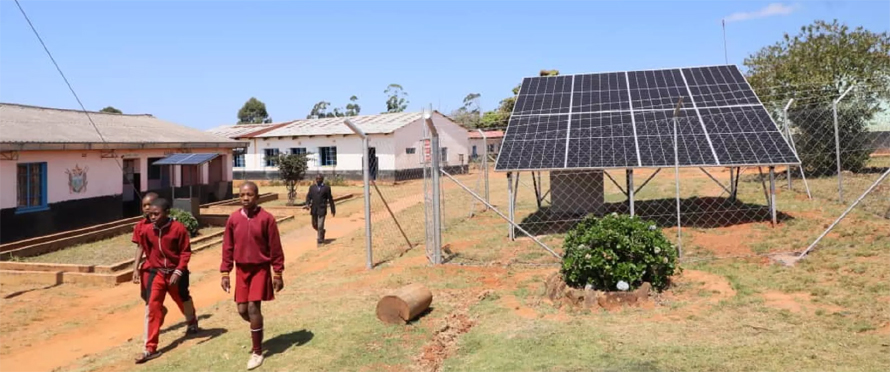
Lovemore Kadzura
Post Reporter
THE Government, private sector, and individuals have made substantial investments in energy provision, positioning Zimbabwe on the brink of achieving Sustainable Development Goal 7 (SDG 7)— universal access to affordable, reliable, sustainable, and modern energy by 2030.
This milestone was highlighted as the world commemorated the International Day of Clean Energy on January 26, under the theme: “Clean Energy for All.”
Yet, global challenges remain: according to the United Nations, 666 million people still live without electricity, most of them in sub-Saharan Africa, where many households depend on unhealthy and inefficient cooking systems.
In Zimbabwe, the Government has spearheaded rural electrification programmes targeting schools, health centres, Government offices, business hubs, and private homes.
The private sector has complemented these efforts by investing in solar energy—both for self-consumption and for feeding into the national grid. At the same time, individuals have embraced clean energy solutions, with many households installing rooftop solar systems. These combined efforts are steadily narrowing the electricity gap between rural and urban communities.
Currently, Zimbabwe’s national energy access rate stands at 62 percent, with urban areas enjoying 86 percent access compared to 37 percent in rural regions.
While this progress marks a significant step toward bridging the energy divide, continued investment and innovation are essential to ensure that every citizen benefits from affordable, reliable, and sustainable energy.
“Energy lies at the core of a double challenge, leaving no one behind and protecting the planet and clean energy is crucial to its solution. In a world grappling with climate change, clean energy plays a vital role in reducing emissions, and can also benefit communities lacking access to reliable power sources.
Still today, 666 million people live in the dark – more than 85 percent of them in Sub-Sahara Africa. The connection between clean energy, socio-economic development, and developmental sustainability is crucial in addressing issues faced by vulnerable communities worldwide. For populations without clean energy access, the lack of reliable power hinders education, healthcare and economic opportunities and many of these developing regions still rely heavily on polluting fossil fuels for their daily life, perpetuating poverty. An estimated 1,5 billion people in rural areas still use unsafe, unhealthy and inefficient cooking systems, such as burning wood or dung and the number of people without clean cooking in Sub-Saharan Africa continues to rise at a rate of 14 million people yearly because of population growth,” noted the United Nations in a statement.
Zimbabwe has a dedicated entity, the Rural Electrification Agency, which focuses on providing energy to rural areas.
The agency’s spokesperson, Mr Johanes Nyamayedenga, revealed that they have accelerated electricity installation in rural areas.
As of 2025, REA completed 312 grid projects, benefiting over 450 000 villagers across the country.
REA also commissioned 16 micro solar grids ranging from 10kW to 150kW.
Mr Nyamayedenga said in Manicaland Province, REA connected 14 primary schools last year, and 88 726 villagers from seven districts now have access to electricity following the connection of business centres, schools, clinics, and other places.
REA is also constructing biogas digesters for smart cooking, the latest being at Nzvimbe in Makoni South, to improve smart cooking and discourage villagers from cutting down trees for use as firewood.
“In Manicaland, REA has made remarkable progress in energy provision, which is uplifting the standards of living of villagers in all its districts, namely Mutare, Nyanga, Chimanimani, Mutasa, Makoni, Buhera, and Chipinge. About 14 primary and secondary schools have been connected to the national grid and solar mini-grid projects, benefiting 133 teachers and 4 344 students who are now enjoying the same educational facilities and tools as their counterparts in urban areas.
“About 88 726 villagers from all seven districts, whose communities were electrified, are enjoying improved services from their local business shops and receiving quality health services at their well-lit clinics. Other villagers have directly benefited from electricity after their homesteads were electrified, while others are using biogas energy for cooking and heating. The biogas digesters were built by REA to improve smart cooking and discourage villagers from cutting down trees for use as firewood,” he said.
Government also announced the launch of the Presidential Rural Household Solarisation Project last year, where a sum of US$433 million will be invested to electrify 1,2 million households across the country.
Each province will have 25 000 households installed with solar energy equipment worth US$360 per household.
In Manicaland, installations will be as follows – Buhera 3 791, Chimanimani 2 316, Chipinge 4 971, Makoni 4 323, Mutare 4 174, Mutasa 3 098, and Nyanga 2 328 households.
Makoni Rural District Council representative for Ward 31, Councillor Ignatius Garanewoko said the Nzvimbe project was a game changer.
“We extend our gratitude to President Mnangagwa for this initiative, which aligns with Vision 2030, the National Development Strategy (NDS2), and his commitment to leaving no one and no place behind. The community has overwhelmingly embraced the solar project, having waited for such development in the area for decades. We would have liked every homestead to be connected, but it is not possible, and to make up for that, there has been an over subscription for biogas digesters, and the current budget will cater for 30 units,” said Councillor Garanewoko.
Hwakwata Village, nestled near the Mozambican border, 60 kilometres east of Checheche Growth Point in Chipinge, now boasts of the 200KW solar mini grid containing batteries, inverter and metering system to supply 80 homesteads together with 14 shops at the business centre, clinic and a primary school.
The project has also seen the installation of 100 solar home lighting systems for the extremely vulnerable households, 90 biogas digesters for smart cooking, 30 solar community flood lights, three solar boreholes and a nutrition garden. The Government, through the Rural Electrification Fund and the United Nations Development Programme, implemented the project with financial support from the United Kingdom’s Foreign Commonwealth and Development Office. Life has been transformed for the community, now accessing potable water and electricity through solar and biogas, consistent with the Second Republic’s thrust to provide clean energy.
At national scale, Mr Nyamayedenga said REA has recorded remarkable progress in the provision of energy in rural Zimbabwe, benefiting scores of villagers, rural-based civil servants, including teachers and nurses, smallholder farmers, and students, in its efforts to provide clean energy and drive the Government’s vision of an upper-middle-income society by 2030.
“From January 2025 to December 2025, REA completed 312 grid projects, including schools, clinics, Government sub-offices, irrigation schemes, small-scale farms, and village homesteads, among others. The electrification programme has resulted in 457 001 villagers having access to electricity, with 13 732 students attending electrified schools and 998 teachers enjoying the comfort of clean energy.
“In addition to grid projects, REA has installed and commissioned 16 solar micro-grid systems ranging from 10kW to 20kW, and seven community solar mini-grids with a capacity of 60kW upto 200kW.
Some of the completed solar projects include the Soti-Source (120kW) in Gutu, Masvingo, 120kW Dete in Hurungwe District, and Gandavaroyi (96kW) in Gokwe North, Midlands, the 150kW solar mini-grid in Nzvimbe Village, Makoni District, among others. To support national clean cooking targets and contribute to sustainable waste management and cost-effective energy, REA has built eight institutional digesters ranging from 50m³ to 100m³ at major rural facilities, such as the ZPCS Ndabazinduna in Matabeleland North and Mogenster Mission Hospital in Masvingo. This is in addition to 106 domestic biogas digesters, also built across the country for mainly vulnerable villagers.
“The beneficiary population is expected to rise by the end of December this year when 101 projects which are under implementation and at various stages of completion are connected to the national grid or solar mini grids. REA is firmly positioning itself as a key driver of Vision 2030 and firmly championing President E.D Mnangagwa’s mantra of living no one and no place,” said Mr Nyamyedenga.