Vusumuzi Dube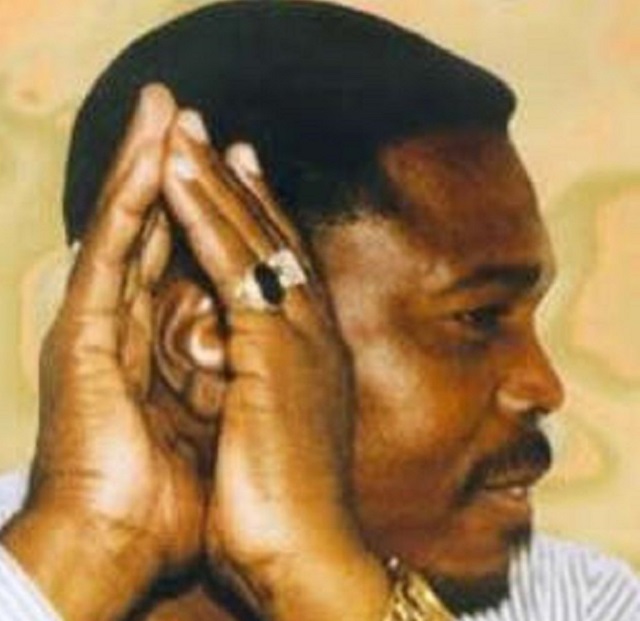
Bruce Ndlovu ,Sunday Life Reporter
“How else would a little child, born in a mud-hut kitchen, growing up in a remote village, come to success? Unless your name is Tymon Mabaleka?”
This is the question posed by Zwelihle Mabaleka, the son of the late Tymon Mabaleka in a documentary exploring his life and career. Titled A Man of all Seasons, the documentary takes a bird’s eye view of the life of a man whose actions and deeds defy belief. The documentary, whose preview premiered last week, is set to make its debut in October.
Indeed, when he was born in that mud hut in Nswazi in Umzingwane District, Matabeleland South province, Tymon’s mother, fresh from labour, would have blinked in surprised disbelief if she was told that not only had she given birth to a future football superstar, but also to a man who would go on to become arguably the country’s greatest music producer.
Sure, footballers, drunk off fame from dizzying football arenas, have been known to find themselves in the studio, suddenly fancying themselves as decent musician despite little evidence suggesting that they can excel there. However, it usually does not take long before the complexity of composing music knocks some soberness back into them, as they discover that, despite their god-like stature on the field, in the studio they are mere mortals.
Mabaleka however, was different. Not only did he excel in football, becoming a legendary figure at Highlanders and representing his country on the international stage, but also becoming a self-taught super producer whose names features heavily on some of the greatest ever songs made in Zimbabwe.

Lovemore Majaivana, John Chibadura, Simon Chimbetu, Oliver Mtukudzi, Ilanga and Leornard Zhakata are just some of the few musicians who credit Mabaleka for steering them towards hit songs that defined their careers.
While the names of the artistes might change, Tymon was the one constant, weaving melody, sang in various tongues, into a unique tapestry which lays bare the country’s rich musical heritage.
Zuva Rekufa Kwangu – John Chibadura
In the doccie, A Man of All Season, filmmaker Andy Kershaw says that Mabaleka should be rightfully called the godfather of sungura and it is not hard to see why. Mabaleka was, after all, the man who noticed the talent of the man the Sungura Boys had only initially employed as a backup dancer, John Chibadura.
Long before he became Mr Chitungwiza, Mabaleka was fighting in Chibadura’s corner, battling to get studio time for him at a time when members of the band felt that he would steal the spotlight from them if they gave him the light of day.
“Once he was established with them, he became the main singer because he had a voice. Once I discovered he could sing, I said I want him to be your singer but they didn’t want that so they resisted because they knew he was going to take over the band. So, they didn’t want him to compose until he recorded his first single,” Mabaleka said.
The song Zuva Rekufa Kwangu, which lays bare the anxiety and fears of a man fearful of what might follow in case of his untimely demise, was testament to Mabaleka’s Midas touch in the studio. Veering somewhere between sungura and reggae, the song is an apt illustration of musical mind that never allowed itself to be confined by genre.
So influential was Mabaleka in the making of the song that Chibadura did not get to hear some elements he had added until after the song was released.
“When it comes to sungura, Tymon revolutionised it, he changed it,” said Mabaleka’s nephew, Dr Sifiso Falala. “He took it to a whole new level that people hadn’t related to before and one of the songs that stands out was Zuva Rekufa Kwangu.
That song was almost like a reggae song while it had the local beats that captivated the spirit and essence of sungura music, it was also different. It sounded like half a genre different from the normal genres and it was a huge, huge hit. When you went around record bars, it was starting in one record bar and finishing in another.
I think he always was someone that was transitional, changing music and making sure that it was up to do and for sungura, he should be regarded as the foremost person who took it from a level where it was to where it found itself during its peak.”
True Love – Ilanga
When people speak of Ilanga, they usually talk of a group whose flame burnt so bright such that when it exploded, its little fragments went on to illuminate little corners of the music world wherever they landed. Busi Ncube, Cde Chinx, Andy Brown, Don Phiri and others went on to be illustrious names in their own right. Little mention is made however, of Mabaleka, the man whose task was to make sure all those strong voices were singing all together in harmony from one hymn book.

With so many young musicians on the cusp of superstardom, the group could have easily have easily lost its way as ego and pride sowed seeds of discord. In the end, perhaps it did happen, but before that, they gave Zimbabwe True Love, a timeless classic which undeniable quality continues to defy time.
Unknown to many, the song was a labour of love, with Mabaleka recording it multiple times before nailing down the version that would titillate Zimbabwean ears for decades.
“I used to listen to songs with him before they went people, before people knew about them so I developed an ear for music,” said Dr Falala. “He would tell me that sometimes he recorded a section of a song three times. There was a popular song that he recorded with Ilanga, called True Love. It was a popular song but people wouldn’t know that certain sections of the song were recorded three times because of the strength of the voice of Busi. I think Busi was the lead singer at the time.”
Ngivulele Amathamsanqa – Lovemore Majaivana
Mabaleka has been rightfully credited as the man who somehow managed to convince Majaivana to get back into the studio and record Sono Sami, a faultless album that spoke of his growing frustration and heartbreak at the fact that he did not seem any closer to getting the recognition he craved at home
As far as swansongs go, Sono Sami is a masterpiece, giving a bittersweet reminder that when Majaivana packed his bags and left, he seemed to be entering his musical prime. His is the story of a giant cut down before his time.
However, Mabaleka is unique in that he not only produced Majaivana’s goodbye, but also the song that introduced Majaivana to a lot of Zimbabweans. It is a song the one-time school dropout, credited as his favourite in one interview.
“The song that opened doors for me, which will remain my favourite song, is a song called Amathamsanqa Ngivulele. It was talking about me not having done well at school, wanting to buy a car, wanting to buy a house, better my life. I just went and sang that and that song sold well. In fact, I would love to say I went and bought a house through the sales that I made. Well, you would say that this means that I made millions, no. Houses at that time did not cost much so it will remain the song that touches my heart,” Majaivana said.
Mugove – Leonard Zhakata
Before YouTube, before iTunes or any streaming services, buying a song meant making time to go to a record store and parting with your hard cash if one wanted to listen to their favourite track at their pleasure. Before songs were only a click away, the process of acquiring music for personal use was as cumbersome as it was it was rewarding.
Yet, in the ten days after the release of Mugove, at least a 100 000 people made the trek to their local record shop as they purchased a song that went on break various commercial records in the country.

However, if it was not for Mabaleka’s ability to harness talent, that song might not have come into being. After all, when Zhakata went to Mabaleka in 1994, he was a frustrated artiste at war with his own record label. As soon as Mabaleka got his hands on him, his changed forever.
“We met in 1987. I gave him (Mabaleka) my demo cassettes,” said Zhakata. “Back then we used to go to the recording companies for auditions. Sometimes you would use cassettes and sometimes you would go in the studio, record, listen and see if it is worth releasing. Before he gave me a response, we got a response from Gramma Records. So, our first recordings were with Gramma in 1988, all the way until 1994.
I had recorded some albums before that, two albums with Gramma Records. Then the third one, we had some problems with the company and they didn’t release my stuff. I started looking for mudhara.
“He was always welcoming and when I met him, I said I have recorded some stuff but they are not releasing me and he said if you pay them and I give you the masters, I will help you. I paid and they gave me my masters which I gave to Mudhara MaB (Mabaleka) and in less than two weeks, they music I had worked on for two years and was not released, was out in two weeks. Anyone that knows anything about me knows that my life changed in 1994 from then on, it was hit after hit.”


 Online Reporter