peter
peter
Judith Phiri, Business Reporter
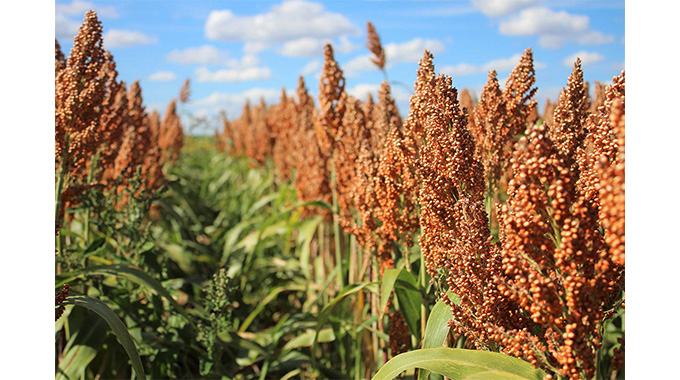
VILLAGERS in Gungwe Village of Gwanda District in Matabeleland South Province have found comfort in traditional grains as they have embraced agro-ecological farming practices with plans underway to increase sorghum hectarage in the 2023/2024 cropping season.
By dictates of natural geography Gungwe Village which is located in the southern part of Gwanda District lies in Region 5 which is a low rainfall area commonly characterised by long droughts.
Dry land cropping has always been a challenge in the area, while the rainfall patterns for Gungwe Village in the past three cropping seasons starting with 2018/2019 was 371mm, 627mm and 203mm, a confirmation that rain-fed cropping activities could not thrive.
A farmer, Ms Trezia Ncube said in an interview, the area had an average maize yield of 0.1 tonne per hectare with records of maize crop write-offs in other years owing to the low drought tolerance capacity of maize.
“Growing maize here does not help much as we do not have enough rainfall to support meaningful maize production.
“Maize is always a failure due to droughts. We are happy we have discovered our agricultural comfort in sorghum as we are now growing the crop on a large scale,” she said.
Ms Ncube is part of 18 farmers who mobilised themselves and formed the Asibambaneni group and grew an average of one hectare of sorghum each using composted livestock manure or other composts in the 2022/2023 cropping season.
She said they secured enough sorghum grain to take their families throughout the year, after getting assistance from Government extension workers and the Enhanced Resilience for Vulnerable Households in Zimbabwe (ERVHIZ) project that strengthened their knowledge and practice in manures and composts as cheaper fertiliser alternatives.
In the season 2021/2022, the ERVHIZ project mobilised farmers in Gwanda to increase hectarage of sorghum and to motivate farmers with 5 500 farmers each supported with a packet of 5kg seed. Farmers were also trained to use local resources to make low-cost fertilisers to support their sorghum crops.
“The training assisted us as farmers to produce and utilise organic fertilisers in the range of composted livestock manure, thermal compost, vermi-compost and boccashi among others.
“Other complementary trainings that were offered include seed management to ensure continuous availability of sorghum seed and soil water conservation in crop fields to adapt to droughts and low rainfall,” said Ms Ncube.
She said the programme also distributed a total of five threshers in Gwanda to reduce labour in processing sorghum after harvesting.
Ms Ncube said sorghum yields for farmers in their group ranged from 1,5 to 2 tonnes per hectare compared to 0,4 tonnes per hectare before the use of composts and soil water conservation.
Other farmers outside Asibambaneni group grew sorghum on areas between 0,5 hectare to 1 hectare with yields ranging from 0,8 to 1,5 tonnes per hectare.
Ms Ncube said threshers were making life easier for women farmers who occupy 75 percent of the number of farmers who are in sorghum production as most participating households were women-headed.
“Women are over loaded with other workloads mainly house chores hence these threshers provided a cushion on hard labour which these women would be involved for threshing of sorghum if such threshing would be done manually.
“The thresher service has motivated and empowered many women who are now planning to increase sorghum hectarage in the coming season (2023/2024).”


 Online Reporter