Chronicle Editor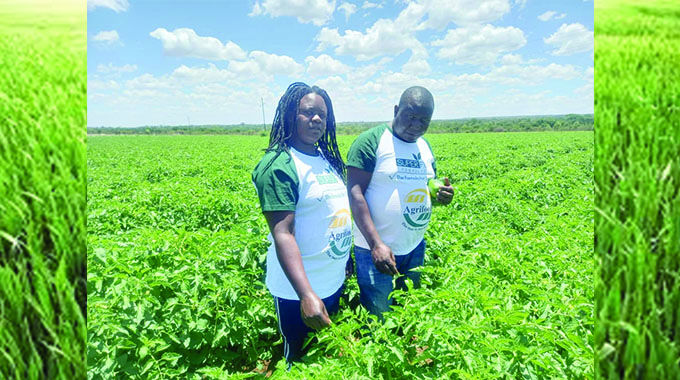
Patrick Chitumba, [email protected]
ALFONSI FUNGURA (37), a school dropout, who began selling vegetables at the Kudzanayi Long Distance Bus Terminus in Gweru, believed for many years that he had found his “dream” career.
Alfonsi, better known by his totem Nyati, grew up in rural Chivhu and attended primary school there from first to seventh grade.
He later moved to Gweru and enrolled at Nashville High School to complete his secondary education. However, he left school before completing his O-levels since his sponsor was unable to cover his tuition and test expenses.
“In 2004 after dropping out of school and facing challenges in terms of accommodation, I joined other vendors selling fruits and vegetables in and around Kudzanayi Long Distance bus terminus in Gweru. At first I did it to get by so that I could fend for myself, then I started enjoying it and thought that life was good actually,” he chuckled.
“I met my wife Chipo while vending and we joined forces. We would travel as far as Harare looking for fruits and vegetables and that is when we noticed that there was a gap in terms of supplying those commodities because at times we would fail to get them and at times we would be overpriced.”
As they visited farms in search of fresh vegetables, according to Alfonsi, he began to like the notion of being a farmer.
“With Chipo, I realised that I could start growing vegetables and it was easy because I had learnt agriculture at school. We learnt which vegetables would provide the best profits, how to prepare the land for planting using manure pits, and practical tips including how much space to leave between plants and the benefits of pruning for example tomatoes,” he said.

Alfonsi is now leasing part of Stafford Shire Farm in Gweru. The farm is now thriving and is filled with potatoes, tomatoes, cucumbers, onions, maize and green pepper.
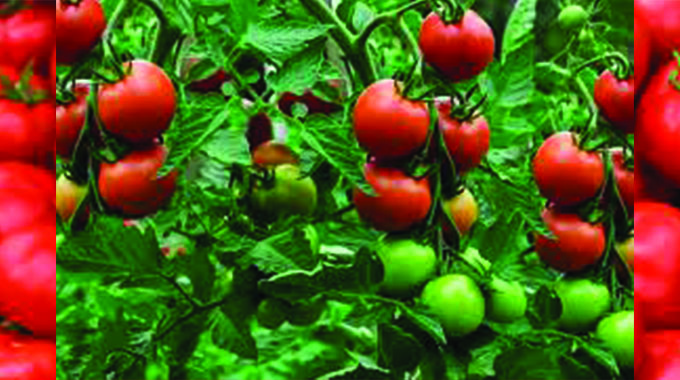
When Chronicle arrived at the farm, some of the employees were busy spraying the metre-long tomato crops sitting on six hectares. Alfonsi said farming during the rainy season is very demanding in terms of chemicals adding that routine anti-fungal sprays are a must.
“I believe in the small way we are contributing to national food security and employment creation. I now employ 25 workers who have their families meaning we are contributing to socio-economic development of the community,” he said.
Alfonsi argued that it is crucial to invest in agricultural intensification in urban areas. He claimed that co-operating with agronomists had helped him obtain crop kinds with excellent returns, which adds to his income.
“Space is limited and production has to be maximised. This means ensuring a year-round source of water. That is why we drilled three boreholes to make them five. The good thing is that we have power these days with no interruptions. So we are not using diesel,” he said.
Chipo said vegetables are in high demand in and around Gweru as evidenced by the high returns they are getting from farming. Life has improved dramatically for the family, Chipo said, adding that they moved to the farm in 2019.
“Since we started farming here, my family can now have three meals a day compared to before when we could go hungry at times. We have managed to buy a 10 tonne truck and a GD6 vehicle. We are building our dream house and our three children are all in good schools and all thanks to proceeds from farming,” she said.
Alfonsi and Chipo are keen to expand production and invest in additional motorised pumps and drip irrigation but the only challenge they have is land.
“We don’t have our own land. Imagine if this was ours, we would do wonders. We are using five boreholes for irrigating the crops. The secret we have is to have something going to the market everyday so that we rack in money. If it’s not the tomatoes, it’s the cucumber, the onions, the maize meal or potatoes and we want to be growing something every day,” she said.
The couple is also working with seed companies such as Syngenta for quality seeds and advice of proper farming to maximise on profit.
Selina Hatidani Sakupwanya, field promoter for Syngenta in the Midlands Province said Alfonsi and Chipo are embracing the use of hybrids and new varieties that have higher returns.
“As Syngenta we come in with technical expertise as we are a seed and chemical company. Very soon we are going to hold a tomato production field school so that we teach on good varietal choice as well as good agronomic practices at this farm because they are excelling,” she said.
Sakupwanya said Alfonsi and Chipo have been very welcoming and eager to learn.
“For Syngenta it’s a motivational story that Nyati started as a tomato seller at Kudzanayi Long Distance bus terminus and he decided to be a producer himself. It’s touching that all this commercial production of ensuring the food security of our nation is being done by someone who is renting yet some farmers who benefited from the land redistribution programme are sitting on idle land,” she said.
To make farming a business, Sakupwanya urged small, medium and commercial farmers to engage and work with agronomists to get free expertise.
“At Syngenta, we have a vegetable business unit that collaborates with the crop protection department in ensuring that chemical use and handling is done well by every farmer,” she said.



 Online Reporter