

 Online Reporter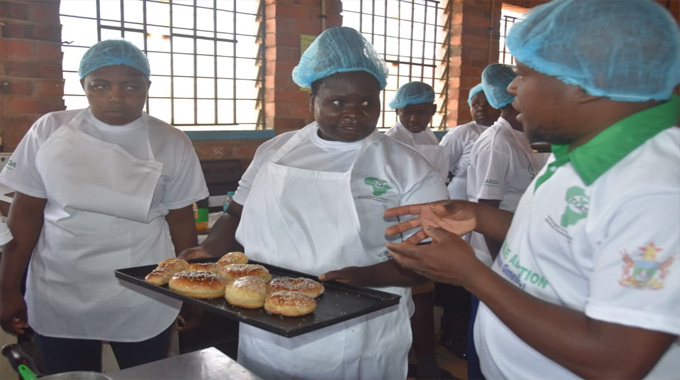
Theseus Shambare, Features Writer
THEY used to wait. Wait for husbands to bring money from the mines. Wait for rains that came late — or never. Wait for food that ran out before the month was done. Then they discovered the chameleon — a grain that changes colour, shape and purpose. It can be sadza/isitshwala, bread, or even pizza topped with madora/amacimbi.
In Muunganirwa, wheat is more than food — it is dignity. It is peace in homes. It is power in women’s hands.
From gardens to equality
In the heart of Musana, near Bindura, lies the Muunganirwa–Chakona Irrigation Scheme. For decades, it was known mainly for market gardening and a small fish project powered by spring water.
But with support from the Technologies for African Agricultural Transformation (TAAT) wheat value-addition programme under the African Development Bank’s Feed Africa Strategy, women farmers are reimagining wheat — transforming it from grain into a tool for empowerment.
Ms Nyembesi Chakona, a mother and TAAT participant, beams as she recalls her first attempt at baking wheat products.
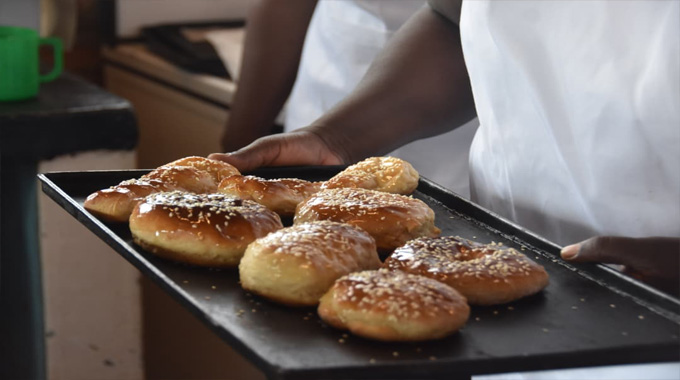
“Before, we sold a bucket of wheat for just US$5. Now, after baking or processing, the same wheat can bring over US$50. We even make madora/amacimbi cake and madora/amacimbi pizza — things no one imagined before. Wheat has given us dignity,” she said.
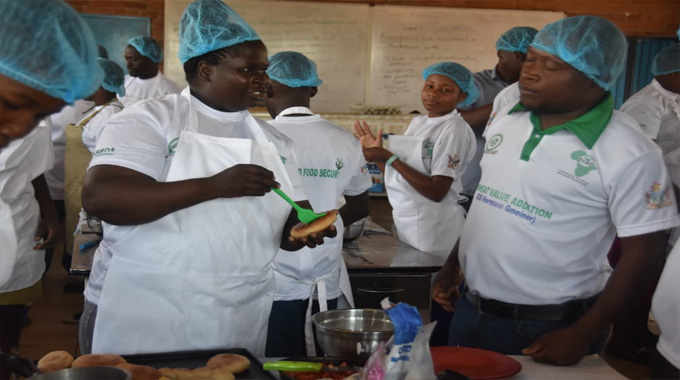
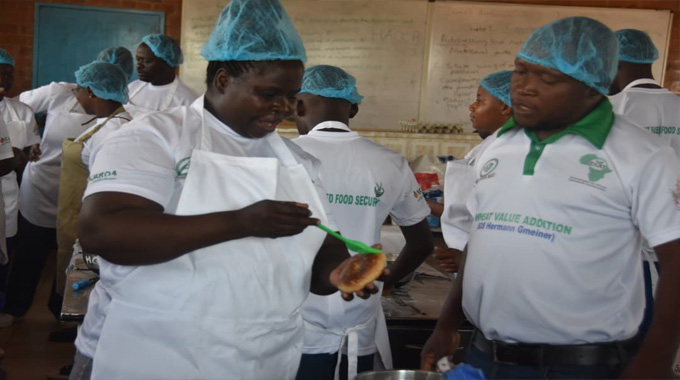
Through TAAT, women were trained in elite recipes and value addition, learning to turn raw wheat into high-value snacks, bread and traditional meals fused with modern techniques.
This training has multiplied household incomes, provided marketable skills and shifted the perception of women from passive helpers to economic leaders.
Bread and peace
Zimbabwe requires about 360 000 tonnes of wheat annually, according to official estimates. Recent harvests have surpassed this benchmark. In 2023, the winter wheat campaign delivered over 465 000 tonnes, marking a historic milestone — transforming Zimbabwe from a perennial wheat importer into a self-sufficient producer with a modest surplus.
For the women of Muunganirwa, this surplus is not just national pride. It is a lifeline against climate shocks, including El Niño-induced droughts that have left maize fields barren.
“When maize failed during the drought, wheat became our sadza (isitshwala), our bread, even our maheu. Our children never went hungry and no malnutrition was recorded in our community,” explained Ms Sandra Mashinge, a mother of four.
Wheat’s adaptability — grown in both summer and winter, with new varieties such as Save — has earned it the nickname “chameleon”. Its versatility has allowed women to safeguard family nutrition even in years of poor rainfall.
“Some people do not like white sadza,” said Ms Missie Hwide, a mother of five. “But with wheat, we are eating nutrition-rich food. Our children are stronger, and we the mothers are stronger too.”
Health officials in Bindura confirm that in Muunganirwa, no major cases of child stunting or severe malnutrition have been reported in the past two years — in contrast to the national average of 23 percent stunting, according to Unicef.
The gender dividend
The Muunganirwa–Chakona scheme sits in a region where many men work in mining, leaving women idle at home. This economic dependency, compounded by cultural and religious norms that discouraged women from earning, has long fuelled gender-based violence (GBV). Now, wheat is changing that dynamic.
“We are no longer waiting for our husbands’ mining money,” Ms Hwide explained. “Women are doing mikando (rotational savings groups), buying chickens and goats. With our own income, we reduce fights at home. Wheat has brought peace and food at the same time.”
Studies in Zimbabwe have consistently shown a strong link between women’s economic empowerment and a reduction in gender-based violence.
Research by Bengesai and Derera (2021) found that women with greater control over income, mobility, and decision-making were significantly less likely to experience emotional or physical violence.
Similarly, a Bindura University case study titled “Gender-Based Violence: A Case Study of Bindura Urban, Zimbabwe” by Jeffrey Kurebwa highlighted that lack of economic independence was a key driver of intimate partner violence in mining communities, where women often relied on men’s wages.
These findings resonate in Muunganirwa, where women’s new income streams from wheat have translated into fewer conflicts at home and stronger bargaining power within families.
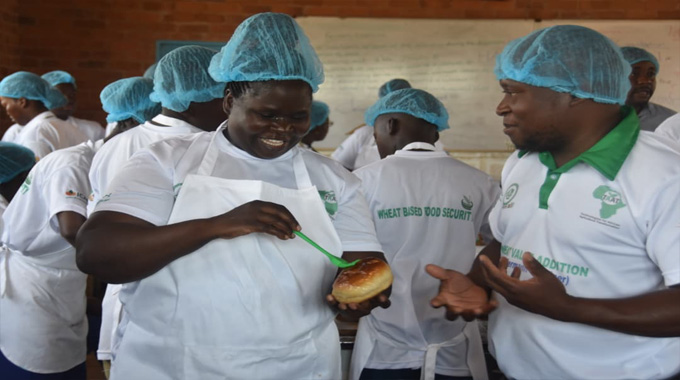
Muunganirwa’s women reflect these findings in lived experience, showing that income generation and nutrition security can be powerful levers for gender equality.
Through revolving funds, each woman now owns small livestock — goats, chickens and pigs — complementing the food and income from wheat and further enhancing household resilience.
For 14-year-old Rumbidzai Mashinge, Sandra’s daughter, the changes are visible at home.
“Now, my mother pays my school fees on time. She even bought me a uniform and shoes without asking my father. I want to be like her — to work for myself,” she said shyly.
Even men acknowledge the transformation. Village head Tawanda Mutyavaviri admitted that women now “carry households”.
“At first, we thought this wheat baking project was just kitchen work. But now, we see that women are buying goats and even sending children to school. It has brought stability to families,” he said.
From waiting to leading
The women have not just grown wheat; they have reimagined it. Value-addition training has equipped them to produce baked snacks, traditional delicacies and even modern recipes blending local ingredients like madora with wheat.
“Instead of selling raw wheat for a few dollars, we now earn US$50 or more,” Ms Chakona repeated with conviction. “It has given us independence, respect and hope.”
Wheat products from Muunganirwa now reach Bindura’s growing consumer market, where demand for processed wheat-based snacks and foods continues to rise.
Mr Jairos Masawi, a wheat breeder at the Crop Breeding Institute (CBI), highlighted the importance of targeting women.
“We deliberately focus on women because they manage households. Training a woman changes the nutrition, income and overall well-being of an entire community. Women constitute the greater portion of the population and it is key we include them in these programmes,” he said.
This aligns with Zimbabwe’s broader goals of Vision 2030, food self-sufficiency and inclusive development under the principle of “leaving no one behind.”
As Women’s Affairs, Community, Small and Medium Enterprises Development Minister Monica Mutsvangwa often emphasises:
“From the trenches of the liberation war to the kitchen, women are the backbone of any revolution that Zimbabwe takes. You cannot talk of food security excluding those who put the food on the table. Women must be at the centre.”
A recipe for equality
The impact of wheat extends far beyond nutrition and income. For the women of Muunga nirwa, it has reshaped social dynamics, granting them voice and visibility in communities where their roles were once limited.
“Before, women had no say in family finances,” Ms Hwide recalled. “Now, we decide how to spend, what to sell and what to keep for home use. Wheat gave us the confidence to stand tall.”
The scheme also addresses broader societal challenges: nutritional deficiencies, child malnutrition, and unemployment among women.
With no reported cases of malnutrition in their families, these women exemplify how gender-focused agricultural interventions can deliver measurable outcomes.
Harvesting equality
In Muunganirwa, wheat is no longer just a crop. It is a metaphor for resilience, a tool for empowerment, and a lifeline against hunger and inequality.
Each loaf of bread, each bucket of processed wheat, each goat bought with mikando funds tells a story of courage, ingenuity, and transformation.
Where women once waited, now they lead. Where homes were once hungry and dependent, now they thrive.
And in every field irrigated by spring water, in every recipe that blends tradition with innovation, the women of Muunganirwa are showing Zimbabwe — and the world — that gender equality can be cultivated, irrigated and harvested, one field at a time.



 derick.khumalo