Online Reporter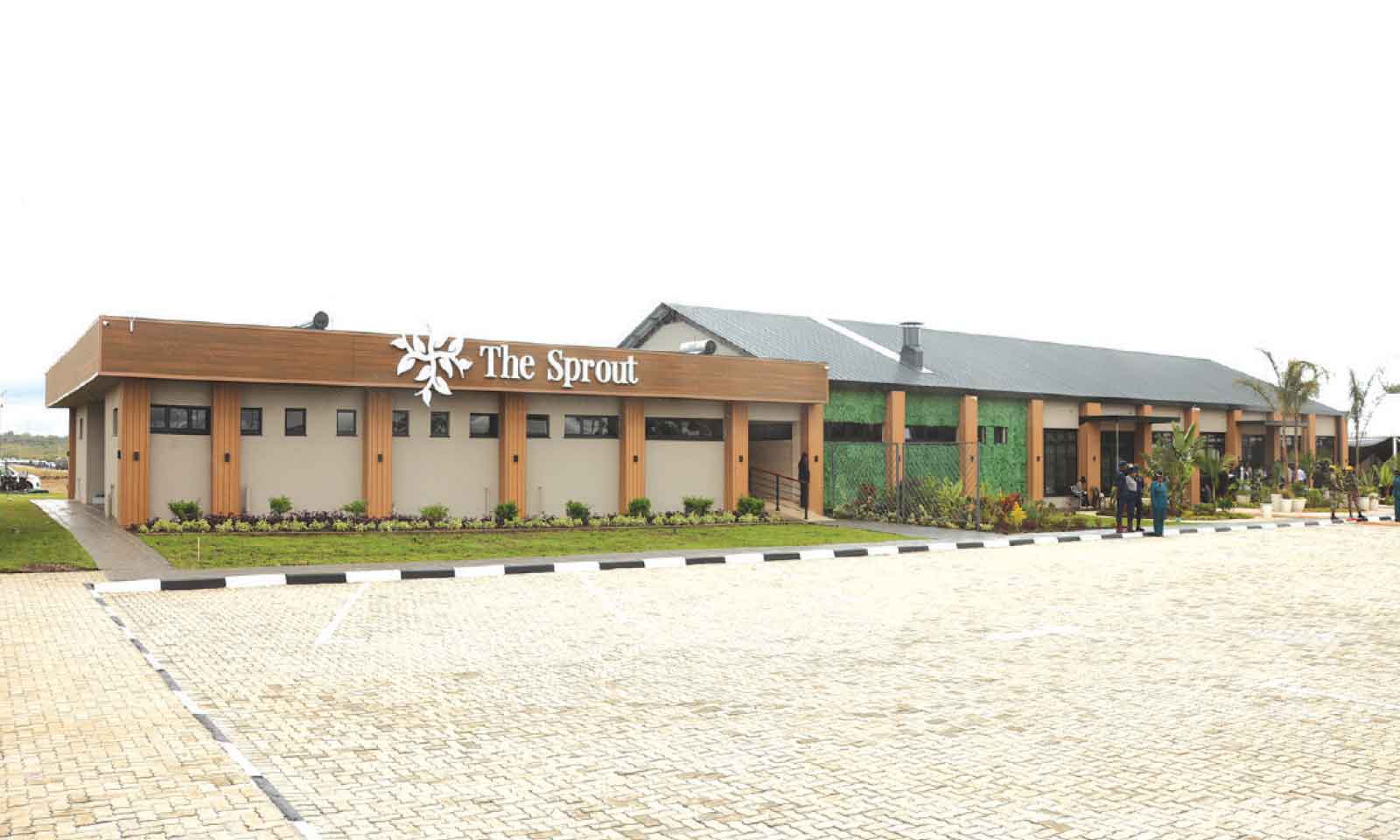
Harmony Agere
On what was once a landscape defined by smoke, stench and smouldering waste, a new story is being written—one plated with ambition, innovation and national pride.
At the heart of the Geo Pomona Waste Management waste‑to‑energy project now stands The Sprout, a state‑of‑the‑art restaurant that is fast becoming a symbol of environmental and diplomatic tourism.
Where fires once flickered across mounds of refuse, fine dining now unfolds in an atmosphere of modern elegance.
Officially opened by President Mnangagwa during a Presidential luncheon held at the Geo Pomona Waste Management facilities on Thursday, the restaurant is more than a hospitality facility. It is, in his words, a reflection of a broader national vision.
“This restaurant speaks volumes about Geo‑Pomona as a trailblazing company,” said the President. “The facelift and infrastructure constructed here stand as an example of our national development philosophy: ‘Nyika inovakwa, inotongwa, inonamatigwa nevene vayo.’”
A site reimagined
Not long ago, the Pomona dumpsite was synonymous with environmental decay—an open landfill plagued by persistent fires, hazardous fumes and uncontrolled waste.
Today, it is an engineered waste‑to‑energy ecosystem. The transformation has included the installation of modern waste‑sorting systems, landfill engineering, methane‑capture infrastructure, and the ongoing construction of power‑generation units.
And the numbers tell their own story.
From just six employees in 2022 to well over 1 200 today, the project has grown into a major employment hub, uplifting surrounding communities and anchoring the emerging Pomona Industrial Development Corridor.
The Sprout: Dining at the edge of innovation
Set within this evolving industrial ecosystem, The Sprout offers more than cuisine—it offers perspective.
With its contemporary architecture and panoramic views of a rehabilitated landscape, the restaurant provides one of the country’s most unique dining experiences. President Mnangagwa described it as “a symbol of progress” that adds “another feather in the cap of our well‑performing tourism and hospitality industry.”
Geo Pomona Waste Management chief executive officer and Executive Chairman Dr Dilesh Nguwaya recently told journalists that the restaurant plays several important roles.
“Yes, this might be a waste‑recycling facility, but the restaurant plays a very important role,” he said.
“The model and the technology we have here have generated a lot of interest from inside Zimbabwe and abroad.
“This facility is therefore important in the sense that sometimes we are receiving diplomats and potential partners, and they will need a place to rest, refresh and dine.
“But it is also part of our corporate social responsibility because this facility is open to the community, together with the sporting facilities.”
The restaurant, Dr Nguwaya added, is part of efforts to establish a modern and complete waste‑recycling facility, which is already being touted as one of the best in Africa.
A model for the nation
Beyond celebration, the President issued a clear challenge: to “replicate this success” across the country.
“I look forward to witnessing broader inclusivity such that other local authorities benefit from the model we are witnessing,” he said.
Already, several municipalities across Zimbabwe—including Bulawayo, Mutare and Gweru—have expressed interest in exploring similar partnerships with Geo Pomona Waste Management, seeking to modernise their own waste‑management systems while unlocking economic value.
Leadership and vision
At the centre of this transformation is Dr Nguwaya, whose vision has been to redefine waste management as a driver of economic growth rather than a municipal burden.
Working alongside the City of Harare and the Government, the company has positioned the Pomona site as a benchmark not only for Zimbabwe but for the region.
Tourism and Hospitality Industry Minister Barbara Rwodzi has also highlighted the site’s growing appeal, noting its role in diversifying Zimbabwe’s tourism offering through industrial and environmental tourism experiences.
“The facility itself is actually a tourism site. It’s a tourism destination,” she said. She noted that the integration of leisure, business and environmental management aligns with global tourism trends promoted by UN Tourism.
A global point of interest
The transformation has not gone unnoticed beyond Zimbabwe’s borders. Delegations from across Africa, Europe and Asia have visited or expressed interest in the project, exploring opportunities for replication and investment. The site is increasingly becoming a hub for diplomatic engagement, technical exchange and sustainable‑development dialogue.
From a former dumpsite to a showcase of modern engineering and hospitality, Pomona now stands as a living demonstration of what is possible when innovation meets intent.
A new narrative
As diners gather at The Sprout—sharing meals where waste once lay—it becomes clear that this is more than a restaurant. It is a statement.
A statement that development can be bold. That transformation can be tangible. And that even the most unlikely places can bloom.
Or, as the President aptly summed it up while declaring the facility open:
“This is yet another aspect of the unfolding success story of Geo‑Pomona.”
From ashes to ambience, Pomona has indeed turned a page—and The Sprout is its most visible chapter yet.