

 Online Reporter
Marshall Ndlela
If migration helped build South Africa’s economy, the country’s repeated attacks on African migrants remain one of the most difficult contradictions of the democratic era. Since 1994, waves of violence targeting foreign nationals have erupted in several provinces. The attacks have led to deaths, injuries, the displacement of families, and the destruction of homes, businesses and livelihoods.
These incidents are often described in public as xenophobia. However, many researchers now argue that the term Afrophobia is more accurate for South Africa. The violence has mostly targeted Black African migrants from other African countries, rather than foreigners in general. That distinction matters because it changes the conversation. It moves the focus from a general dislike of outsiders to the specific tensions between South Africans and other Africans living and working in the country.
The biggest outbreaks were in 2008, 2015 and 2019. There have also been more recent incidents linked to anti-immigration campaigns and community protests. The people most affected have come from Zimbabwe, Mozambique, Malawi, Nigeria, Somalia, Ethiopia and the Democratic Republic of Congo. In some cases, Asian-owned shops in townships have also been targeted, especially in the informal retail sector.
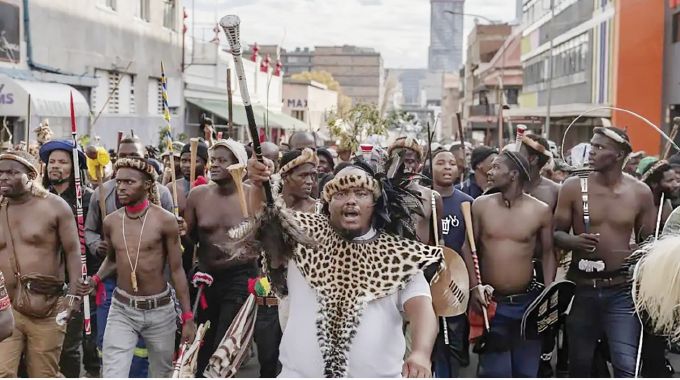
Beyond the immediate harm to people, these attacks have damaged social cohesion. They have disrupted township economies and caused diplomatic concern across the continent. Images of violence against African migrants have appeared repeatedly in African and international media. That coverage has created a sense that South Africa’s long-standing idea of Pan-African solidarity is under strain.
These events have happened during a long period of economic difficulty. For more than ten years South Africa has faced slow economic growth, very high unemployment, rising inequality, weak municipalities, failing infrastructure, electricity cuts, problems in transport and logistics, and growing public debt. The Covid-19 pandemic made these problems worse. At the same time, crime remains high. Violent crime and organised crime put pressure on a criminal justice system that is already stretched.
Several commissions of inquiry have looked into how the state was weakened over the years. The Judicial Commission of Inquiry into Allegations of State Capture, chaired by Chief Justice Raymond Zondo, found that corruption, bad procurement and governance failures damaged public institutions and public trust, and slowed economic growth.
Economists and governance researchers have argued that state capture reduced investor confidence and service delivery, and left fewer resources for development that includes everyone.
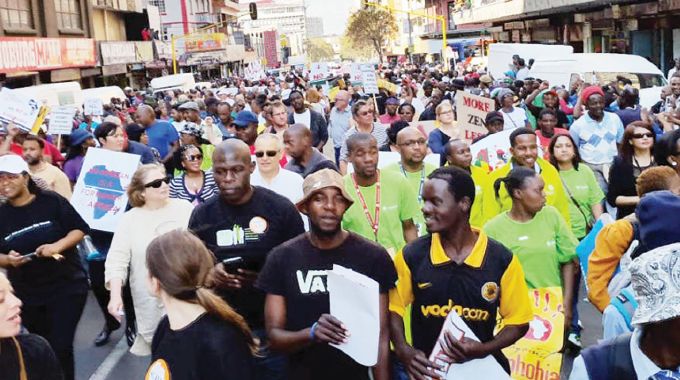
In this environment, competition for jobs, housing, municipal services and space to trade informally has become more intense. Researchers say that when opportunities are scarce, social tensions often rise as groups compete for limited resources.
Many scholars argue that this broader political and economic situation, not migration alone, helps explain why anti-migrant mobilisation keeps recurring.
Youth unemployment in particular remains a major challenge. In many townships and informal settlements, frustration over joblessness, poverty, crime and poor services has created space for political messages that point to migrants as competitors for work, housing and business opportunities. Migrants are visible in these spaces, and that visibility makes them an easy target when people are angry.
Recent academic work has also looked at the role of governance. Professors Loren Landau and Jean Pierre Misago from the University of the Witwatersrand argue that these attacks cannot be understood only as spontaneous community anger.
They suggest that repeated episodes have sometimes been made possible by weak law enforcement, a lack of consistent accountability, and the way local political actors, vigilante groups and criminals sometimes use public frustration for their own purposes.
The South African state has repeatedly condemned the violence and has affirmed that the Constitution protects everyone within the country’s borders. At the same time, the failure to prevent some attacks and to secure convictions has led some members of the public, civil society groups and neighbouring countries to feel that such violence can happen with few consequences.
Researchers warn that this perception risks making periodic violence seem like a way to settle local grievances. These are scholarly interpretations and not court findings, but they are part of the public debate.
Studies from the University of Cape Town and other institutions make a similar point. They argue that the violence should not be seen only as isolated crime or sudden public anger. It is also a political and economic issue shaped by unemployment, inequality, poverty, weak local government, social exclusion and political mobilisation.
These studies also caution against blaming migration for all of South Africa’s economic problems. The country’s low growth, governance failures and corruption existed before many of the recent migration debates. They have on their own limited job creation and economic expansion.
In that context, migrants can become scapegoats for problems that have much deeper causes.
Migration has also become a central issue in politics. Public concern about undocumented migration, organised crime and pressure on municipal services is now a regular part of political discussion. Some civic organisations, community movements and political parties have made immigration a key campaign issue. They argue that stricter border control is needed to restore confidence and protect scarce opportunities.
On the other side, constitutional lawyers and human rights organisations say that it is possible to talk about migration management without blaming or attacking people because of their nationality or ethnicity.
The result has been a national conversation that is increasingly divided. Migration often becomes a way of talking about deeper worries about governance, inequality and economic decline.
The economic impact goes well beyond those who are directly attacked. When a township shop is destroyed, the loss affects South African landlords, wholesalers, transport operators and local suppliers.
When workers are displaced, labour markets and household incomes are disrupted. Each outbreak also affects how investors view the country and adds to a sense of policy uncertainty. Over time, this damages confidence and makes planning harder for businesses.
There is also a regional effect. The violence strains relations within the Southern African Development Community. It complicates labour mobility in the region and can undermine the goals of the African Continental Free Trade Area.
Both SADC and AfCFTA depend on trust, cooperation and easier movement of goods, services, investment and people across borders. When there are repeated attacks on African migrants in South Africa, it becomes harder to build that trust.
The question facing the country is therefore larger than migration. Can South Africa strengthen border management and deal with organised crime, while also restoring the capacity of the state, improving economic governance, and protecting the constitutional values and regional relationships that have been part of its leadership in Africa?
The country’s future competitiveness will depend not only on how migration is managed, but also on how it addresses the deeper problems that have made competition for opportunities so sharp.
Corruption, weak institutions, slow growth and unemployment have all contributed to the environment in which anti-migrant tensions grow.
Migration itself was part of what helped build South Africa’s economy, from the mines to farms, factories and township businesses.
Many South Africans and migrants have lived and worked side by side for decades. The challenge now is to find ways to manage the pressures of a difficult economy without losing that history of regional connection, and without allowing frustration to turn into violence against people who came to South Africa seeking work and a better life, just as South Africans have sought opportunities elsewhere on the continent.



![The scope of domestic violence [part 1]](https://www.heraldonline.co.zw/wp-content/uploads/sites/2/2022/03/Violence.jpg)