

 admin
admin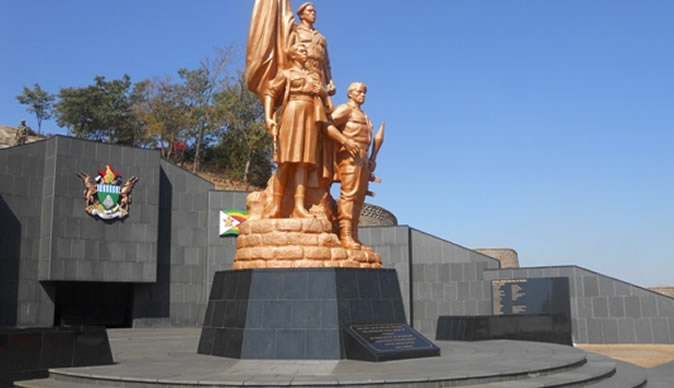
Freedom Mutanda Correspondent
The Nyadzonia and Chimoio massacres were violations of international law and Mozambique did not push ZANLA away; the country hosted ZIPA (a combination of ZIPRA and ZANLA fighters) until the pact’s demise.
It has always been noted that a hero is selfless and does daring acts for non-monetary gains but for the good of everyone and the country, even paying the ultimate price, death.
Zimbabwe had its own share of female and male cadres who joined the liberation struggle notwithstanding the terrifying and superior-armed Rhodesian forces’ propensity to use crude tactics to suppress black majority rule.
To achieve the final victory, the Frontline States of Southern Africa had their say in the emancipation of Zimbabwe which had been under the colonial yoke since that fateful September 12 1890 when the Pioneer Column hoisted the Union Jack in Harare.
Back in 1963, the then Organisation of African Unity, had resolved that the total independence of the continent was one of its major objectives and to that end, it established the OAU Liberation Committee head-quartered in Dar es Salaam, Tanzania, whose President, Mwalimu Julius Nyerere, was one of the founding fathers of OAU.
As Zimbabwe African Liberation Army (ZANLA) the military wing of Zanu (PF) and the Zimbabwe People’s Revolutionary Army (ZIPRA) invaded the rough turf fighting racist Rhodesia head on, more Southern African countries gained independence and the leaders were hopeful the Rhodesian crisis would be resolved.
They advocated unity among the fighting forces and that is why at several international forums meant to break the impasse, ZANU and ZAPU went there as the Patriotic Front.
Botswana, Zambia, Mozambique, Angola and Tanzania were some of the African countries who put their people’s lives at stake to ensure Zimbabwe got its freedom.
The foregoing narrative takes a look at how as a nation, we cannot celebrate Heroes’ Day this coming week without acknowledging the good deeds the Front-line States performed to arrive at where we are today.
The United States of America’s birth narrative is twinned with the French Revolution because some French soldiers fought alongside the “rebel” Britons who had gone to the New World to seek fame and fortune but they no longer wanted to be an appendage of Whitehall.
Frontline States will forever be etched in the collective memories of all Zimbabweans.
The famous Chinhoyi Seven were able to use the Zambia route to Zimbabwe. Imagine what would have happened if Zambia had been an enemy and had guarded its borders jealously.
No access would have been gained by these gallant sons of Zimbabwe as they would never have reached Chinhoyi, then Sinoia.
Zambia went on to provide refugee camps such as Mkushi and Freedom to the thousands of Zimbabweans who thronged the country after a severe backlash from the Ian Smith regime which did not brook any nonsense.
It was in Zambia that ZAPU officials and strategists lived and the guerrillas passed through that country as they went into Rhodesia on fighting missions.
It is in Zambia that the external wing of ZANU under chairman Herbert Chitepo thrived and the Dare ReChimurenga head strategised on the mapping of the Second Chimurenga.
Kenneth Kaunda’s “One Zambia, one nation” resonated with the unity of purpose espoused by the leader as he plotted the successful prosecution of the liberation struggle.
After a six-year hiatus, ZANLA intensified the armed struggle to reach the decisive phase; carving out the north-eastern front was essential for the whites to know that even though the regime had jailed the political leadership, the armed struggle would not end.
The subsequent attack on Altena Farm in December 1972 was the official start of an engagement which would end with the one man-one vote getting sway.
From the resultant attack, the settlers realised they were going to be in for the long haul and their venom centred on Zambia where they carried out attacks to destabilise the enemy.
Most ZIPRA combatants’ liberation stories mention Botswana as a conduit; they passed through it on their way to Zambia. Sir Seretse Khama sacrificed his country to help the two liberation armies through moral support.
In war situations, moral support is crucial; at that time, Botswana may not have reached the economic boom it is currently experiencing; however, that moral and logistical support drove the wheels of Zimbabwean independence.
As a member of the Front-line States, Botswana did its part and in return it suffered economically from the racist regime’s attacks which destabilised it.
Sir Khama would have decided to remain aloof and allow the Zimbabweans to be caught by the Special Branch whose eagle eyes were on border patrols day and night.
He decided to be on the side of the oppressed people of Zimbabwe at great risk to his countrymen.
For those living along the eastern border, Mozambique is real.
For a while, FRELIMO fighters and ZANLA combatants fought alongside each other to beat the Portuguese and Rhodesian forces until June 25 1975 when FRELIMO was given the reins of power and from then on, ZANLA established bases there.
A deluge of political refugees from Zimbabwe were hosted by Mozambique.
In those camps, there were “Watoto” (the young ones) and “Vazee” (the very old ones) and the many females and males who had skipped the border to liberate Zimbabwe.
Chibawawa, Doroi, Nyadzonia, Chimoio and Tembwe were some of the ZANLA places used to house refugees and training for thousands of young men and women. For a country that had recently gained independence, the task at hand was insurmountable seemingly but Cde Samora Machel and his people took it in his stride.
They remained resolute until the Rhodesians agreed to a peaceful end to the conflict.
Hunger stalked the refugees and trainees and war veterans talk of “Chilenje” where they received food from the outlying communities.
Such sacrifices cannot be wished away. In the front-line of the Rhodesian atrocities, the Mozambican government was defiant to the very end.
The Nyadzonia and Chimoio massacres were violations of international law and Mozambique did not push ZANLA away; the country hosted ZIPA (a combination of ZIPRA and ZANLA fighters) until the pact’s demise.
To the late Cde Samora Moises Machel, the independence of Mozambique was a fallacy as long as Zimbabwe was not free.
As détente fell off and the two armies moved a gear up, the Tanzanian government hosted training for ZANLA fighters; two camps stood up like a sore thumb-Nachingwea and Mgagao.
These were in Tanzania and thousands of combatants were trained there under Chinese and Tanzania trainers.
From the conveyor belt of these training bases, we have the ‘Songa Mbele,’ ‘Fanya Haraka’ and ‘Sasa Mariza’ contingents who were trained in conventional warfare as well as guerrilla tactics.
Although Tanzania was very far away from Rhodesia, she saw herself as a Front-line state in respect of aiding the independence of Zimbabwe.
In the days we played traditional games, there was this game called “Chisvake” where a chain is created through touching another person and we would run after each other; Zimbabwe assumed this role of helping friends who were in the throes of colonialism.
ANC and PAC offices were in Zimbabwe while SWAPO enjoyed huge support from Zimbabwe. South Africa and Namibia are independent and they savour the good job done by Zimbabwe.
Frontline States and Heroes Day in Zimbabwe are intertwined.



 Online Reporter