admin
adminDebra Matabvu
Harare is battling yet another deadly outbreak of typhoid in the latest episode of what has now become an annual explosion of water borne diseases.The advent of the rain season in Harare is now synonymous with outbreaks of diarrhoeal diseases, most of which are linked to a decay in general hygiene and unsafe drinking water.
Most Harare suburbs are characterised by erratic water supplies, numerous sewer blockages and spillages, which is a perfect recipe for diarrhoeal diseases outbreak.
Uncollected refuse has also become the order of the day. However, what is mind boggling is the fact that over the years, Harare has been recipient of various water and sewer infrastructure funds ranging from loans to donations, which amount to millions of dollars.
Since 2013, Harare has been a beneficiary of the Zimbabwe Multi-Donor Trust Fund (Zimfund), which is being administered under the African Development Bank (AfDB).
The project focuses on rehabilitating critical water and sanitation in six municipalities namely Harare, Chitungwiza, Chegutu, Kwekwe, Masvingo and Mutare.
According to a report released by the AFDB in November 2014, Harare received aid to rehabilitate its main water and waste water treatment plants such as Morton Jaffery, Prince Edward, Crowbrough and Firle with about $11 million disbursed for the programme.
In December 2014, city authorities confirmed that $12 million from AFDB had been set aside for 5 000km pipe replacements in the city. In 2013, Harare had received a $144 million loan from the Chinese Exim Bank to rehabilitate main water and sewer treatment plants in Harare.
In addition, from 2014, council has been pledging in its budget statements to make investment in garbage collection, with millions being set aside each year for that purpose.
The projects, by now, could have put an end to leakages, spillages, blockages, perennial water shortages. Water quality as well as refuse collection should have improved by now.
However, it is now four years since the extensive overhauls began but Harare is in no better situation than it was before the programmes began. Water quality remains poor, supply remains erratic in most parts of the city and the city-wide infrastructure continues to fall apart.
So far, typhoid fever has claimed two lives in a space of a week, with 126 cases suspected and 23 cases confirmed.
This situation has seen council frantically running around trying to contain the disease. New water pipes are being laid in an attempt to supply clean water, sewer pipes are being drained, unblocked and cleaned in an attempt to contain the outbreak.
The situation, as usual, has been reactive rather than proactive. Council has moved into Glen View, Budiriro, Mabvuku, Tafara and Hopely to try and improve waste management systems.
A schedule on refuse collection has already been released with the aim of sanitising the suburbs, with adverts of the schedule in the local press. But in some suburbs like Kambuzuma, the notices are yet to be followed with physical garbage collections.
Residents are not happy.
“What took them so long to act on the dilapidated water and sewer infrastructure?” asks Harare Combined Residents Association (CHRA) Director, Simbarashe Moyo.
“Red flags have been raised all along and they did nothing. We all know it is only a matter of time before the council diverts attention to other issues. “Harare needs to put its house in order.”
Corruption within the local authority has been cited as one of the factors stalling progress in replacing water and sewer infrastructure. There have been reports that funds from the $144 China Exim bank loan were abused.
Internal squabbles and fights for top posts have also been the order of day, thereby compromising service delivery as people are locked in court battles.
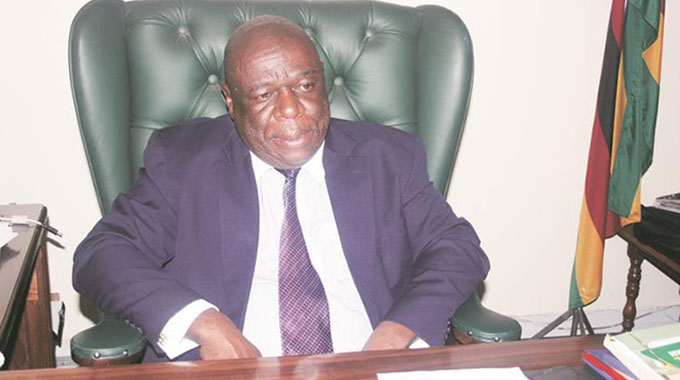
However, former deputy minister of Health and Child Care, Dr Edwin Muguti, feels all stakeholders need to adequately play their roles to deal with the issue.
He emphasised that replacing water and sewer infrastructure is the only panacea to the problem.
“This issue of typhoid needs a holistic approach. It is a chain that demands everyone to be involved and the process that should be directed from the grassroots,” he said in an interview.
“I feel it is also necessary for the Ministry of Health and Child Care to re-look at the way they are managing the health services. “The health sector which encompasses all these issues is not adequately playing its role.
“The Ministry (of Health and Child Care) needs to take this matter seriously and urgently engage the Ministry of Finance and Economic Development.
“Funds to replace and revamp infrastructure, particularly water and sewer, have to be availed and the Ministry of Health needs to oversee the implementation of such programmes.
“There is need to come up with a solution as soon as possible because if the problem is not rectified, the same problem will arise again next year and the following years.”
The Ministry of Health and Child Care indicates that Harare is the main contributor of typhoid countrywide, with over 76 percent of cases reported in the capital.
Last November, Harare introduced tight water rationing schedules which saw some suburbs going for more than five days with no water supplies. This has forced residents to use bush toilets as well as unsafe or unprotected water sources for household chores, thereby resulting in the rise of diarrhoeal diseases such as cholera and typhoid.
The worst cholera outbreak in Zimbabwe was recorded in 2008 when an outbreak in Harare’s Budiriro left hundreds dead.



 Online Reporter