admin
admin
Jeffrey Gogo Climate Story
A NEW United Nations study on the country most at risk of climate-related disasters, puts Zimbabwe 15th in Africa — and the 38th country in the world — but local risk experts have warned the data should be treated with caution.
Zimbabwe has a risk value of 10,06 — significantly higher than much of Africa – according to the World Risk Index report 2016, released by the UN University’s Institute of Environment and Human Security in collaboration with a German think tank, Bundnis Entwicklung Hilft, on August 25.
In a study of 171 nations, the World Risk Index measures the extent of those countries’ exposure and vulnerability to extreme climate events such as cyclones, floods, drought, earthquakes, and others. The higher the index rating, the greater the risk.
Disasters are a function of several factors, they don’t just occur.
A country may experience a flood or drought, but without the disaster.
According to the report, poor infrastructure — roads, power etc — poverty, lack of access to healthcare, poor housing, and others could swing a country’s ability to reduce “the risk of a natural event turning into a disaster” to dangerous levels.
Here, a lack of access to clean water and sanitation post-extreme events has been the greatest undoing, pulling Zimbabwe back five places to the 13th most susceptible — the likelihood of suffering harm in extreme events — country in the world, from 18th the year before. In terms of vulnerability, Zimbabwe dropped to 15th in the world from 28th in 2015, the biggest decline worldwide.
“The risk is very high wherever natural events hit vulnerable societies,” says the report.
“In comparison to the previous year, Zimbabwe . . . experienced the largest shift. This is above all due to a reduction in the share of population with access to water and improved sanitation.”
Only 73 percent of Zimbabweans have access to clean water, and 63 percent to improved sanitation, according to UN’s Children Fund (UNICEF) local website.
This may have more to do with inadequate financial investments into water infrastructure as it were for damage of such infrastructure from natural hazards. But a lack of similar services can be a huge drawback in responding to disasters. Now, the UNICEF is implementing a $50 million four-year programme — ending this year — that aims to improve water, hygiene and sanitation to 2,5 million people, mostly in rural areas.
The vulnerability aspect is only one of several indicators used to calculate the overall risk index, but is very important because it incorporates most of the core components.
That specific indicator shows Zimbabwe — never short of extreme events like drought and flooding that have turned into disasters in the last few years — fared badly compared to poorer nations in Africa or those at war like Iraq.
In percentage terms, war-torn and volatile Iraq is 55 percent vulnerable. That compares with Zimbabwe’s 67 percent.
Loosely defined, vulnerability refers to a lot of things, such as the possibility of natural events, a society’s ability to directly respond to, warn and prepare for similar hazards, and long-term strategies to adjusting to the changes brought about by climate change and its attendant impacts.
When all those factors, and others, cannot be adequately met, a community is said to be vulnerable, according to the World Risk Report, whose index is based on four key components in climate strategy and response — exposure (to natural events), susceptibility, coping capacities and adaptive capacities.
It is not all that bad for Zimbabwe, though. The report shows the country’s public transport infrastructure such as roads, air or rail — key factors to disaster response — have a low exposure to natural hazards compared to those countries along coastlines, in the Middle East, and large parts of Europe and Asia.
This can significantly boost response at a time of increased climate linked events.
In 2015, damage to rail and road infrastructure due to flooding in Europe topped $470 million, the report says.
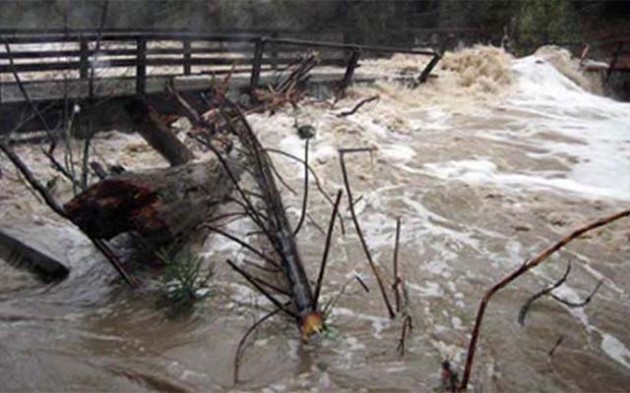
Similar data is not readily available here, but frequent cyclones and flooding have destroyed public infrastructure like dirt roads, bridges, clinics and schools.
Local disaster risk and management experts are rather apprehensive of the UN data. And they may be justified.
“These ratings depend on available information, so they are estimates, and not absolute,” argued Simon Bere of the Institute of Waste Management Southern Africa in Harare, by text message.
“The issue is (that) preparedness depends on many factors including disaster prevention and response systems, human capacity, and availability of resources.”
Use of estimates may be one of the reasons Zimbabwe ranks worse on the World Risk Index compared to unstable, poorer, weaker nations like Eritrea and the Central African Republic (CAR), which occupy the 83rd and 71st positions in the world, respectively.
Funding is a major handicap to Zimbabwe’s disaster readiness and response.
Typically, poor nations tend to rely on global aid during disaster times.
But with a GDP of just $5 billion, Eritrea’s economy is three times smaller than Zimbabwe’s.
It is difficult imagining the little north-eastern African country being more prepared to handle natural hazards — which are common in that part of the world — than Zimbabwe. The report, however, appears to play down this line of argument.
Using the example of Japan, one of the world’s richest nations, it shows that wealth isn’t everything.
“Japan shows that a low level of vulnerability cannot fully compensate for extreme exposure,” according to the World Risk Report.
“Despite its very low vulnerability, the country is in place 17 in the World Risk Index because of its very high exposure, mainly to earthquakes and floods.”
Across Africa, the UN report shows that 13 of the 15 countries in the world with the greatest vulnerability are here.
These include Eritrea, Liberia, CAR, Madagascar, Mozambique, Sierra Leone and others.
Guinea Bissau faces the highest disaster risk in Africa, followed by the Gambia and Benin.
Guinea Bissau is ranked 15th in the world. Vanuatu is first globally followed by Tonga and the Philippines.
South Africa, Botswana, Namibia, Egypt, Equatorial Guinea, Tunisia and the Seychelles have some of the lowest disaster risk not only in Africa, but across the world.
God is faithful.


 Online Reporter