admin
admin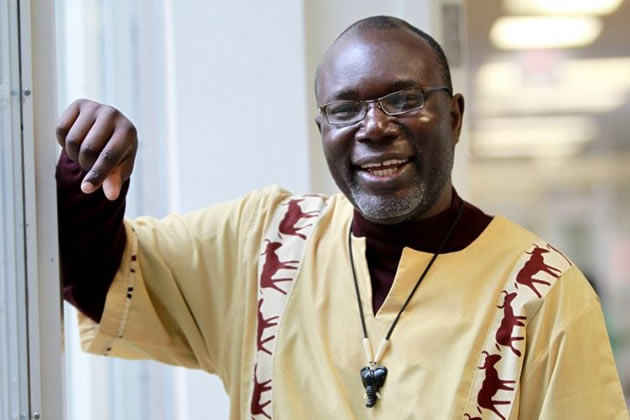
Poet, publisher and writer Ignatius Tirivangani Mabasa is among a few on a mission to ignite a new interest in African folklore.
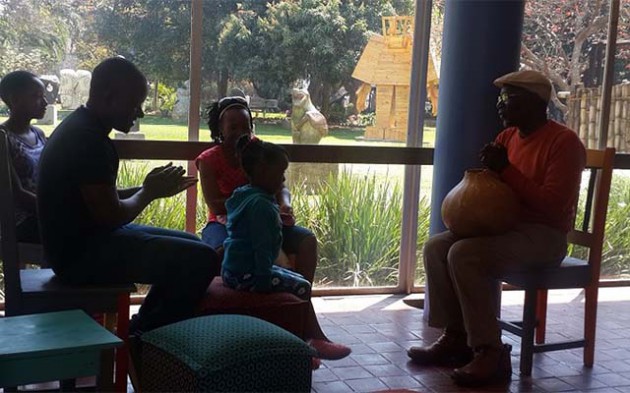
In the first of a series of collaborations between the artiste and the National Gallery of Zimbabwe, Mabasa over the weekend kick-started the African folklore sessions with “Tsuro neDzimwe Mhuka (Hare and the Other Animals)”.
This a commentary on people who set themselves up as “smart” but eventually get outsmarted by those least expected. It is also a commentary on how physical strength does not always guarantee victory, as even the big five — animals — fail to reign in Tsuro/Hare. Instead it is Kamba/Tortoise who accomplishes the feat.
At the moment the primary target is school-going children.
The objective of the collaboration is not just telling African folklore; it is also about helping children learn and consolidate their understanding of their mother tongue as the stories are told in ChiShona.
While the artiste enjoys a regular slot on StarFM radio, the NGZ sessions are meant to provide direct personal interaction between the children and Mabasa.
The expectation is that this interaction will result in a quest for reading in African languages and that even though globalisation is the buzzword these children can still be global players anchored in their African identity.
Colletta Mutangadura is the other writer who immediately comes to mind. She beams brightly when she launches herself into her story-telling mode. In western Zimbabwe, historian Pathisa Nyathi has been spearheading a similar initiative with the Amagugu Cultural Heritage Centre.
In recent years, Mabasa has not been content with just publishing and writing. He realised story-telling is mesmerising and the key in firing up creativity among young people.
It all began several years go with performances in Mutawatwa, in Mashonaland East Province, when he partnered with the local newspaper, appropriately named Kwayedza (Dawn), heralding the dawn of new era in rekindling interest in African story-telling.
So successful has been this formula that Africans in the Diaspora are keen to expose their children to his output and help them discover what defines their African world.
Last Saturday he took his show to the National Gallery of Zimbabwe for a session where he regaled both young and adult audiences with his performances.
The National Gallery of Zimbabwe is set to hold story-telling sessions on Saturdays for the whole of September, in a move meant to stimulate creativity and to revive the traditional folk story-telling, threatened by technological advancements.
However, Mabasa has instead harnessed this technology as part of the strategy in rekindling interest in African folklore.
The story-telling sessions, first introduced during the Holiday Art Camp held at the National Gallery, run from 10am to 11am.
Admission is not only limited to primary and high school children, but is free and open to everyone and anyone who wants to attend the sessions.
Mabasa, who writes mainly in Shona, has won numerous awards, and frequently performs as a story-teller in schools and has written several children’s books in English and Shona.
Visual art does not simply stand alone but is inter-dependent and connected to literature, fashion, film and theatre. The session not only seeks to stimulate creativity, but also seeks to educate people on the relationship between visual art and story-telling.
Thandazani Dhlakama, curator for education at the National Gallery of Zimbabwe, observes: “The way you think when creating a story and how you think when listening to a story is similar to the way an artiste thinks when creating an artwork. Story-telling directs and gives content to the audience to be imaginative and gets the creative juices going.”
The sessions prompt people to know more about their culture, develop new learning techniques while reviving folklore and preserving intangible heritage.
Intangible heritage, also referred to living cultural heritage, is an exciting and important aspect of cultural heritage. It is transmitted from one generation and is constantly being recreated in communities in line with their environment and interaction with nature.
Oral tradition (orature) such as story-telling is one important vehicle that drives the preservation of intangible cultural heritage.
The proposed introduction of multiple television platforms as a result of the national broadcaster, ZBC radio and television going digital is: who will be telling our stories?
Mabasa has anticipated this scenario.
In order to respond not only to the September deadline for the advent of more television channels but also to answer to the dearth of local content in story-telling and African folklore, Mabasa began a series of engagements particularly with schoolchildren.
The first engagements were with schoolchildren from the high-density areas of Dzivarasekwa two years ago under the Dende Rengano (Calabash of Stories) series. Then he moved into the central business district, where school children from various suburbs converged at the Old Mutual Theatre at the Alliance Francaise.
It appeared these were the formative stages, testing the waters as it were. This year he has also joined hands with the Culture Fund Trust of Zimbabwe and Harare City Library during which he conducts a series of weekend story-telling sessions, titled Animated Folktales.
Sometimes in late 2010 Mabasa was the writer/story-teller-in-residence at the Centre for Creative Writing and Oral Culture at the University of Manitoba, iCanada. It was during that stint that he realised the extent and power of story-telling.
Mabasa says he began telling stories before he could write and has since shared them with audiences from Harare to San Francisco.
An accomplished mentor for budding writers and story-tellers, a champion of the Shona language and a lay preacher at his local church, Mabasa is the brains behind Bhabhu Publishing House, which has produced award-winning novels.
In recent years there have been several concerted efforts aimed at reviving interest in local languages but Mabasa appears to have gone further than some of his contemporaries in that he has established a publishing house, Bhabhu Books.
He writes books for children, presumably the argument being that if you are intent on promoting reading of local languages you first have to whet the appetite of your targets and mould the future readers you wish to see; and he combines story-telling with performances in a riveting manner, reminiscent of the great itinerant story-tellers.
The new Zimbabwe Constitution recognises 16 official languages and the efforts of writers/publishers such as Mabasa are aimed at ensuring that the official languages migrate from recognition on paper into everyday lived experiences.
The approach he has opted for is very effective in engaging young children. It is interactive and involves songs and dance as part of the story-telling.
As a Shona language activist and a published novelist, story-teller and a translator Mabasa writes mainly in his mother language but in an innovative way that appeals to the younger generations.
It is his belief that it is through language that knowledge is stored, and it is through language and knowledge that people learn.
“Indeed, I am passionate about our oral art forms and Africa needs to have her own agenda that taps from her wealth of indigenous knowledge at the same time acknowledging the changes within and around her,” he explains.
He has a proven track record as a writer, storyteller and publisher. His novel “Mapenzi” won the Zimbabwe Book Publishers’ Association Best Shona Novel of the Year Award in 1999 and was selected as one of Zimbabwe’s 75 Best Books of the Century by the Zimbabwe International Book Fair in 2000. “Mapenzi” has been prescribed as an Advanced Level school set text. Both his second novel, “Ndafa Here?”, published in 2008 and the third novel “Imbwa Yemunhu” published in 2013 won the Zimbabwe National Arts Merit Awards (NAMA) in the outstanding fiction book category.
In 2009 he represented Zimbabwe at the San Francisco International Poetry Festival, USA. Previously, he had been a visiting Fulbright Scholar in 1999-2000 at suburban Chicago schools: North Central College, College of Du Page, College of Lake County and William Rainey Harper College.
Later he was to spend four months at the University of Manitoba in Canada as the Writer-and-Storyteller-in-Residence during 2010.
“I am hoping to create a legacy of telling new stories that are of national significance and relevance. I have visited a lot of countries where I have been telling our traditional folktales and I feel Zimbabweans continue to enrich other cultures and yet we are not using the information and knowledge we get from intercultural dialogue experiences to start an arts and creative revolution,” he explains.
“I believe I have got to a point where as a creative person I need to help Zimbabwe play her own drum, and not someone else’s drum.”
Africa is a different continent with a different value hierarchy and tradition where new ideas and values are constantly interacting, encroaching upon and modifying the concept of unhu/ubuntu.
“Unhu/ubuntu relates to the ontological perception of self, family and relations, between self and other. ‘I am because we are’ is an acknowledgement of the importance one accords to others. The immediate acknowledgement of this and the declaration that ‘if you don’t exist or I don’t acknowledge you, then I cease to exist’ is a heavy responsibility, a generous disposition and one that drives against the global contemporary values of individuality and a narcissistic selfie culture.
“The alienation and isolation brought about by technological displacement of the human factor in many aspects of life is increasing, while the contemporary tools that reinforce and reward these values are manifested through social media and new information and communication technologies.”
The Animated Folktales project that he proposes to embark on is a sequel to the interactive story-telling concept and seeks to make use of the very same isolating technologies to fight back, to share and connect, but most importantly to influence in a positive manner issues that affect us as a people. — Panomara Magazine.



 Online Reporter