admin
admin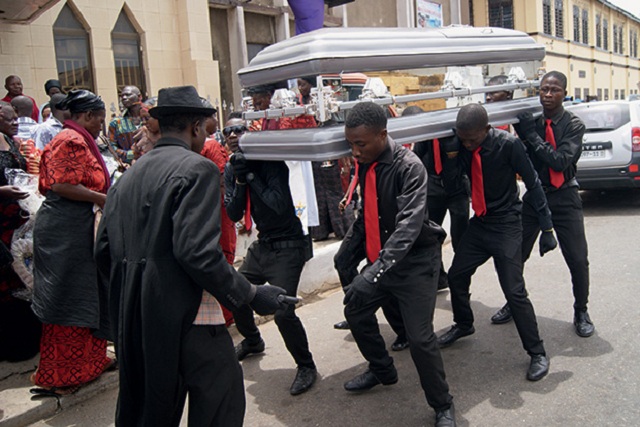

Peter Matika, Senior Life Reporter
A RATHER disturbing phenomenon is slowly creeping into the Zimbabwean society, considering the manner in which funerals are being held.
Comparing Zimbabwean funerals to Ghanaian ones, there is no doubt some people have little regard for the departed.
Funerals are somewhat becoming mini festivals, where in some cases wealth is lavishly displayed, while in others rowdiness and wayward behaviour is the order of the day. Funerals are no longer gloomy or depressing events, where people converge to bid farewell to a beloved.
Today’s funerals are turning into times to both mourn and “celebrate” life.
In recent months some funerals have been adorned with waywardness, if rowdy kombi drivers and touts behaviour at the cemetery is worth mentioning.
More so the recent funeral of a Gweru man, where women threw their undergarments into his grave, depicts moral and social decadency of the disregard people have on funerals.
Funerals nowadays are rarely considered social events, unless the media is involved and numbers are high. Death and funerals are slowly turning into festivals, where people come together to bid farewell to their dearly departed and also to have fun.
Just like Ghanaian culture shown in movies, funerals have warded off from the usual somber events but are now fun packed events. Funerals in Ghana are not only an occasion to mourn, according to what is depicted in the media.
They are also an opportunity to celebrate the life of the dearly departed.
Hardly ever a somber, low-key affair, Ghanaian funerals are a social event attended by a large number of mourners, which could reach hundreds — the more, the merrier.
One traditionalist said the manner in which people were seemingly turning funerals into fun fests was because of the evolution of the world.
“If you see a person having fun at a funeral it means the departed person was very friendly, very charitable, was good at socialising, was good at communicating with the people within the society. Take some funerals where people dance, sing and drink. It is not that they want to have fun entirely but it is a way of bidding farewell to their loved one,” he said.
Comparing local funerals to Ghanaian ones, people tend to spend as much money on funerals as on weddings, sometimes even more. The extravagance also extends to the coffins.

Coffins are a statement in Ghana. They are usually brightly coloured and elaborate. They may have fanciful shapes that resemble the dead’s favourite objects, or represent their profession.
Thus, a carpenter may have a coffin shaped like a hammer, or a shoe for a shoemaker. There are also caskets shaped like Coca-Cola bottles and airplanes. Ghanaians revere the dead so much that funerals are at the heart of Ghanaians’ social life. Funeral rites also involve some official crying by mourners, as well as praying. But the rest of the funeral ritual is purely party time. Could we be warding towards this trend? Only time will tell.


 Online Reporter