admin
admin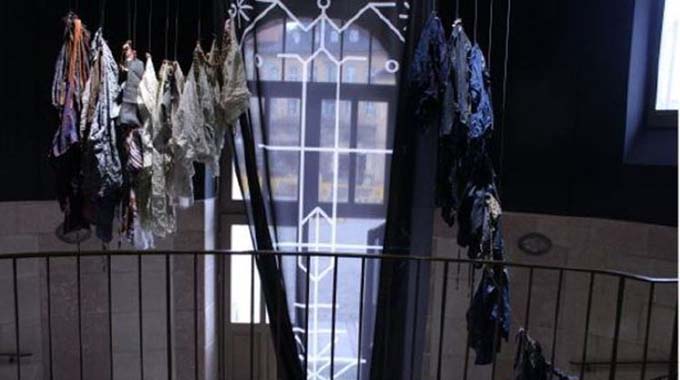
The past cannot be changed and the future is yet in power. From an Afropolitan point of view, the future is not fixed. While there is arguably only one past, the future is largely “open”. Goethe-Zentrum Harare (The Zimbabwe German Society), Iwalewahaus University of Bayreuth and the National Gallery of Zimbabwe, the home of comprehensive art, are set to stage an exhibition entitled “Future African Visions and Times (FAVT)”.
Co-curated by Susanne Gerhard and Raphael Chikukwa “FAVT: Future Africa Visions in Time” explores diverse areas of research and debates that were generated by the Bayreuth Academy of Advanced African Studies since its inception in 2013. This exhibition has been recently held in Nairobi, Namibia and Johannesburg, South Africa.
In 2015 “Future African Visions in Times” exhibition was held in Kenya at Nairobi National Museum. After a celebratory opening, a framework programme offered free guided tours, panel discussions, artists’ talks, lectures, concerts, film screenings, and more.
The Bayreuth Academy is an innovative research structure, which forms part of Bayreuth University.
Since its inception in 2013, various artists and cultural producers have participated and contributed to the work at the Bayreuth Academy, generating insights on topics such as “temporal orders”, “hope”, “utopia”, “dystopia” and “prognosis” amongst others.
After the stop in Nairobi, “Future Africa Visions in Time” travelled to Johannesburg, South Africa, and other destinations on the African continent in 2017 and 2018, in cooperation with the Goethe-Institute of Germany.
As a process of ongoing exchange, the exhibition is changing its focus and content at each stop and was accompanied by a programme which “activated” its theme.
In Windhoek, Namibia, the Bayreuth Academy of Advanced African Studies, Iwalewahaus (University of Bayreuth) and the Goethe Institute were the main organisers of the exhibition.
The exhibition was open to the public from January 23 2018 till February 16 at the Goethe-Institute Namibia.
On display during the Namibian exhibition were photographs and installations produced by international artists such as Emeka Alams, Kae Sun, Simon Rittmeier and Délio Jasse among others.
The aim of the exhibition is to reflect the African and African Diasporas’ past understanding of a future and how moments of crisis and social mobility have affected the current envisioning of a future.
The exhibition includes photography, installations, sound scapes, projections, text and performance and will be accompanied by a series of publications and activations, such as guided tours and thematic talks.
The exhibition content derives from discursive collaborations between invited international artists and resident researchers within the academy, resulting in innovative conceptual research that traverses aesthetic and scientific approaches.
Positions generated through this collaborative process also question the results and processes of academic research by aesthetically complicating them.
The structure of the exhibition encompasses previous sub projects on “Beyond Europe” Narratives, Visions of Nature, Middle Class on the Rise and the Concept of Future in Media spaces.
Combining academic research with the production of art, the exhibition “FAVT: Future Africa Visions in Time” aims to examine and instigate discourse around the acknowledgement of a past and its importance in shaping visions of the future. Simultaneously the exhibition questions the typical academic knowledge production and opens the views and discussions through the inclusion of art into different approaches of understanding, imagining and participating in visions of futures.
Parts of the original exhibition, conceptualised and initiated at the Bayreuth Academy of Advanced African Studies and the Iwalewahaus at the University of Bayreuth, will be shown among works of local artists.
In collaboration with the National Gallery of Zimbabwe, which will host the exhibition from the opening on March 29 until the 23rd of April and the Goethe-Zentrum Harare, several artworks where chosen, representing a set of keywords.
The keywords intervening and longing/desiring deriving from the curatorial process were identified as modes of futuring.
Artists who exhibited in Joburg include designer, artist and founder of clothing line Gold Coast Trading Company, Emeka Alams, and award-winning artist and doctoral fellow Ruth Sacks.
Concurrently with the Joburg exhibition, parts of the exhibition will also be shown at the Goethe-Institute in Salvador de Bahia, Brazil.
The exhibition in Harare includes contributions by local and artist from beyond Zimbabwean borders.
The exhibition will attract foreign artist such as Katharina Fink, Susanne Gerhard, Constantin Katsakioris, Shalom Kufakwatenzi, Peggy Piesche, Luís Carlos Patraquim, kara lynch and Nadine Siegert.
Oscar Lwalwe, Lillian Magodi, Georgina Maxim, Tumi Mogorosi, Kupakwashe Mtata, Webster Mubayirenyi, Sam Mukavaza and the Strategical Radicals.
Katharina Fink works as a researcher, writer and cultural organiser. She holds a magister in Cultural Studies from University of Thübingen and a PhD from BIGSAS, University of Bayreuth.
She is and has been engaged in various projects ranging from all cultural areas of research and teaching.
Her particular interest is to combine theoretical and practical aspects of aesthetics with societal issues: What can “beautiful” mean? She is also facilitating the literary estate of late South African author, Bloke Modisane.
Currently she holds the position of a post-doctorate researcher at the Bayreuth Academy of Advanced African Studies, where she is part of the sub-project TP 5, Revolution 3.0.
Susanne Gerhard is a curator of the collective from afar. Her focus lies in photography from Southern and Eastern African countries.
She holds a Master’s Degree in Arts and Curatorial Studies as well as Sociology of Development and currently resides in Cologne, Germany.
Peggy Piesche is a literary and Cultural Studies scholar whose work is centred in Black European Studies.
At the Bayreuth University she is currently working in the Academy for Advanced African Studies.
Piesche’s areas of research and teaching include Critical Race and Whiteness Studies, Black Feminist Studies, Diaspora and Translocality, and the Performativity of Memory cultures (Spatiality and Coloniality of Memories). Peggy Piesche is also an activist member of ADEFRA (Black Women in Germany) and the Black community in Germany.
The exhibition will be surrounded by several activations and events, starting with two per-formative interventions at the opening by Tumi Mogorosi, kara lynch and Peggy Piesche.
The curator Susanne Gerhard will guide through the exhibition on March 30, followed by a conversation with academics and artists about layered temporalities in the artwork of Tumi Mogorosi.
On the 31st, curator Nadine Siegert will map socialist (past) futures in the art work Socialist Dreamscapes, followed by an educators ‘event organised by Katharina Fink between participants of the exhibition and students from the National Gallery of Zimbabwe on the topic “Futures from the Past”.



 Online Reporter