Online Reporter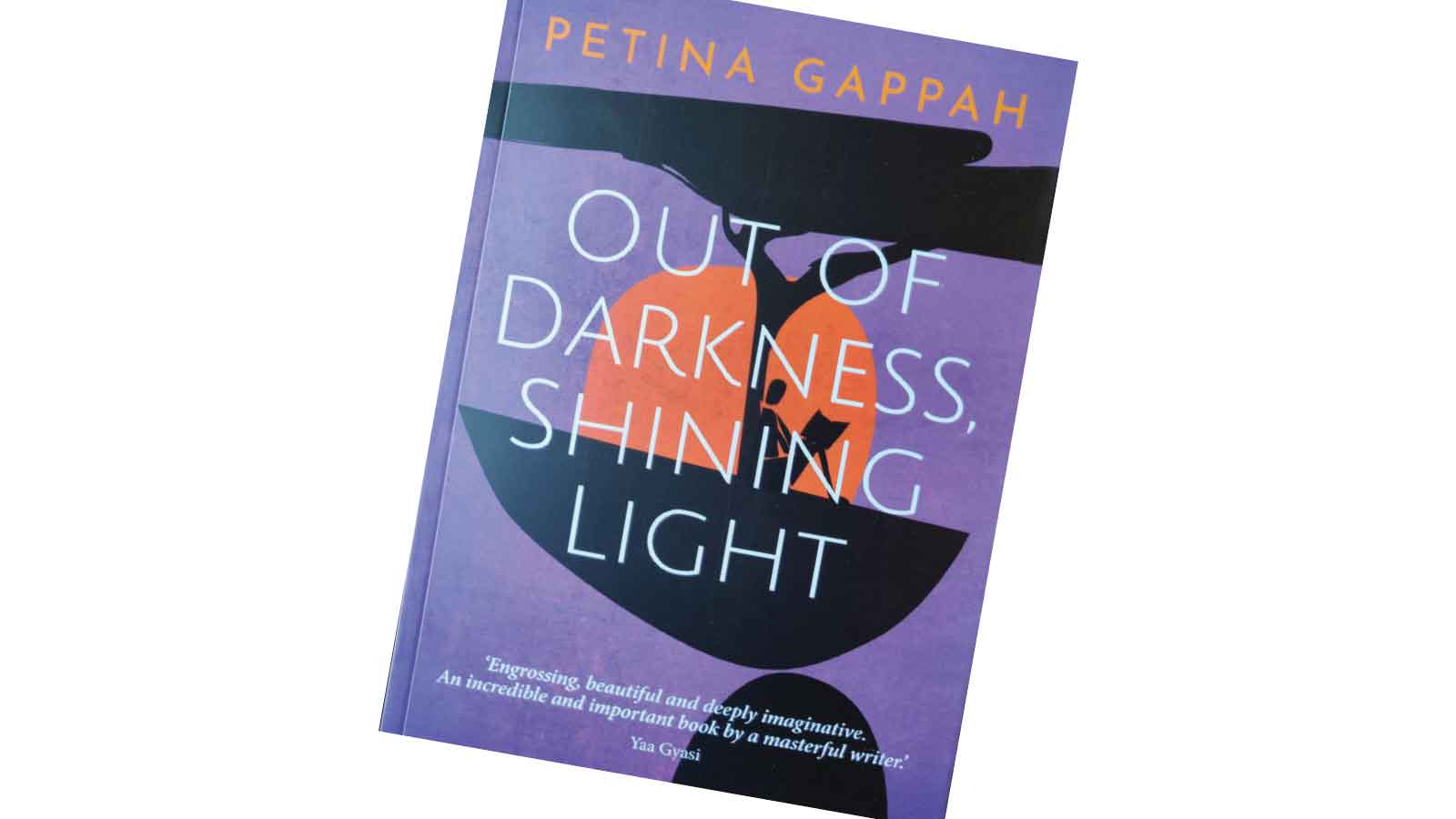
Tanaka Chidora
Book Review
Many times when history is being told, it is all about ‘big’ people doing ‘big’ things.
The rest are subsumed under a single identity that casts them as inconsequential in the making of history.
While reading Petina Gappah’s second novel, I became fascinated by how she coaxed the ‘small’ people to the centre of history and only limited the ‘big’ person to the role of a cadaver being ferried across the jungle to the sea.
I really do not know what motivated Gappah to do that.
But whatever it is, I fell in love with what she did.
Palace histories and meta-narratives are only useful when your flight has been postponed and you need to wait for 10 more hours! (That actually happened to me once).
Out of Darkness, Shining Light is the story of the 69 (they could not have been 70!) who ferried David Livingstone’s corpse across the jungle to the sea.
And the journey is retold via the voices of Halima, his sharp-tongued cook, and Jacob Wainwright whom we are told is one of the Wainwright brothers who had once been to India.
I liked those parts of the novel that were narrated by Halima.
Those parts that were narrated by Wainwright made for a more heavier reading because Wainwright is a hypocritical bastard who loves lofty expressions!
And I think that’s exactly how Gappah wanted the bastard to appear to us. But eventually, instead of absolutely not liking Wainwright, we are made to appreciate how the conquered became a parody of the conqueror, which in a way absolves Wainwright and makes us forgive him for torturing us with his self-righteousness and undramatic narration in the second half of the book.
He is merely a conqueror’s creation, but an important part of the 69 because without him history wouldn’t have been complete.
But to tell the truth, there were instances when, through the torture Wainwright subjected me to because of his meticulous attention to detail (almost like Marechera’s Edmund when it comes to the rigour of it), I missed Halima.
I would encourage myself to be patient because I would probably reunite with Halima in the next chapter, only to bump into Wainwright with his religious books and heavily biased and self-righteous interpretations of his and others’ realities.
But he is also reliable when he is not interpreting facts, which is why we tolerate him right to the end when Halima takes over and wraps up the story for us.
When we finally meet her at the end, there is this thoughtfulness about her, this hope that comes from freedom, the hope that one day her man will come and visit her house with its unique door and never leave her!
But there is also the restlessness that comes with freedom, that gives her the desire to explore:
“There were many things that happened on that journey with Bwana Daudi, part while he was living, part when he was dead, but one thing that it left with me is the feeling I get sometimes: as though I am hemmed in all round, and all I want is to go somewhere no one has ever been, and gaze at the sky and look for miles around to see nothing but trees and hear nothing but birds.”
In a way, the journey from the interior to the coast, a journey which was also Halima’s journey to freedom, changes her.
Wainwright changes too when he discovers that the world does not just avail itself to you and your dreams.
He falls out of favour when, in England, he tries to tell the real story of Livingstone away from the mythologised version that eventually made it into official history. I loved the ‘changed’ Wainwright more than the self-righteous one who had taken charge of more than half of the story-telling in the novel during the journey to the coast. Without his self-righteousness, he would have made a really likeable fellow and probably made his diary entries less of torturous affairs.
But then, I am sure the story would not have come out the way it did had Wainwright assumed, throughout the narration, the pathos that afflicts him at the end.
I think Gappah embarked on an epic project in this book. Discarding Livingstone and trusting, not Chuma and Susi (or Susi and Chuma, these mere appendages of history) but Halima and Wainwright was a very adventurous choice which she executed very well (of course, minus Wainwright’s sometimes heavy-handedness with the pen!).
And just as Conrad’s Heart of Darkness ignores everything that happens in-between, everything that is not understood by the trekking explorer, and calls it darkness, Gappah makes a reverse trek of her own and, with it, the history whose darkness comes from not being told, the history the telling of which sheds light on the acts of small people. – litmindssite