admin
admin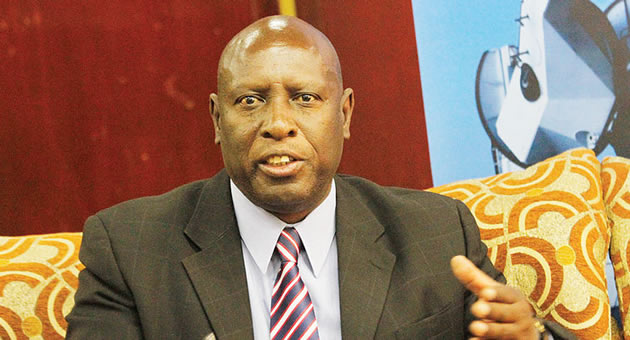
Harare Bureau
THE government has directed all fuel traders in the country to slash prices with effect from Wednesday next week in line with falling global oil prices or risk unspecified sanctions.Energy and Power Development Minister Samuel Undenge issued fuel retailers a two-week ultimatum starting from December 31, 2014, which the majority of traders ignored.
The directive would see the pump price of petrol dropping from about $1,54 per litre being charged on the market to a maximum of $1,32 and diesel from an average of $1,44 to a maximum of $1,20 per litre.
The prices are based on “a cost-plus model”, which entails the full on board cost plus charges for transportation, levies and taxes, administration and distribution.
“I’m hoping to get co-operation from all players. As government, the last thing we want to do would be to go back to price controls,” said Minister Undenge yesterday.
The Minister said in a volatile sector such as the oil industry, a befitting response would be for prices to track global trends and be adjusted in reasonable time.
“This hasn’t been the case in respect of our fuel traders for various reasons. Be that as it may, it calls for my intervention by quickening the response time.
“Currently, pump prices are higher than those obtained using the December 2014 FOB prices as companies claim that they’re disposing of old stocks bought earlier,” he said, adding it took two weeks to clear old stocks.
This quoted the ire of the motoring public who felt they were being shortchanged, with Zimbabwe Energy Regulatory Authority seemingly defending retailers’ slow response.
However, traders had until September last year, been charging prices that were lower than the FOB plus allowable mark, which promoted healthy competition.
The price of a barrel of oil on the international market has been going down since mid last year from $118,18 on June 2 to $71,83 on December 19.
“Our own oil prices have not gone down that much in tandem with the crude oil prices, but should, however, go down to levels that reflect crude oil prices, having factored in all cost relevant to obtaining the refined products we buy,” he said.
As a significant component of costs, lower fuel prices are critical to the success of the Zimbabwe Agenda for Sustainable Socio-economic Transformation.
Minister Undenge said starting from end of December 2014, he expected local fuel retail prices to lag behind FOB prices by two weeks for either increase or decrease. This, he said, would be supported by relevant legal instruments.
The Minister said in June 2014 the FOB prices at Beira were $0,88 per litre for petrol and $0,86 for diesel and have declined to $0,52 and $0,57 respectively.
“Maximum pump prices allowable based on the pricing formula are, for June 2014, $1,56 per litre for diesel and $1,64 per litre for petrol,” Minister Undenge said.
The December 2014 FOB prices gives maximum retail prices of $1,32 per litre for petrol and $1,20 for diesel, although traders can go lower to beat competition.
Wholesalers and retailers are allowed a maximum 7 percent profit. There are about 30 licensed fuel importers and about 400 forecourt retailers in Zimbabwe.
The Minister urged fuel retailers to revert to “the admirable” practice of charging lower prices than the recommended FOB plus the allowable profit margin.
Minister Undenge said the December FOB maximum pump prices he expected to take effect by Wednesday comprised 50 percent fixed and 40 percent variable costs.
He urged the oil industry to be responsible and responsive to developments in their industry, adding that the government would continue to issue policy direction. Fuel dealers do not have representation following the demise of the Petroleum Marketers Association and individuals yesterday declined to comment on the matter.



 Online Reporter