Vusumuzi Dube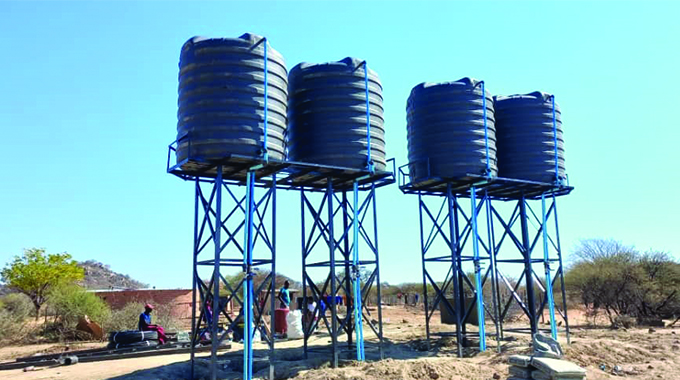
Sukulwenkosi Dube-Matutu, Matabeleland South Bureau
GARANYEMBA Drought Mitigation Centre in Matabeleland South Province has brought economic empowerment and food security to the community with irrigation farming taking place for the first time following the harnessing of water from Garanyemba Dam after a desilting programme.
The dam, which was established decades ago, had become heavily silted, causing it to dry up after a few months of the rainy season. The drought mitigation centre now boasts solar-powered boreholes, a nutrition garden, livestock feeding troughs and supplementary feeding facilities.
The Garanyemba Drought Mitigation Centre was established last year as part of livestock drought mitigation strategies and the Village Business Unit (VBU) model, under the Government’s Rural Development 8.0 programme.
Garanyemba Ward was selected to pilot the initiative, whose replication in all 1 620 rural wards across the country has begun.
The programme seeks to build community resilience to climate shocks, promote sustainable food production and reduce poverty through integrated rural development.
Plans are also underway to establish a livestock sales centre and a fisheries project, expanding the scope of economic opportunities for villagers.
The drought mitigation centres, being rolled out countrywide, are part of the Government’s measures to sustain the national herd and to mitigate the effects of the El Niño-induced drought, which has severely affected water and pasture availability.
Garanyemba Drought Mitigation Centre chairperson, Mr Justice Ndlovu, said the project was introduced at a crucial time when farmers were losing cattle to drought.
“When this project was introduced, we were reeling from the effects of the El Niño-induced drought and our cattle were dying.
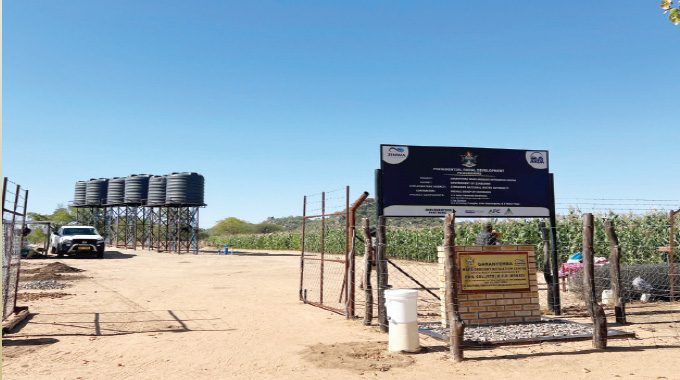
“The dam didn’t have any water left and two boreholes were drilled while the infrastructure we now have at the project site was constructed,” said Mr Ndlovu.
“Many cattle were saved because of this project as farmers were able to bring their animals for feed and watering. Now there is no need to feed our animals because we have grass, but if another drought comes, we know that we will be cushioned.”
Mr Ndlovu added that the community is now mobilising funds to construct cattle sales pens, a crucial step to ensure that farmers get fair value for their livestock rather than selling out of desperation.
Mr Ndlovu appealed to well-wishers and private partners to assist in setting up the pens.
The centre’s vice-secretary, Ms Evert Masare, said the introduction of a horticulture garden has provided both income and improved nutrition for villagers.
“Some of our clients are market owners who come from Gwanda Town to buy produce from us in bulk. Irrigation farming wasn’t possible in our area as we had water challenges, but now we can produce all year-round and ensure that we feed our families,” she said.
“This project has come as a huge empowerment boost, especially for us as women as we form most of the farmers and some are widows.”
She said the garden produces chomolia, beans, maize, cabbage and spinach, among other crops and members contribute part of their sales to a common fund used for maintenance and sustainability.
Speaking during a recent visit to the project site, Lands, Agriculture, Fisheries, Water and Rural Development Minister, Dr Anxious Masuka, said the project is designed to cushion communities against the effects of recurring droughts, which often lead to livestock losses.
He said the nutrition gardens will support both horticulture and fodder production to sustain people and animals alike.
Dr Masuka said the livestock sales centres will regulate the sale of livestock adding that no farmer will be allowed to sell animals from their kraal as buyers will purchase cattle from designated points on organised dates.
The model, he said will help the Government control market prices and protect farmers from exploitation by middlemen.
@DubeMatutu



 Online Reporter