admin
admin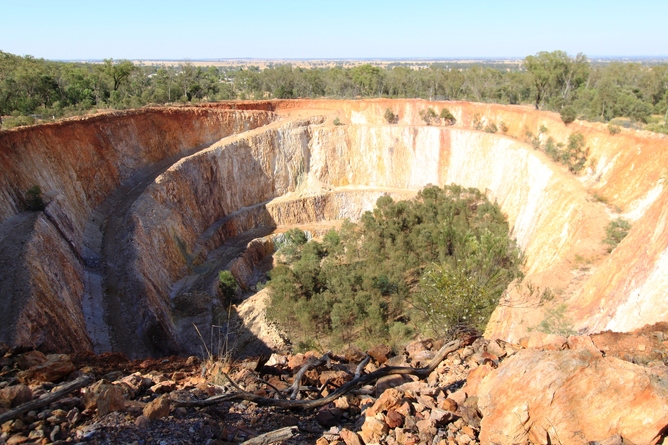
Andrew Mangwarara – Garden Affair
Reclaiming of mine wastelands is a vital component that is incorporated in the environmental laws of many countries.
Mined land needs to be restored for the benefit of future generations because we live on a planet that is not expanding though the population is increasing.
There are provisions set out in the Constitution of Zimbabwe for an environment that is not harmful to the health and well-being of the people, to have an environment protected for the benefit of present and future generations, in Section 73 (Chapter 4). Thus it should be a matter of principle for mined lands to be restored to their original stable states.
Many years ago I had an opportunity to visit the Haller Park in Bamburi, Mombasa on the Kenyan coast.
The area was once a quarry wasteland used to produce cement, but today it is a thriving lush forest. The then Bamburi Cement Company hired Dr Rene Haller to restore the limestone desert.
This was an almost impossible task.
Dr Haller planted 26 plant species and of these only three survived: the damas, coconut palm and Casuarina were used to colonise the area.
Once these plants were established other plant species also established themselves, after Dr Haller identified the red legged millipede to feed on the tough needles of the Casuarina tree.
This made it possible for the organic matter to be decomposed and create an environment conducive for other plant species to succeed.
Many lessons can be drawn from this amazing story, which can be applied to our own Zimbabwean scenario.
However, reclaiming mined land requires a lot of capital injection, which hopefully can come from the companies that would have extracted minerals from the area.
It is also an opportunity for local communities to derive some benefits by being employed to restore these sites.
Land reclamation is not just a case of burying waste, smoothing out land and planting some vegetation; but is a process of returning a piece of land to its valuable state.
The land must be reformed to similar land use activities in that area, support of the same species diversity, conformity to community expectations and the Environment Management Agency must be in agreement to the restoration done.
This brings us back to the constitution whereby the land should be returned to a safe and stable landscape for humans, domestic animals and wildlife.
The process of land reclamation must begin with the removal of any wastes in the environment followed by re-contouring of mined pits to mimic the original landscape.
Topsoil can be reintroduced possibly from those areas which have been recently cleared in a process called direct return.
Direct return enhances the return of viable seeds from the same area, nutrients, organic matter and beneficial soil micro-organisms.
This process is followed by ripping of the land to open up the subsoil whilst seeding can be done simultaneously. Seed is broadcast by hand or by attaching a seeder to the bulldozer.
Only indigenous seed is used preferably within 15km of each mine to retain local genetic material in the area.
Fertiliser can be applied to the area at rates of about 500kg per hectare. The seeds planted must ensure that there is at least one legume plant per every square metre and another which is not.
Monitoring programmes should be carried out at nine-month intervals whilst erosion problems can be checked every 15 months.
Plant species diversity should also be measured. The area must not be occupied by just one or two species. This allows for greater colonisation by numerous animal and insect species, thereby promoting a more stable interactive ecosystem.
Land reclamation or reformation needs to happen now rather than later. As soon as mining ceases in an area efforts at reclamation must begin in earnest under the watchful eye of environmental agencies.
It is the responsibility of both small and large firms to restore mined land to its original state once mining is over.
For further details contact Andrew by email: [email protected]



 Online Reporter