


 admin
admin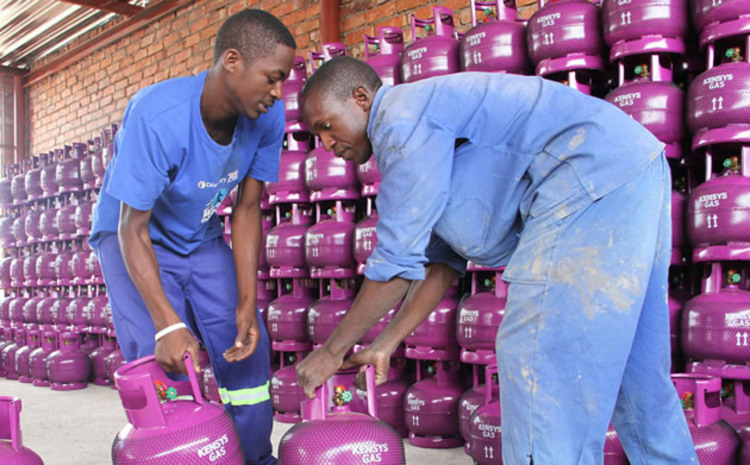
Prices of liquefied petroleum (LP) gas have more than doubled due to an on-going critical shortage of the commodity on the local market as a result of the shutting down of South African refineries a fortnight ago.

A snap survey carried out by The Sunday Mail Extra in Harare last week showed that prices had gone as high as $5 per kilogramme from the usual average of $1,80 per kilogramme.
Zimbabwe gets most of its LP gas from South Africa and has therefore seen some of its major importers run out of stock after refineries from the neighbouring country were shut to pave way for maintenance work.
While there are also suggestions that the shortage was caused by alleged blocking of ports by the US Navy to protect their president Barack Obama when he visited Africa, South African traders say the shortage is due to technical breakdowns at their refineries.
As a result, major LP gas distributors in the country such as Redan Gas and BOC Gases last week said they were out of stock.
Local distributors say although they have kept prices as low as possible, getting supplies from other traders besides South Africa has been expensive thereby resulting in the price hikes.
Some local retailers have now resorted to sourcing the resources on their own directly from South Africa and Mozambique.
Paul Bowen of Redan Gas confirmed the shortages and said retailers might continue to hike prices if the shortage persists.
“We are still hoping that the situation will improve but as for now there are still challenges at the South African refineries and supplies are low,” Bowen told this publication last week.
“We have been getting our supplies from traders in Beira and we do not really know when we will get the next one. This has obviously affected prices, though we try to keep them as low as we can but retailers are now just taking advantage.”
Another distributor, BOC Gases said they were currently out of stock although a consignment was on its way from South Africa.
“I would not say the situation has improved because as for now we do not have anything. But there are two trucks on the way, that’s all I can say,” said the company’s sales manager, Mr Francis Nyamayemombe.
A LP gas filler in Warren Park says he has failed to get supplies from three separate distributors and had to get it at an exorbitant price from an unscrupulous dealer. Unfortunately, he had to pass that price on to his customers.
“There is nothing we can do than to charge more because we are also getting the product at a higher price from the dealers so we are simply passing on the cost,” he said.
The Consumer Council of Zimbabwe has, however, warned retailers to desist from taking advantage of the situation saying their conduct disadvantages customers at a time they are facing severe electricity shortages.
“As we are coming from the holiday we had not been able to dispatch our team to work on the issue but the problem that we are having in the country over and over again is of retailers taking advantage of the consumers,” said Ms Rosemary Siyachitema, the council’s executive director.
“Considering the fact that we want to conserve our electricity through alternative sources of energy, their (retailers’) conduct leaves a lot to be desired. If retailers are indeed hiking prices and taking advantage of the situation we will look into the issue.”
However, it is still not clear when supplies will stabilise.
One of South Africa’s major LP gas suppliers, Afrox, revealed in a statement that it was failing to meet the South African demand.
“The current gas shortage is a combination of refinery shut-downs and constrained supply at some refineries that are still in operation,” said Afrox.
“Afrox is importing LPG but the lack of national import terminals for LPG in South Africa, limits the tonnage which can be imported by Afrox to 3 000 tonnes per shipment, which constrains our ability to meet national demand in peak winter periods.
“Until the local refineries are all operating at 100 percent capacity, the shortage will continue.”
Nevertheless, the Zimbabwe Energy Regulatory Authority (Zera) last week told ZBC that supplies resumed from the alternative port of Beira in Mozambique and there are high expectations that supply will be consistent soon.
“There has been challenges getting LP gas from South Africa but things have started improving,” said Zera chief executive officer, Engineer Gloria Magombo.
Efforts to get a comment from Zera were fruitless as the regulatory authority had not yet responded to questions sent to them by the time of going to print.
The gas deficit has compounded the energy problems rocking the country and experts say unpredictable shortages will continue in the future as the country relies on dealers who have access to ports in neighbouring countries.
The usage of LP gas in the country has increased over the years as it had become the most affordable and efficient source of energy for most households.
The persistent shortages have amplified calls for Government to expedite plans to extract coal-bed methane (CBM) gas which was discovered in large reserves in Lupane and Hwange. Large reserves of CBM were discovered in Matebeleland North and experts say it can be tamed for domestic use.
The country has a peak electricity demand of 2 200 megawatts (MW) a day but Zesa only manages to produce an average of 1 500 MW.



 Online Reporter