

 Chronicle Editor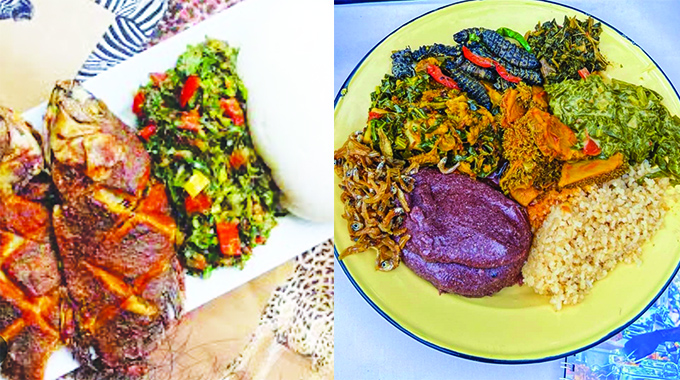
Simbarashe Murima, [email protected]
ZIMBABWE is bestowed with the knack of its own organic and inimitable taste of local beverages and food produced from loamy soils and reduced use of biochemical products.
The love for food and changes in eating preferences in individuals has levitated culinary culture and added the value of social eating habits that drive travel motives in tourism activities.
Gastronomy tourism has become a subtly fast growing cog of the tourism and hospitality appeal in Zimbabwe, which is recognised as a unique destination.
The UN Tourism, Committee on Tourism and Competitiveness (CTC), which is one of the technical committees of the UNWTO defines gastronomy tourism as a type of tourism activity which is regarded as the visitor’s experience concomitant with food and related products and activities while travelling.
Also known as food tourism or culinary tourism, gastronomy tourism involves visiting food producers, partaking in food festivals, tea tasting, engagement in culinary activities and tasting of various wine and breweries in restaurants, hotels or hosts’ homesteads.
Since food tourism is part of cultural tourism, it cogitates on the diversity of local communities, ethnicities, culture, heritage, traditions of diverse societies and communities.
The local development of gastronomy tourism in Zimbabwe is empowered by local and international culinary enthusiastic tourists who travel to experience the indigenous foods prepared by locals.
Importance of gastronomy tourism in Zimbabwe
Gastronomy tourism provides a travel offering that supports the domestic tourism market which is one of the most potent resilient strategies that help strengthen tourism in Zimbabwe.
This sub-type of cultural tourism aids by contributing to the long-term sustainability of home-grown agricultural products, communities and values.
In addition, gastronomy tourism allows tourists to discover and appreciate new cultures through local gastronomies.
Likewise, food is an essential part of the destination’s cultural identity that provides a profound understanding of the customs, ethos, history and lifestyle of the host people.
Tourism Africa Gastronomy Conference to be hosted in Zimbabwe
Zimbabwe, a country larger than Germany in terms of size, will this year host the first-ever Tourism Africa Gastronomy Conference scheduled to be hosted at the majestic, Victoria Falls. The purpose of this conference is to promote the consumption and exhibition of indigenous foods that are hailed for their abundant health benefits, from different African countries.
The staple food in Zimbabwe
The main staple of Zimbabwean cuisine is maize/corn, known as isitshwala in Ndebele and sadza in Shona. Thus, the relish for this staple food can be any one or more of either chicken, fish, beef, mutton, goat meat, idelele/derere (okra soup), with varieties of green leafy vegetables such as rape (collard greens), tsunga (mustard greens), pumpkin leaves, amacimbi (mopane worms) etc.
Zimbabwe foods exposed on YouTube food and travel channel
A few years ago, Zimbabwe was featured in the YouTube Food and Travel channel, streamed under the brand “Best Ever Food Review Show” created by American filmmaker Will Sonbuchner, widely known as Sonny Side. The channel boasts of over 10,6 million subscribers and over 2 billion views. Through the channel, the prominent YouTuber introduced part of Binga, titled “Thriving on $1 a Day in Africa! Africa’s Apocalypse Man.”
Located in Matabeleland North and south of Lake Kariba, Binga is home to the BaTonga people and is a pristine destination in Zimbabwe that is yet to be fully reconnoitred and discovered by modern travellers all over the world.
Through such channels, the country is indirectly marketed and exposed to millions of views signifying Zimbabwe’s potential to lure travellers from around the world and experience the distinctiveness and exotic cuisine preparation.
As a result, such internet publicity and the Ministry of Tourism and Hospitality Industry in the country may have garnered international attention and proffered Zimbabwe an opportunity to host the first-ever food tourism conference.
Thus, the reminiscence of the host destination is taken back by the tourist not only through visiting local attractions and sightseeing but as well as through the taste of the native’s food.
For that reason, gastronomy tourism in Zimbabwe is destined to play a vital role in empowering local communities, and symbolises a continuum of positive cultural and heritage characteristics that are aligned with sustainable tourism.
If well promoted and supported by all tourism and hospitality stakeholders, I foresee a flourishing and auspicious future in gastronomy tourism in the country.
l Simbarashe Murima (PhDc) writes in his own capacity as an Education, Tourism and Hospitality expert in Namibia and Zimbabwe.
Feedback: [email protected] or +263781480742.


 Online Reporter