admin
admin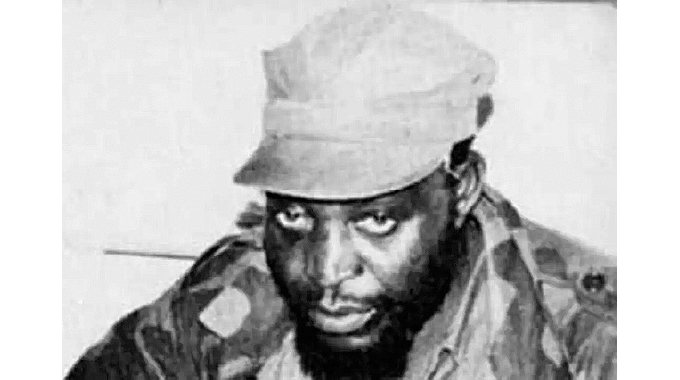
Compiled by Zimpapers Knowledge Centre
WHAT had promised to be the most memorable home-coming event turned into a nightmare as tragedy struck the nation following the untimely death of Zanla Commander and Secretary for Defence, General Josiah Magama Tongogara.
Gen Tongogara perished in a road traffic accident in Mozambique on December 26, 1979, two months before the first democratic elections were held.
He was reburied at the National Heroes’ Acre on August 11, 1981.
In Gen Tongo, as he was affectionately referred to, Zimbabwe lost a gallant fighter, military strategist, organiser, loyalist and patriot whose life personified the armed struggle.
Following the theatre of conflict, which had taken a large part of his life, was Gen Tongo’s death going to be a game changer?
This instalment can only give an abridged version of the towering figure’s works and impact on Zimbabwe’s future socio-economic, political and cultural standing.
The late Zanu Secretary for Defence and Zanla Commander was an esteemed General who took over command from Cde Herbert Chitepo.
Over the years, many have attested that the late military commander was a military strategist, a principled cadre and a man who fought tirelessly for the freedom of Africans from colonial bondage.
It was these attributes that helped him transform the Zimbabwe African National Liberation Army into a formidable force that forced the Rhodesian administration led by Ian Smith to concede to negotiated talks, which ultimately resulted in the country’s independence.
The exceptionally gifted Gen Tongo was born in Selukwe (Shurugwi) on February 4, 1940 and was named Josiah Magama — after his father.
His brother said that school-work, which he found difficult, was easy for Josiah, so too football and other sports; and even music, adding that his brother grew up with one intention, one goal — to liberate his country.
Gen Tongo grew up at a farm and was educated up to Standard 6 before he left the country for Northern Rhodesia (present-day Zambia), in 1960.
In the book, “Tongogara in his own words” he recounts his upbringing: “Like most Africans, our family as a whole, and individual members of it, oscillated between the small chrome-mining town of Selukwe and the Tribal Trust Lands in the Mashaba area. My father, Magama Tongogara, was a peasant who eked out an existence from tilling the land and looking after a diminishing number of livestock…”
In Zambia, Gen Tongo studied book-keeping and after completing his studies, he was employed the following year as a secretary at a golf club known as Chainama.
He started his revolutionary activities in Zanu in Lusaka, Zambia, in 1963.
Gen Tongo was a dedicated cadre of the youth wing, and returned to Rhodesia (now Zimbabwe) in 1964 to attend Zanu’s first congress in Gwelo (Gweru) in that capacity, before he went to China in 1965 for training in political science, military intelligence, mass mobilisation, and guerilla war strategies and tactics at the Nanjing Higher Military Academy.
On his return from China in 1966, Gen Tongo started to train Zanla cadres in Tanzania, and he also began to review military strategy.
In 1970, he arranged for the Zanla forces to work with Frelimo and later established camps in Mozambique.
It was Gen Tongo’s military prowess and dedication that led to his appointment as the military commander of Zanla and chairman of the High Command in 1972.
In 1973, at the biennial review conference, he became Chief of Defence in the Dare reChimurenga, the Zanu executive council charged him with the responsibility to direct the liberation war that brought about Independence to Zimbabwe.
When the party was reorganised in 1977, Gen Tongo was re-elected to the Central Committee as Secretary for Defence, and he continued to chair the High Command until his untimely death.
Gen Tongo played a significant role at the Lancaster House negotiations for independence in 1979, which he regarded as a “second front” on the war, and especially the military negotiations on logistics for the ceasefire between the Rhodesian forces and the Zanla/Zipra forces.
He had this to say about the Lancaster House conference in 1979: “As I have always said, Lancaster is our second front, brought about by the freedom fighters. And so far, what I see, that has been achieved by the liberation forces of Zimbabwe is . . . they have brought about the birth of a new Zimbabwe. That is one.
“Two, they have buried the so-called racial supremacy. . . This is important, that in the near future, the people of Zimbabwe will be proud to have their new Zimbabwe . . . and this will never be reversed anymore.”
To ex-combatants, and Zimbabweans in general, the name Josiah Magama Tongogara will always be synonymous with the successful prosecution of the liberation war.
His next most important goal was that his children and others should grow up in a peaceful and free Zimbabwe and be able to participate in its reconstruction.
In an interview with David Martin during the Lancaster House talks in late 1979, Gen Tongo spoke about the future and the role that he was likely to play in the new Zimbabwe and also his desire to go into farming.
“In the first initial stages, definitely, as I say, we still have got a lot to do. I have got to participate in the reconstruction of Zimbabwe,” he said.
“Probably what I could say is that, since I still feel that there must be a new Zimbabwe army and I seem to be having some role to play, I would like to see myself completing this, creating a new Zimbabwe army, the army for the people, the army which has the interests of the people at heart, the army which has the interests of the country at heart.
“Probably after that, one can ask me what I want to do. I may decide to go back to the countryside and do some ploughing.”
In December of 2017, the Government of Zimbabwe renamed King George VI Barracks and the Air Force Headquarters in Harare as Josiah Magama Tongogara Barracks, in honour of the liberation struggle stalwart.
The liberation war icon’s son, Tichafa, started the Josiah Magama Tongogara Legacy Foundation to highlight the role played by his father in liberating Zimbabwe.
Professor Simbi Mubako, who chairs the Josiah Magama Tongogara Legacy Foundation, in 2014 described Cde Tongo as “not just a legend, but . . . a country boy who rose to greatness through sheer determination and self-sacrifice, virtues that young men and women can emulate and achieve in their own walks of life.”
In February 2020, the National Gallery of Zimbabwe held an exhibition in Harare giving insights into the late national hero’s family life, strategies and never-seen-before images.
Additional information from:
A guide to the Heroes Acre: Some basic facts about Zimbabwe’s heroes and the Heroes Acre. (2019) Harare: Ministry of Information, Publicity and Broadcasting Services.
Tongogara in his own words. (2019) Harare: African Publishing Group.


 Online Reporter