admin
admin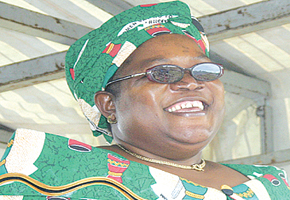
I understand that by 5am they rush to city centre markets to buy various goods for sale. I remember vividly that a commuter omnibus which was involved in an accident at a railway crossing in Dzivaresekwa in Harare in the early hours of one morning a few years ago was carrying women who were on their way to the market. At times I wonder whether these vendors even have time to cook dinner for their families because as late as 10pm they are still in town selling their wares.
Such a picture is the common portrait of women entrepreneurs in Sub-Saharan Africa. When one hastens to ponder about women and economic activity these are images that are recorded on one’s mind — a woman selling cellular phone recharge cards by the street corner, a vendor selling one or two tomatoes and onions in front of a supermarket, a woman with a baby on her back tilling land, a woman at the flea market shouting for customers at the top of her voice, a vendor selling roasted maize through the window of this bus to Mutare via Chivhu.
Buwa, a journal on African experiences points out that as a bonus, the women are usually smiling oblivious of the hardships they go through day and night in a bid to fend for their families. The International Labour Office report of 2009 says that in the developing world, women workers make up around 60 percent of non-agricultural employment, 90 percent of street vendors and up to 80 percent of home-based workers. Due to their placement in the informal sector, women’s vulnerability increases and often excludes them from protective regulations.
As they complement their husbands’ salaries I wonder whether their efforts are actually appreciated. Such are the efforts of women’s unpaid work.
She wakes up at 6am daily, sweeps the yard, prepares porridge and warms water for the husband, bathes her Grade One child and sends her to school. When she comes back from school, she washes the dishes and clothes. She then cleans the house before she hurriedly drinks tea at 11o’clock so that she picks up the Grade One child from school.
The chores go on and on till midnight or so on, on a daily basis. Just because there is no pay attached to women’s roles and duties, women think they are not at work. Such is the portrayal of unpaid work.
This is what the African woman with her unmatched determination does to fend for her family. It shows this incredible endurance and strides that African women take to survive under very difficult and harsh conditions. Whether it is a small business like vending or at macro-level, a woman always endures hardships.
According to Buwa: Rethinking Approaches, Reconsidering Strategies, a barrage of data affirms gender inequalities and reveals how women lag behind men in every area of human development.
However, this era should come to end as more and more women who are assertive and rising to prominence are on the increase.
Our own Honourable Vice-President, Amai Joice Mujuru, the Honourable President of the Senate, Cde Edna Madzongwe, and Honourable Deputy Prime Minister Thokozani Khupe have set the pace for Zimbabwe. Their positions have helped challenge perceptions that people have about African women’s potential and ability.
However, participation of women in the world economy cannot be achieved if women do not have access to finance as well as land and property rights. Gender parity at corporate level is also affected as very few women are board members or executive members of corporations.
A South African study on women’s participation in companies listed on the Johannesburg Stock Exchange (JSE) showed that the country will achieve 50 percent female representation on boards in 2031, while 2050 is the realistic target for parity at executive management level.
It is unfortunate that while women are also venturing into mining, their operations are still at small scale and there are very few women at the top-levels who can lobby for gender equitable policies in the sector.
In South Africa for example, the mining industry has been challenged to increase its female workforce and transform its working conditions to promote gender equity.
While progress is being made to address gender disparities, there is a need to challenge cultural norms, attitudes and practices that continue to promote self-limiting images of women and unfair conditions that exclude women from the mainstream economy.
In this regard, the media should continue to reflect a positive image of women and help influence perceptions about women’s roles and their potential in development.
There is also need for development financial institutions, private banks and micro-financial institutions to invest in women businesses so that they can also grow from micro to macro levels.
The writer is the Bulawayo provincial development officer in the Ministry of Women Affairs, Gender and Community Development.



 Online Reporter