Chronicle Editor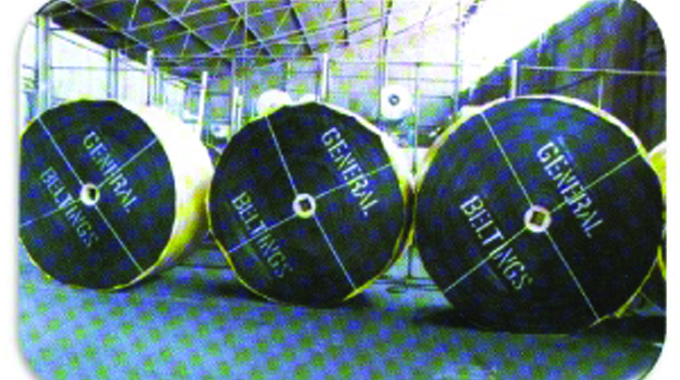
Senior Business Reporter
LISTED conveyor belts manufacturer, General Beltings Holdings Limited says it is angling to capitalise on the on-going Russia-Ukraine conflict which has disrupted raw material supply chains as firms are now compelled to procure locally.
Globally, the conflict has seen rocketing fuel and commodity prices, along with supply chain disruptions and choking raw material shipments across international markets — Zimbabwe included.
As such, the firm says it anticipates increased demand in products by local companies as they turn to local suppliers for various raw material requirements, company secretary, Mr Patrick Munyanyi said in a trade update accompanying financial results for first quarter ended 31 March.
“Having contained the pandemic, the Russia- Ukraine conflict emerged as a Global flash point which has spawned among others global logistical constraints which have resulted in delayed delivery of raw materials. Inevitably the conflict has negatively impacted economies through pass-on increases on raw materials, energy, mining and agriculture input costs.
“The absence of a cessation in the Russia- Ukraine crisis, logistical delays will continue to disrupt the flow of materials into the sub-region. Therefore, local firms will be compelled to procure locally in order to avoid long lead times and working capital cycles,” he said.
“GB Holdings will focus on value preservation through continued profitability in the traditional markets which are expected to be buoyed by improved mineral commodity prices and increased local demand as firms opt to procure locally.”
The stock exhange listed firm manufactures and distributes general-purpose and specialised reinforced conveyor beltings, and rubber and chemical products.
Its product range includes rubber-covered belting, polyvinyl chloride (PVC) belting, light-duty PVC belting, solid-woven belting, transmission belting and conveyor belt rubber skirting.
On the firm’s performance in the period under review, Mr Munyanyi said the company generated an operating profit on the back of carried forward stocks and orders from prior year.
“Volumes at 307 metric tonnes were 48 percent above same period prior year’s volumes 207 metric tonnes. Both operating divisions recorded growth in revenue and volumes compared with the same period prior year.”
He added that in view of the limited pricing options and limited raw material supplies, turnover on an inflation adjusted basis at $210 million grew by 23 percent from the $170 million recorded same period prior year.

On a historical basis turnover at $196 million grew by 104 percent from prior years $96 million.
Gross margins and operating expenses were under severe pressure due to parallel rate indexing of local costs. As a result, operating profit is lagging behind budget.


 Online Reporter