

 Chronicle Editor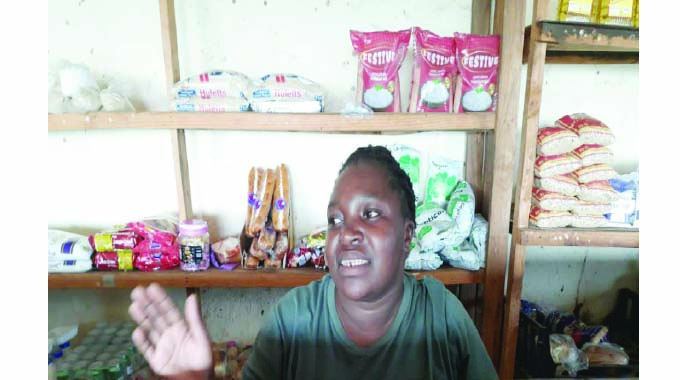
Yoliswa Dube-Moyo, Matabeleland South Bureau Chief
It was as though time had stood still for a moment as everyone visiting Hantinya Kiosk along the Gwanda-Beitbridge highway early afternoon yesterday gazed at the unfamiliar figure that had arrived.
The late legendary musician Oliver Mtukudzi’s Bvuma blurred from the speaker of one store while sungura maestro Alick Macheso’s Petunia could be heard from the other shop.
It was just the music and stares; no more talking or laughing until hushed tones could be heard, as though they were reassurances that there was no need to be alarmed.
Hantinya Kiosk is one of the many general dealers across the country that do not only offer grocery items and other goods for sale but act as a conduit between villagers in surrounding areas and their relatives living in various towns and cities.
From here, villagers can send or receive various goods such as fertilisers, groceries and even money through buses and other vehicles that ply that route and pass through Hantinya Kiosk.
Ms Janet Gwarimba, the shop attendant at Hantinya Kiosk said people trusted them and were comfortable to leave their goods at the shop.
“A lot of people coming from Beitbridge and others from surrounding villages come and leave their parcels with us to be collected by their relatives who live around here. We simply keep the parcels safely until the owner comes to collect their parcel,” she said against Mtukudzi’s voice in the background.
She said people leave packages ranging from grocery items to farming implements and various household goods and appliances.
This has been a trusted system which has been used for many years, dating as far back as the 50s when traders not only offered various goods for sale but also received letters and other items from the city on behalf of the villagers.
Nowadays, these general dealers do not only act as a conduit or a supplier of basics but are also an entertainment spot for villagers who go there to buy alcoholic beverages, listen to some music or play snooker. Enterprising villagers have also maximised on the popularity of the place to set up parallel markets for their wares comprising mostly clothing items.
“A lot of people visit these shops not only to buy groceries but to also socialise. That’s why I decided to set up my market stall here,” said Ms Sandra Kwando who sells clothes for women and children.
She said a lot of traffic also stops by the shops for recess and some travellers are interested in her wares.
“Selling from here has been working well for me and because of the good relationship I have with the owners of the shops, I’ve been allowed to sell without paying anything,” said Ms Kwando.
General dealers have evolved from decades back when they were primarily owned by the whites, mainly the Greeks, Chinese and the Jews.
“The whites owned general dealers in the rural areas before black people were evicted so you would see names like Thandabantu, Sizabantu – these were the common names for those shops.
Johan Colenbrander had one across the Shangani at Sivalo. These were scattered in many areas and they were serving the African population within native reserves,” said renowned historian Mr Pathisa Nyathi.
He said during this time, blacks were developing new tastes and the entry point of new items was the traders.
“These shops were introducing new things such as sweets, petroleum jelly, sugar, fabric, cigarettes and biltong among other items. Later on, there were drinks such as Canada Dry, Lemonade and Fanta. Usually there would be a tailor who would then make clothes from the fabric you would have bought from the traders. These shops changed the material culture of the people. They went from wearing sandals to wearing Tommy shoes among other brands,” said Mr Nyathi.
He said there were traders’ houses at Old Bulawayo where whites would get various goods from blacks like sorghum and other crops.
“At that time, there was the barter system. Colonisation later came and general dealers were associated with mining compounds and commercial farms. The range of items coming in were constantly changing, for example, we went from dripping to wholesome and eventually cooking oil and others,” said Mr Nyathi.
In Kezi, Mr Nyathi said, one of the first trading stores to be established there was run by Fletcher Ngwenya.
“The likes of Joseph Mtshumayeli and Dick Bhango established their stores in the 50s and black people were now becoming players in the industry. Buses would transport goods to these stores but before these, lorries such as Bedford did the job. Delivery vans of various brands then started operating later on.”
Turning to the liberation struggle era, Mr Nyathi said some trading stores were closed down with the introduction of curfews and other restrictions.
“These stores became critical in providing items like beef to the freedom fighters. It was important for the combatants as part of their strategies to link up with the Zapu structures within the country who would then link them to these businessmen.
These traders would not only provide food but clothing items as well. The businessmen had an excuse to get into town as they would say they were going to order stock for their stores.
They would then come with denim and combat gear different from what they had come with from the Soviet Union,” said Mr Nyathi.
He said general dealers have now become meeting points for the youths.
“They continue to be the conduit for items from town which have evolved over the years.” – @Yolisswa


 Online Reporter