Chronicle Editor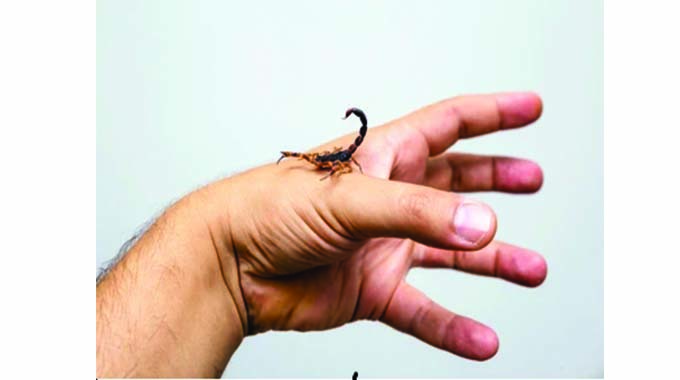
I HOPE I find you well and in good health. The Covid-19 statistics are getting lower by the day in terms of transmission and death rates. Preventative measures need to be maintained so that we keep another wave at bay.
With the erratic power supply these days, firewood has been an alternative. This comes with its threats; snakes, spiders’ centipedes and scorpions to mention a few. Scorpion stings are painful but rarely life-threatening. Young children and older adults are most at risk of serious complications.
The pain you feel after a scorpion sting is instantaneous and extreme. Any swelling and redness will usually appear within five minutes. More severe symptoms, if they’re going to occur, will come on within the hour. It’s possible to die from a scorpion sting, though unlikely.
Scorpions are predatory creatures that belong to the arachnid family. They have eight legs and can be recognised by their pair of grasping pedipalps, which resemble pinchers, and their narrow, segmented tail. This tail is often carried in a forward curve over a scorpion’s back and ends with a stinger.
Some scorpions are smaller and more translucent and difficult to see. They may appear as a thin string on the ground. Scorpions come in a variety of colors — from tan to light brown to black.
When a scorpion stings, its stinger can release venom. The venom contains a complex mix of toxins that affect the nervous system (neurotoxins). Healthy adults usually don’t need treatment for scorpion stings. But a scorpion sting can have serious effects in young children.
Signs and symptoms at the site of a scorpion sting may include:
Pain, which can be intense
Numbness and tingling
Slight swelling
Warmth
As with other stinging insects, such as bees and wasps, it is possible for people who have previously been stung by scorpions to have allergic reactions with subsequent stings. Reactions to these subsequent stings are sometimes severe enough to cause a life-threatening condition called anaphylaxis.
Signs and symptoms related to widespread (systemic) venom effects usually occur in children who are stung and may include:
Difficulty breathing
Muscle twitching or thrashing
Unusual head, neck and eye movements
Drooling
Sweating
Nausea and vomiting
High blood pressure (hypertension)
Accelerated heart rate (tachycardia)
Restlessness or excitability, or inconsolable crying in children.
Scorpions often hide in firewood, clothes, bed linen, shoes, and garbage pails, so care should be taken when handling these things. They’re more likely to be seen during the warmer seasons and when hiking or camping. Scorpion stings usually occur on the hands, arms, feet, and legs.
Scorpions hunt at night and hide under rocks or trees during the days, they resist stinging unless provoked or attacked. Prevent being stung by:
Removing piles of rocks or lumber from around your house and don’t store firewood against the house or inside.
Keep grass closely mowed, and prune bushes and overhanging tree branches, which can provide a path to your roof for scorpions.
Caulk cracks, install weatherstripping around doors and windows, and repair torn screens.
Inspect and shake out gardening gloves, boots and clothing that haven’t been used for a while.
When travelling to areas where lethal scorpions are common — especially if you’re camping or staying in rustic accommodations — wear shoes and shake out your clothing, bedding, gear and packages often.
If you find a scorpion, use tongs to gently move it away from people. Most scorpion stings don’t need medical treatment. When bitten stay calm, do not panic. The treatment for most scorpion stings is home remedies and rest.
First aid that can be administered;
Wash the sting with soap and water and remove all jewellery because swelling of tissue may impede blood circulation if it is not allowed to expand (for example, a sting on a finger that has a ring surrounding it).
Apply cool compresses, usually 10 minutes on and 10 minutes off the site of the sting. This may help reduce pain.
Acetaminophen 1-2 tablets every four hours may be given to relieve pain (usually not to exceed 3g per 24 hours). Avoid aspirin and ibuprofen because they may contribute to other problems.
Antibiotics are not helpful unless the sting area become secondarily infected.
Do not cut into the wound or apply suction.
If a child is five years or younger is stung, seek evaluation by a medical caregiver.
Don’t consume food or liquids if you’re having difficulty swallowing.
In 2015, there were reports of airline passenger(s) being stung in flight. The planes were landed before reaching their destinations to rid the aircraft of the scorpion(s). (emedicinehealth).
Till next week stay. Stay safe.
Dr Tatenda Simango can be contacted on [email protected] or follow him on Facebook@ 9th Avenue Surgery.



 Online Reporter