

 admin
admin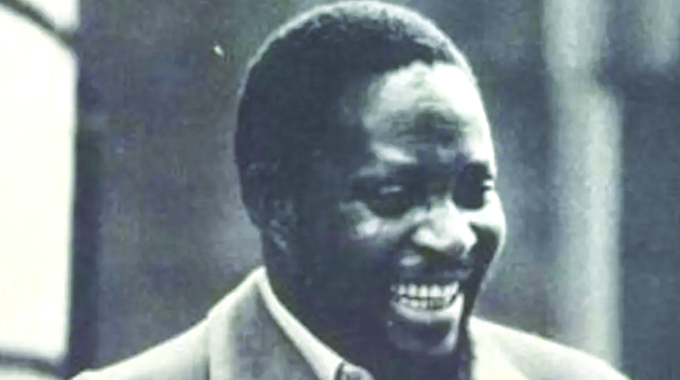
Herald Reporter
General Josiah MagamaTongogara, who was the ZANU PF secretary of defence and commander of the Zimbabwe African National Liberation Forces (ZANLA) was an astitute military leader who led the liberation army with so much focus and vision.
At a time the white minority government regarded Africans as lacking capacity to come up with a formidable army to liberate the country, Gen Tongo, as he was affectionately known, formulated military strategies that led to the defeat of the Rhodesian army. Many in the military around the world still wonder at how the locals managed to achieve such a feat, and the answer will always revert to General Tongogara and his array of commanders.
Gen Tongo envisioned a Zimbabwe that was free and unshackled by settler colonial racism, and that pushed his desire to fight for independence. He always spoke about everyone becoming equal in a free Zimbabwe and also about the land, which was supposed to be shared among all the people. Below is a brief interview Gen Tongo (JMT) had with journalist David Martin (DM) during the Lancaster House talks in late 1979.
***
DM: Have you achieved finally, what you went to war to achieve?
JMT: You see, when you enter a revolution, when you take up arms, you do so in order to achieve everything you want, but when you do resort to discussing around a table, you cannot envisage to achieve everything. But so far, at Lancaster, I am quite convinced myself that the people of Zimbabwe, by that I mean the liberation forces of Zimbabwe . . .have scored a tremendous victory.
They have demonstrated to the whole world that they are a force to reckon with, and they have brought about Lancaster. As I have always said, Lancaster is our second front, brought about by the freedom fighters. And so far what I see has been achieved by the liberation forces of Zimbabwe is that they have brought about the birth of a new Zimbabwe. That is one. Two, they have buried the so-called racial supremacy.
This is important, that in the near future, the people of Zimbabwe will be proud to have their new Zimbabwe, and this will never be reversed any more.
DM: How do you see your role in the future?
JMT: In the first initial stages, definitely, as I say, we still have got a lot to do. I have got to participate in the reconstruction of Zimbabwe. Probably what I could say is that, since I still feel that there must be a new Zimbabwe army and I seem to be having some role to play. I would like to see myself completing this, creating a new Zimbabwe army, the army for the people, the army which has the interests of the people at heart, the army which has the interests of the country at heart.
Probably after that, one can ask me what I want to do. I may decide to go back to the countryside and do some ploughing.
The book, “Tongogara in his own words” quotes Gen Tongo recounting his upbringing: “Like most Africans, our family as a whole, and individual members of it, oscillated between the small chrome-mining town of Selukwe and the Tribal Trust Lands in the Mashaba area. My father, Magama Tongogara, was a peasant who eked out an existence from tilling the land and looking after a diminishing number of livestock…”
Cde Tongogara died in Mozambique on December 26, 1979 in a car accident and was reburied in Zimbabwe on August 11, 1981.
He started his revolutionary activity in ZANU in Lusaka, Zambia, in 1963.
Cde Tongogara was the product of the Nanking Academy of Peking. He worked in the youth wing of ZANU in Zambia before he went to China to receive training in military intelligence, political science, mass media and guerilla war strategies and tactics.
From 1963, he worked relentlessly as a party activist and on his return from China, he started to train ZANU cadres in Tanzania
Cde Tongogara was instrumental in arranging the ZANLA forces to work with FRELIMO in Mozambique and fought the Portuguese alongside President Samora Machel.
It was Cde Tongogara’s military prowess and intelligence that led to his appointment as the Military Commander of ZANLA and Chairman of the High Command in 1972.
In 1974 he became the Chief of Defence in “DARE”, the ZANU Supreme Council charged with the responsibility to direct the prosecution of the war in Zimbabwe.
It was also because of his leadership and the way he had popularised the war throughout Zimbabwe that the enemy agreed to go to the negotiating table at the Lancaster House Conference. Here too, Cde Tongogara played a great part in military negotiations which involved the ceasefire between the Rhodesian forces and the ZANLA/ZIPRA forces.
For most guerrillas and Zimbabweans, the name Tongogara is synonymous with ZANLA’s successful prosecution of the liberation war.
When the Party was reorganised in 1977, Cde Tongogara re-elected to the Party’s Central Committee as secretary for Defence a post he held up to his untimely death.
In December of 2017, the Government of Zimbabwe renamed King George VI Barracks and the Air Force Headquarters in Harare as Josiah Magama Tongogara Barracks, in honour of the liberation struggle stalwart.
The liberation war icon’s son, Tichafa, started the Josiah Magama Tongogara Legacy Foundation to highlight the role played by his father in liberating Zimbabwe.
Professor Simbi Mubako, who chairs the Josiah Magama Tongogara Legacy Foundation, in 2014 described Cde Tongo as “not just a legend, but . . . a country boy who rose to greatness through sheer determination and self-sacrifice, virtues that young men and women can emulate and achieve in their own walks of life.”
In February 2020, the National Gallery of Zimbabwe held an exhibition in Harare giving insights into the late national hero’s family life, strategies and never-seen-before images.
Commemorating the 42nd anniversary of his death in 2021 at the National Heroes Acre, guests praised Gen Tongogara for successfully leading the liberation army that prevailed against all odds, resulting in Zimbabwe’s independence. Air Force of Zimbabwe Air Vice Marshal Biltim Chingono said the legacy left by Gen Tongogara should never be allowed to fade given his immense role in the fight for the liberation of the country.
“He was one of our commanders during the liberation struggle,” he said. “I remember very well he would come to address us as soldiers during the liberation struggle. He was very popular among cadres and we need to emulate his legacy. He was a commander par-excellence.”
Gen Tongogara’s eldest son, Hondo echoed the same sentiments of the need to preserve his legacy.
“He did not just fight for us as a family, but for every Zimbabwean. There is therefore need to preserve that legacy and it is the legacy that is going to drive Zimbabwe,” he said.
His younger brother, Tichafa, said as part of preserving his father’s contribution they formed the Josiah Magama Tongogara Legacy Foundation aimed at upholding is legacy.
He said under the foundation, they had managed to pay school fees for more than 40 pupils, some of whom they later assisted in getting employment, particularly in Government’s security arms such as the Zimbabwe Defence Forces.
“We are actively calling for people to participate in the foundation. The foundation is collaborating with Institute of African Liberation Museum in Harare where we have also delivered some artefacts,” said Tichafa. In an interview, the widow of General Tongogara, Angelina, described her husband as a rare breed who would easily adapt to situations.
“When he was at home, you would not think that he was a soldier or a commander for that matter. He would easily adapt to the family situation to become a father and husband,” said Senator Tongogara.
Ms Nyaradzo Tongogara, daughter to the late national hero, paid tribute to members of the foundation whom he said demonstrated dedication given that they did not receive any remuneration despite the immense work they deliver. — Herald Reporter/A Guide to Heroes Acre



 Online Reporter