Chronicle Editor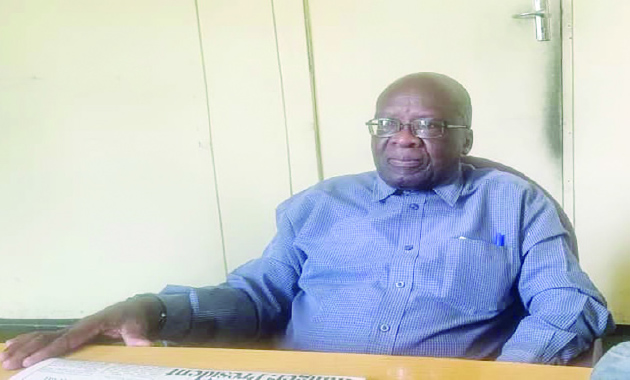
WE continue our interview with Colonel (Rtd) Marshal Mhambi Mpofu, the former Brigade Political Commissar when ZPRA was building its conventional forces at Mlungushi Camp in Zambia. Col (Rtd) Mpofu was one of the three ZPRA officers, who were seconded to Mlungushi to assist the Zambian Defence Forces train ZPRA recruits in conventional warfare. The other two (all late) were Colonels Richard Dube (Gedi Ndlovu) and Shadreck Boris Sibanda (Cephas Khuphe). In our last week’s edition, Col (Rtd) Mpofu told our Assistant Editor Mkhululi Sibanda (MS) about his training at Morogoro in Tanzania, after which he was one of the few chosen to go for further training in the Soviet Union. Below Col (Rtd) Mpofu resumes the conversation by narrating his training in the Soviet Union.

MS: Last time you were talking about leaving Tanzania for the Soviet Union in a group of 12, led by the now late Eddie Sigoge. Take us through your stay in the Soviet Union.
Col (Rtd) Mpofu: We left for the Soviet Union at the end of February 1974 to undertake a special in battery commanders’ course. Our training was meant to fit us into a conventional warfare set-up. The training covered the use of anti-air weapons and it was meant to prepare us to be commanders and instructors. That’s why after we came back, Sigoge returned to Morogoro to continue as an instructor with more specialised knowledge. During our time in the Soviet Union, we met comrades from other liberation movements and had an association with a leadership structure. The head of all African Military Students was Cde Armando Emilio Guebuza from Frelimo of Mozambique. Remember, Cde Guebuza was to become President of Mozambique between 2005 and 2015. Cde Sigoge was then chosen to deputise him, but he passed on the privilege to me and I duly took it. Also from Frelimo was Cde Candid Mondlane, a relative of Eduardo Mondlane, who was the leader of Frelimo but died in 1969. However, the Frelimo delegation withdrew from training and that had to do with the transitional government in their country, as they were readying for their Independence.

MS: On your part, how long were you in the Soviet Union?
Col (Rtd) Mpofu: We finished our training in December 1974 having travelled to the Soviet Union in February. So we flew out of the Soviet Union on 25 December 1974. We took a charted flight to Dar es Salaam and from there we were driven to Zambia. When we returned home as we called Zambia then, it coincided with the release of nationalist leaders from detention. It was the détente period, which was the slowing down of the armed struggle. So there was a lull in the execution of the armed struggle, although the reconnaissance units were very active. When efforts were made to integrate ZPRA and Zanla and the two to operate from Mozambique under the banner of the Zimbabwe People’s Army (Zipa), I was one of the cadres who was not deployed to Mozambique and we remained in Zambia under the command of Lookout Masuku. As you know, ZPRA committed its troops to Mozambique, which were led by its commander, Nikita Mangena. During our stay in Zambia, we tried by all means to respect and observe the détente protocols although the recc units were active along the Zambezi River. Then when things didn’t go as expected and we resumed our operations, I was deployed to the front, where I was involved in a number of skirmishes with the Rhodesian forces. I saw combat action in Kariba, Jambezi in Hwange District, Victoria Falls and so on. I was at the front in 1975 and 1976. Then in June 1977, I was withdrawn and told to report to the rear.
MS: What were the new orders?
Col (Rtd) Mpofu: I was posted to Mlungushi ,where ZPRA with the assistance and involvement of the Zambian Defence Forces was building its conventional forces.
MS: What triggered the formation of the conventional forces?
Col (Rtd) Mpofu: After the failure of the Geneva Conference that took place between October and December 1976, Zapu President, Dr Joshua Nkomo when asked by journalists “what was the way forward?”, responded by saying the Geneva Conference was a conference that never was. He went further to say that Zapu and ZPRA will build a conventional army, not an army in the sense of the Salvation Army, but one armed to the teeth that will take Ian Smith head-on. ZPRA under the command of Mangena then started rolling its plans of creating the conventional force. A lot of diplomatic manoeuvres were made that saw Zapu getting assistance from many quarters as it moved to put its military plans into action. Cadres were sent to Angola to train in semi-conventional warfare ,under the Cubans and Soviets, some were sent to Somalia to train as officer cadets, others to Ethiopia, Libya, while hundreds were being trained at Mwembeshi, CGT1 and CGT2 in Zambia as guerillas. Zambia also accommodated ZPRA, to train its cadres as officer cadets at its Military Academy at Kohima. So, when I got to Zambia from the front where I had been operating as a guerilla in 1975 and 1976, I was posted to Mlungushi as part of the three ZPRA officers to assist the contingent from the Zambian Defence Forces. The Zambians provided commissioned and senior non-commissioned officers to train our pioneer group of 2 000 recruits. The now late Colonel, Richard Dube, who was called Gedi Ndlovu during the war was then commissioned as a full lieutenant by the Zambian Army while myself and SB who is now late Colonel Shadreck Boris Sibanda (pseudonym Cephas Khuphe), were commissioned as second or junior lieutenants. SB for your information was the brother to politician and former Member of Parliament for Bulawayo Central, Dorcas Sibanda. He came from Musengezi in Mashonaland West Province. However, I joined them when they were a month into the training.
MS: How was the situation at Mlungushi compared to guerilla camps such as Mwembeshi?
Col (Rtd) Mpofu: The recruits were staying in proper barracks, as the facility used to be a training centre for the Zambian National Service. The dressing was all one uniform, it was a full complement of the kit. In short, I can say everything was done along the lines of a conventional army with us that is myself, Gedi and SB, receiving a monthly stipend of 25 Kwacha, a decent amount those days. We appreciated the stipends although we didn’t need them to be honest, we were not motivated by money in fighting for our Independence. However, the stipends went a long way in making us not feel out of place when socializing with other officers. That is because we would, like our Zambian counterparts who were salaried, go to the officers mess for drinks, so the stipends were meant to make us comfortable and not feel out of place.

MS: What did the training focus on?
Col (Rtd) Mpofu: We were training infantry soldiers, but we picked 100, whom we trained in anti-air. Of that 100 I was in charge of their training. Then in March 1978, we had a massive pass-out parade, which was graced by Dr Nkomo, the Zambian President then, Dr Kenneth Kaunda, the Zambian Army commander, Lieutenant-General Kingsley, Chinkuli and our commander, Nikita Mangena among the dignitaries. However, if my memory still serves me right, the pass-out parade had been postponed on two or three occasions. That was attributed to the tight political and diplomatic schedule that Dr Nkomo had. Conspiracy theories were constructed around the postponement, with some detractors accusing Mangena of building a secret force, which he intended to use to take over power. All that was hogwash.
MS: Who were some of the comrades that you trained at Mlungushi and what happened after they completed their training?
Col (Rtd) Mpofu: The pioneer group at Mlungushi had comrades who went on to distinguish themselves in their military careers such as the now decorated diplomat, Air Marshal,(Rtd) Titus Abu-Basuthu, who is the country’s Ambassador to Pakistan, now late Colonel Smile Madubeko who sneaked with a battalion to Tsholotsho in 1979, Colonels Mpabanga and J Ndebele, Cobra, Mbiba and others, who went on to distinguish themselves in the Zimbabwe National Army after we attained our Independence. On what happened to the group after their pass-out parade, we had between 300 and 500, sent to various military academies in friendly countries for further training. They were going for training as company commanders, battalion commanders, chief of staff and battalion commissars.


 Online Reporter