admin
admin
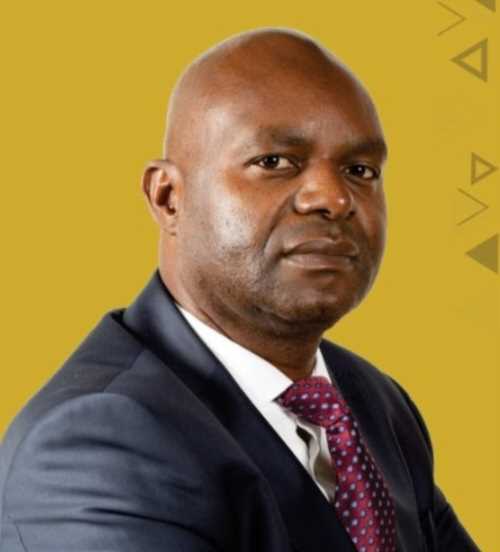
Our reporter, Tawanda Musarurwa (TM), recently caught up with Regional Centre for Corporate Social Responsibility director Sithembile Nyoni Mpofu (SNM) to discuss the responsibilities of the centre.
TM: How did you come up with the idea of establishing the Regional Centre for Social Responsibility which, I am sure, is the first of its kind in this country?
SNM: The driving force behind the Regional Centre for Social Responsibility is the desire to see self-determined individuals and corporates driven by the great need for self-actualisation of the people of Zimbabwe working together in nation building.
As one looks around one has a sense that we as a people deserve better and surely can do better for ourselves.
One then asks the question what can we do as individuals, groupings, the private sector and Government?
What if each one of us became more socially responsible? Would we not be more efficient in service delivery, reduce the number of social problems around us and be part of the solution by fixing as well as reversing some of the challenges that we face?
These are some of the questions that prompted the founding members to think outside the box and envisioned “a just and socially responsible community in
Zimbabwe” as an answer to these questions.
Our mission is “to develop and support a body of corporate and social actors committed to the advancement of society in Zimbabwe through socially responsible actions that ensure sustainable development”.
The founding members of the Regional Centre for Social Responsibility have a background of working in the social development as well as in private business sectors.
RCSR was formed to bridge the gap between private sector and the development sector. It is widely accepted that NGOs and community based organisations, complement Government in the “people business”, whilst the private sector “makes profits”.
TM: It has also been suggested that some foreign companies use CSR as a strategic tactic to gain public support for their presence in the local market, helping them sustain a competitive advantage by using their social contributions to provide a subconscious level of advertising. What would you say to this?
SNM: Social responsibility according to the ISO 26000: 2010 (SAZ) is voluntary. The Indigenisation Act is the one that speaks to matters of community and labour involvement in ownership and management of natural resources, particularly in largely foreign-owned business concerns.
Some foreign-owned entities have been involved in some community initiatives for 20 years and even longer, while others have become more visible as pressure to comply has been increased.
However, in the absence of well-substantiated study, generalisations will remain unsubstantiated as to why foreign companies engage in CSR.
Because CSR has largely been done voluntarily, private sector community investment is not reported on formally and recorded centrally, consequently the Zimbabwe Statistics Agency has not captured CSR data in the past.
Even the Millennium Development Goals Status Reports have not captured such data in the past.
TM: What would you say is the level of CSR compliance of corporations in the country, especially in view of the fact that it is done on a voluntary basis, as well as the liquidity challenges that companies in Zimbabwe are facing?
SNM: Zimbabwe does not have CSR compliance requirements, save the acknowledgement that social investment projects, if declared, can serve as credits towards the 51/49 ownership requirement.
When companies report on their social investment, this is unqualified reporting since no formal non-financial audits are done.
RCSR has interested a number of companies to avail its services of providing external audits of their portfolio and be able to have an independent evaluation of what they do.
As long as there is no clear policy on CSR across sectors for wholly locally owned and foreign/locally owned companies, the issue of compliance falls away
Social responsibility discussions need to be broadened beyond corporates. RCSR is founded on the ethos of a “socially responsible society” where the multiplicity of “C” are at play working with Government and its various arms.
The “Cs” include churches, clubs (unregistered entities), community based organisations, corporate and the corporate citizen, working hand with the big “G”, that is the Government and its “Ps”, that is the parastatals.
TM: What are the benefits for a company for carrying out CSR?
SNM: The benefits that companies derive from CSR depend on what it is that they have done, with whom and to what end.
“So-called CSR initiatives” used for brand marketing; often focuses on an increased market share by those who have the purchasing power.
Logically, it is expected to result in some easily measurable indicator such as increase in sales: but often it very difficult to measure the short-term spin-offs of the investment.
CSR benefits need be viewed within the long term, and should be seen as a contribution to a goal larger than what one individual company can do, hence the need for a co-ordinated approach. Companies that carry out CSR which is embedded in a company’s global strategy; well-defined operational strategy, workplans, and monitoring mechanisms can easily be able to measure what the benefit would be to their company.
However, the question should be turned the other way “How is CSR benefiting the nation and its people?”
It is an initiative that improve the lives of the underprivileged, empower the potentially economically productive to be part of a value-chain addition in a thriving economy.
CSR can also contribute to a healthy workforce and a well and appropriately educated market with discerning taste which makes business sense and contributes to a business entity that is assured of a bright future.
TM: And the disadvantages? Surely, it is not a perfect concept, right?
SNM: In other words, we are asking: Can doing good backfire? “A big fat yes”. Intentions do not translate to good results depending on the processes we engage in and the ingredients we put in order to achieve a given end.
It is possible to have good intentions but reap undesirable results and this may be due to a number of reasons.
The motivation for CSR has to be genuine otherwise the consumers will see through the thin veneer.
For example, a company that purports to support vulnerable children and fails to have some scholarship fund or budget line to support orphans from its own staff reflects that the company has a CSR commitment that is lopsided. Its external image is of greater concern than its sensitivity to its labour force.
TM: Finally, what would say to a company that wants to get involved in CSR, but just does not know where to begin?
SNM: The kind of social investment a company will do will depend on a number of factors such as the financial budget, human resource skills, core business and opportunities for working within the company’s global strategy and the needs in the community.
a) Engage in some dialogue with persons in touch with the social sector to help the company map up least cost but high impact social investment opportunity.
RSCR has a pool of such personnel who can facilitate processes that empower teams to think outside the box.
b) Get the board member and top management to have an in-house training programme on CSR.
c) Send CSR add-on staff member for courses on CSR so that they can be ensure that CSR is mainstreamed in the company’s global strategy, operational workplans and audits and correctly reported on.


 Online Reporter