

 Online Reporter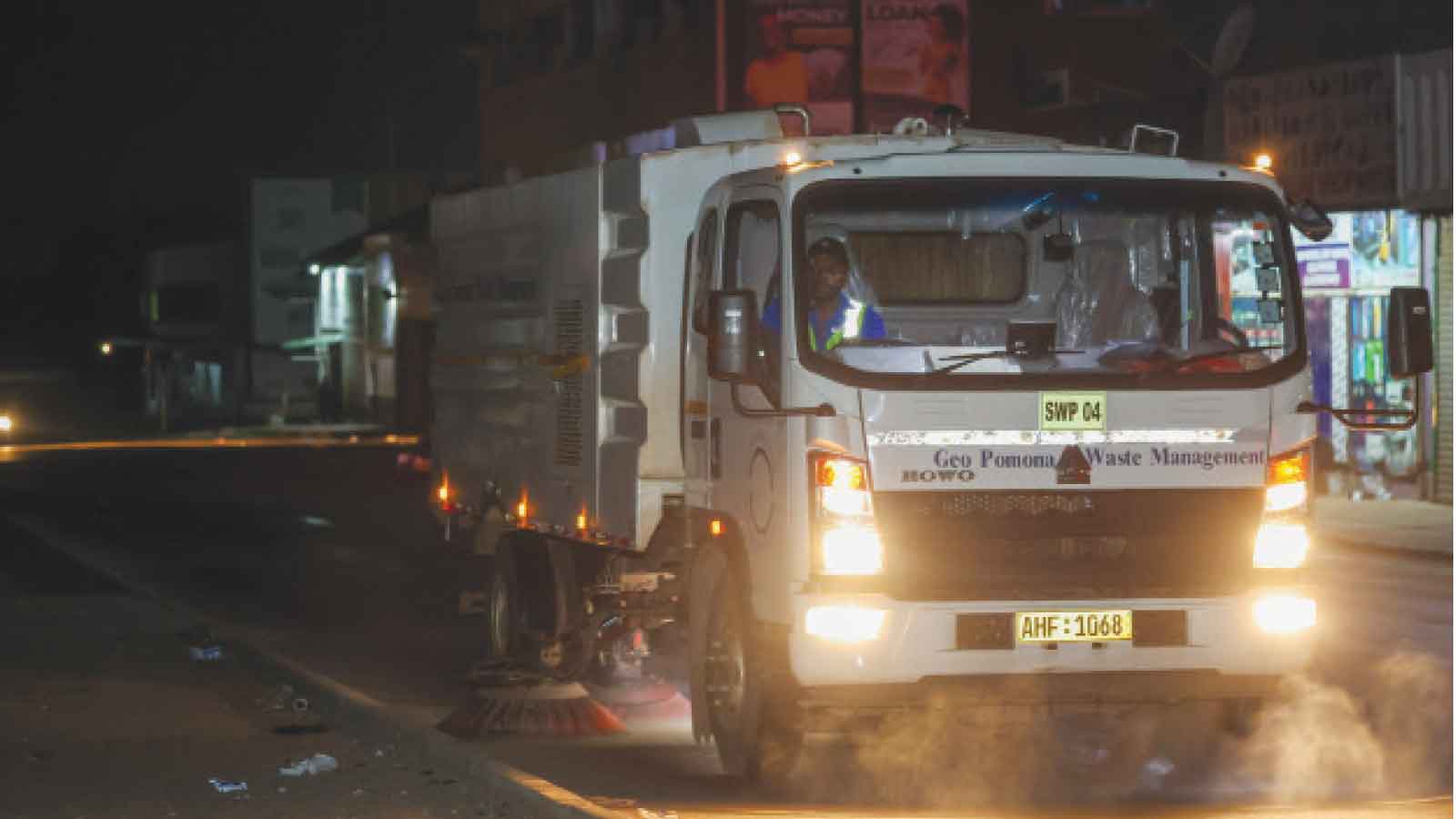
Wallace Ruzvidzo
Herald Reporter
HARARE has always had a spirit that refuses to fade.
Yet for a long time, that spirit was tested by something that should never have been part of everyday life: the mess not only at the formerly Pomona dumpsite, but in and around Harare.
In simple terms, it was an eyesore that turned the area into a health risk.
Before things changed, the Pomona dumpsite was described in grim terms.
The dumpsite was not just untidy; it was a breeding ground for trouble.
Flies swarmed in large numbers, while stray dogs roamed and scavenged as they searched through towering piles of garbage.
The smell from the waste was strong and sickening and it became part of daily life for people living nearby.
On days when the situation looked “better”, residents still had to deal with waves of unpleasant, nauseating odour drifting from the site.
But when conditions worsened, the problems went on for far longer than anyone could easily tolerate.
At times, communities would remain under thick, choking smoke for weeks, as burning litter sent fumes billowing into the air.
That situation continued until 2020, when a decisive shift took place.
In that year, the Environmental Management Agency (EMA) formally labelled the dumpsite, at the time managed by Harare City Council, as an environmental emergency that demanded immediate action.
The move served as a strong signal that the problem had reached a dangerous level and could no longer be treated as “business as usual”.
With that warning on record, city fathers and key stakeholders were forced to confront the reality on the ground.
They had to look closely at how long the dumping had gone on and what it had grown into over time.
The concern was not only the waste piling up day after day, but also the harm spreading outward, affecting people’s health, worsening environmental conditions, and threatening the wellbeing of surrounding communities.
Today, the story is different. Geo Pomona transformed from a dumping ground problem to a wonder.
Geo Pomona Waste Management has since launched door-to-door services in Harare, and the change was felt almost immediately.

Residents shared joy because the capital began making real headway towards regaining its Sunshine City status.
Government enlisted the services of a private firm to rescue residents after the local authority declared incapacity.
This arrangement builds on Geo Pomona’s existing partnership in managing the Pomona dumpsite, where the company is constructing a waste-to-energy recycling plant.
Under that agreement, Geo Pomona Waste Management will continue managing the former dumpsite and has also taken on the responsibility of waste collection across Harare.
In other words, the work is no longer only about controlling one site; it is about protecting entire communities.
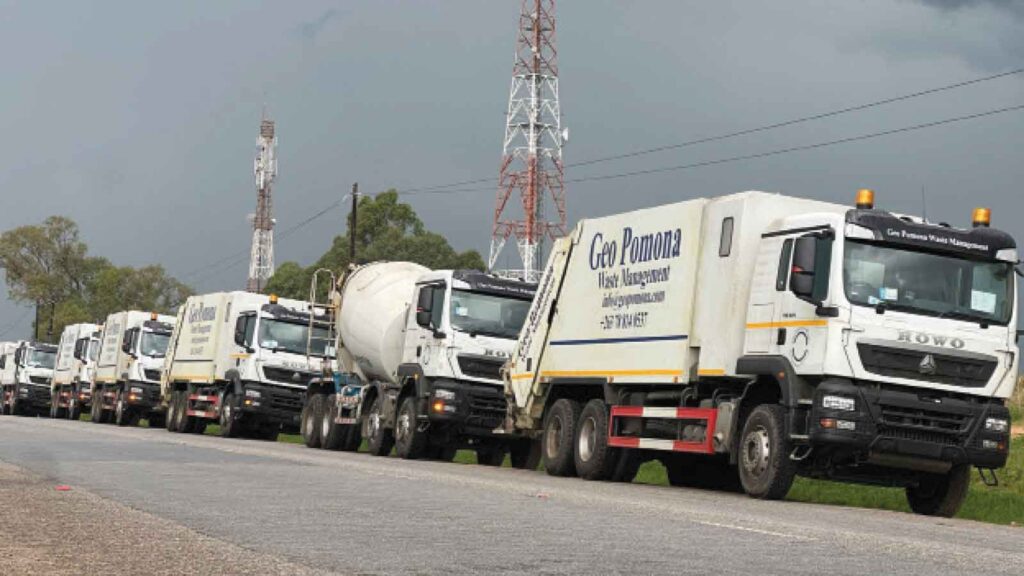
The momentum also received a major boost when President Mnangagwa last year commissioned the second batch of refuse collection equipment from Geo Pomona Waste Management.
This was a significant step toward cleaner streets and improved environmental health.
The fleet includes refuse compactors, tipper trucks, skip trucks, and street sweepers.
“While the city sleeps, Geo Pomona’s night crews are sweeping Madokero Mall, the CBD, Airport Road, Trabablas, Harare Drive, Alpes to Sawley Way, ED Mnangagwa Way (Glenara to Ridgeway North), and Nemakonde Avenue (Second Street to Westgate).
“While most of the city sleeps, a group of street sweepers is quietly bringing Harare back to life.
“The nocturnal fleet currently covers Madokero Mall and its surroundings, the CBD, Airport Road, Trabablas, Harare Drive, the stretch from Alpes to Sawley Way, ED Mnangagwa Way from Glenara to Ridgeway North and Nemakonde Avenue from Second Street through to Westgate Shopping Centre,” said Geo Pomona Waste Management chief executive and executive chairman Dr Dilesh Nguwaya.
With more machines available, waste collection can move faster, reach more places, and happen more consistently for homes and businesses alike.
As the city’s dust settles and dawn breaks, the message is clear, clean streets are not a dream.
They are built through late-night effort, steady planning, and serious investment in better waste systems.
“We have invested in 6 mechanical sweeper trucks, allowing deep cleaning without disrupting daytime traffic.
“In doing this, we are eliminating the possibility of health risks, illegal dumps, among other risks,” said Dr Nguwaya.




 Bongani Ndlovu