Chronicle Editor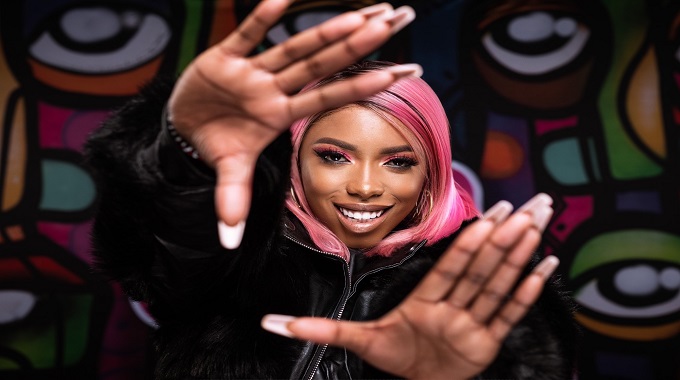
Mbulelo Mpofu, Showbiz Reporter
SOUTH African female rapper with Zimbabwean ties, Gigi Lamayne has responded to Inkabi Records kingpin Big Zulu’s 150 Bars diss track which was released on Friday and has made shockwaves in South Africa and beyond.
Big Zulu’s track takes a swipe at other South African rappers, a move that has been met with both fury and happiness in the hip-hop divide.
It is the third installment of diss tracks which began with 50 Bars and 100 Bars.
Gigi Lamayne took to social media to lay down the gauntlet for Big Zulu “accepting the challenge” for the song also known as #KeHipHopDawg.
“Did I just listen to that? #150Bars. Listen, when I land back from London, I need a beat from someone. Big Zulu, it’s on! Challenge accepted. Let’s go, let’s go, let’s go!” said the Mashonisa hit-maker without mincing her words.
Big Zulu’s 150 Bars song is a reminder of Killemol’s Ready for war that was released earlier this year.
These types of songs have left a bitter taste in many artistes’ mouths and the question that arises is: Are diss tracks necessary for the revival of the game? Is the Hip-Hop sector even dead?
Chronicle Showbiz went about the streets of Bulawayo to ascertain the answer to the abovementioned questions.
Two Hip-Hop pundits only identified as Nyasha and Delroy were in the affirmative when quizzed on the relevance of diss tracks.
“I personally think it works as it draws attention. We’re all suddenly interested in South African Hip-Hop. I think many artistes’ careers can be resurrected by this,” said Nyasha.
“Yes, it’s necessary. Now we can see who can drop bars without getting touched,” said Delroy.
Producer Viper Beatz said Hip-Hop thrives on disses and these constitute the factory settings of the game.
“I lean towards the culture view. Battles were the origin of Hip-Hop where groups and individuals either dissed or outrapped each other. Along the line, it did evolve into a publicity tool that fuels both conversation and sales but that wasn’t the point initially. I like what Big Zulu has done because he’s restored factory settings for the South African stage to the fact that it’s not about bad blood or opportunistic jabs. It’s about a healthy competition which the genre in its best state thrives on,” he said.
Local diss track masters, Killemol who are made up of King Rodney and Obby Mwanakomana said diss tracks are part of the game’s DNA.
“Big Zulu is doing things in South Africa just like what Killemol did in Zimbabwe a few months back. We called out rappers to rap and whoever feels like they can go against Big Zulu will respond at the same time getting rappers back to their writing and rapping. Well, as for Killemol, we are happy he is bringing back that Hip-Hop in South Africa and calling out the big guns because the Amapiano wave had taken over and South African Hip-Hop was slowly dying.
“I can safely say Battle rap is our second nature and we will continue slapping all these so-called big rappers. It’s the Hip-Hop culture and that’s what we are about. It’s Hip-Hop and Big Zulu is surely a Ngadlangadla. Big Zulu is Killemol,” said King Rodney.
Over the years, diss tracks have seen the rise of beefs where artistes rival each other for bragging rights and notable ones include the famous Tupac Shakur vs. The Notorious B.I.G, and 50 Cent vs. Ja Rule.
– @eMKlass_49



 Online Reporter