Online Reporter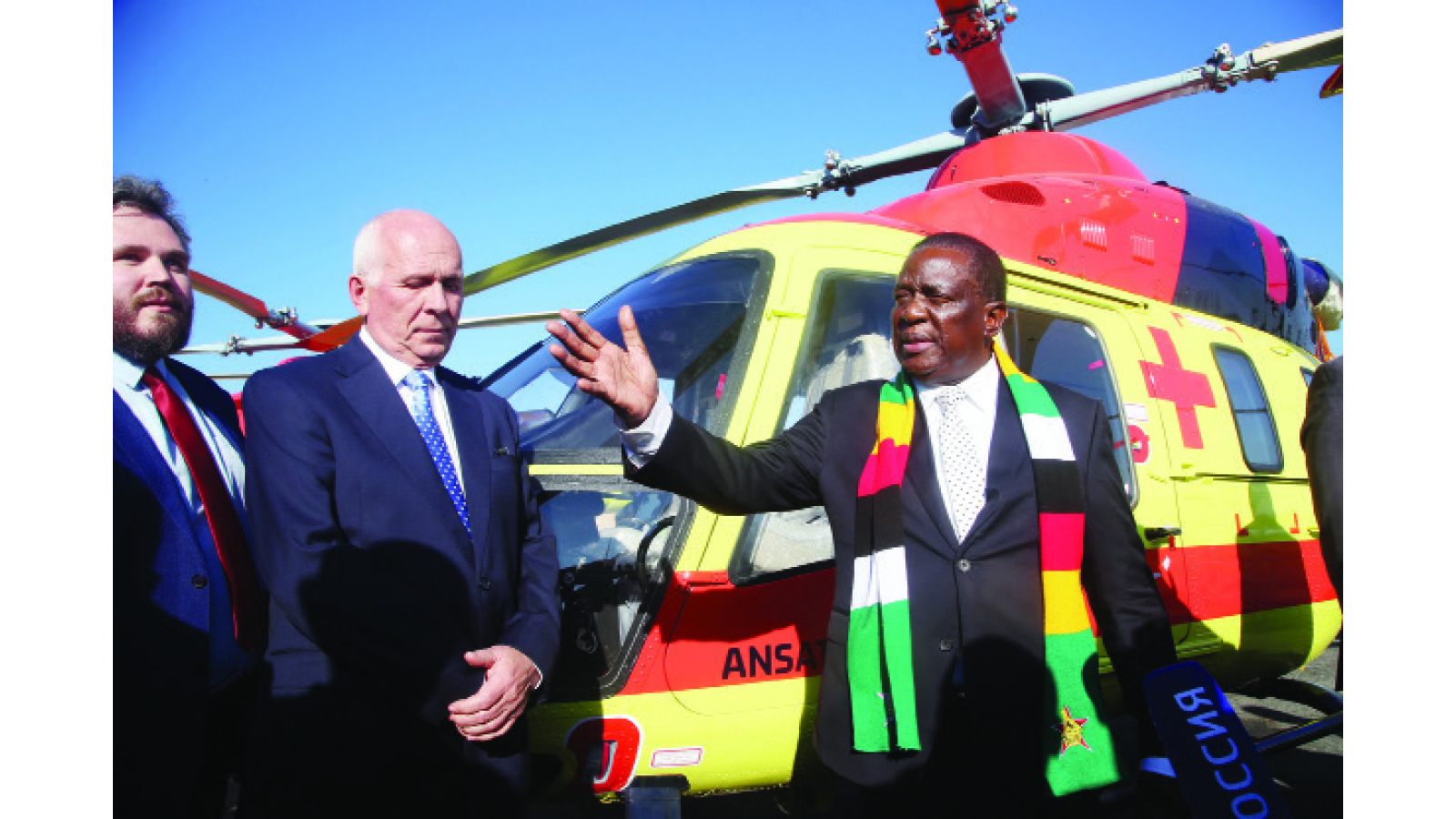
Walter Nyamukondiwa-Mashonaland West Bureau Chief
THE road to Vision 2030, a beacon of light for Zimbabwe reaching the proverbial Canaan, has notched up innumerable socio-economic and political milestones and got the country believing.
With visible infrastructure development projects, targeting revamping and rehabilitation of the national transportation backbone and key enabling infrastructure, the social and economic transformation plane has taken off.
For several years, the plane was parked on the tarmac while refuelling, undergoing structural repairs and realignment for that day when the control tower gives the greenlight for take-off.
While on the tarmac, only those at the airport could perceive, the activities going on behind the scenes.
That was the time when the Beitbridge-Masvingo-Harare Highway was being widened and upgraded for smooth flow of traffic on the North-South regional transportation corridor.
During that period, dam projects, long abandoned were under construction and some projects are still ongoing.
Even as the engine roared in anticipation of that forward thrust on the runway and take-off, it was too faint and indecipherable for those faraway.
Even as it moved along the taxiway to the runway threshold awaiting clearance for take-off, for those afar, there was nothing happening.
Once the air traffic controllers gave the greenlight for take-off, progressively more people began to see the transformation plane.
As it soared higher, even more people become witnesses to a transformation journey that was years in the making.
Relatable!
As far-fetched as it sounded at the time, Zimbabwe took delivery of 6 helicopters from Russia, drawing frenzied dismissal and speculation over the authenticity of that delivery.
If ever these helicopters were to fly in the country’s airspace, quipped a section of the awe struck population, they would be undertaking the errands of the elites in the country.
Government had a mind of its own, which was fixated on a vision to deliver to the generality of Zimbabweans.
Some areas like fishing camps in Kariba and Binga districts, minefields strewn throughout the country are generally inaccessible by road yet facing significant dangers, including human/ wildlife conflict and mine accidents.
These require swift attention, which road ambulances cannot provide in the critical golden hour to save life when specialised care is needed.
Scope of the service
The free National Ambulance Services, Heli-drive started in August 2024 and has so far airlifted more than 1 024 critically ill patients to various health centres across the country.
It has become a lifeline for those needing urgent referral to the next best medical centre.
The National Air Ambulance Service has achieved a 1 000-flights milestone, a year into full-scale operations, signifying improved access to tertiary healthcare in emergency cases for people in outlying and hard to reach areas.
Heli-Drive chief medical director, Dr Freddy Mhondiwa, said serving for a year was inspiring and helped save many lives.
“It represents not just numbers, but thousands of lives touched across the country through faster access to emergency medical care.
“Since our launch in Harare (last year), we have successfully expanded operations to Bulawayo and extended coverage to Victoria Falls, enabling rapid response across vast and often hard-to-reach areas.”
The mission has been growing with a target to ensure coverage of most parts of the country, said Dr Mhondiwa.
“Our goal has always been to bridge the gap between remote communities and tertiary hospitals — ensuring that distance and terrain are no longer barriers to timely care,” he said.
The air transfer service will expand to Mutare before year end, further widening national coverage.
With expanded coverage, the National Air Ambulance Services is improving equitable healthcare access, patient safety and collaboration with provincial hospitals, emergency services and the Ministry of Health and Child Care.
The dividend!
Through multi-stakeholder support, Zimbabwe is on course to building a stronger, more responsive emergency medical system.
Paediatric and neonatal conditions have accounted for about 35 percent of airlifts during the past year, while maternity-related transfers accounted for 11 percent of cases.
These mostly involved pre-eclampsia, C-sections and labour complications among others.
Adult cases form the majority of airlifted patients.
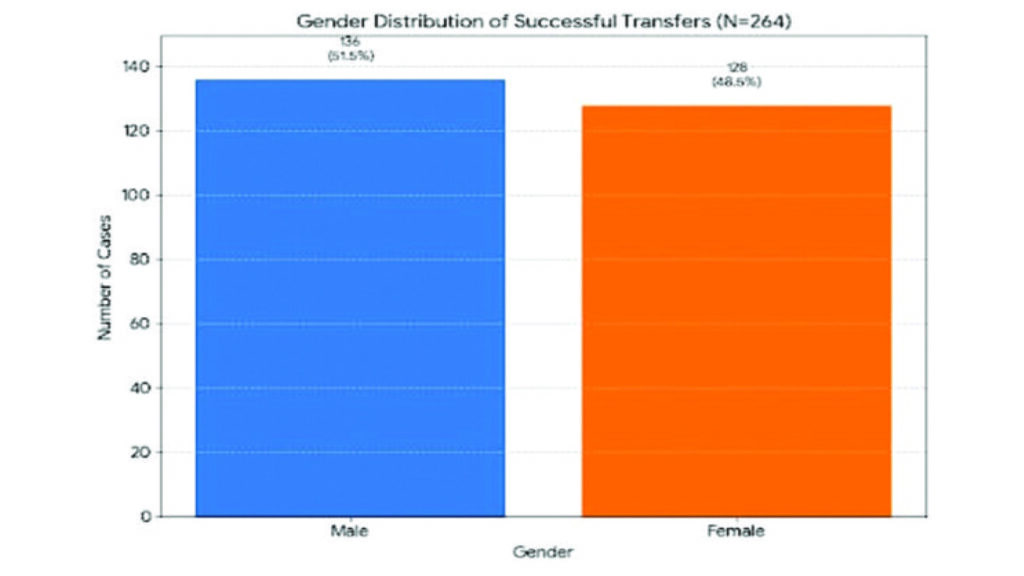
There were nearly as many men as women transferred during the period, signifying a great milestone for Zimbabwe in achieving equitable access to health services for all its citizens, regardless of gender.
With a significant number of paediatric and neonatal conditions being airlifted for specialised care, Zimbabwe is expected to progressively roll back maternal deaths.
Category Count Percentage
Adults 147 53.8%
Paediatrics 51 18.7%
Neonates 47 17.2%
Maternity 28 10.3%
Figures on maternal mortality rates vary, depending on source but the National Air ambulance Service is expected to help reduce complications in giving birth for people in hard to reach areas.
Difficulty in accessing vital services before, during and after delivery for most of the mothers in rural areas accounts for the significantly high number maternal deaths.
According to the World Bank Gender Data Portal, at least 352 women die for every 100 000 live deliveries in 2023, showing significant decline over the years from a high of around 900 deaths.
The coming in of the air transfer services among other interventions will ensure further decline of maternal deaths.
According to the World Bank Gender Data Portal, at least 352 women die for every 100 000 live deliveries in 2023, showing significant decline over the years from a high of around 900 deaths.
Anchored on a cocktail of key rallying war cries, mantras and messaging, the country’s citizens did not need to believe in their sound and origin but the reflective impact has become noisy and too visible not to notice.
The Zimbabwe is open for business mantra brought the feather in the country’s healthcare delivery system, the golden crown to a transforming sector. Zimbabwe is among at several countries with operational air ambulance service.
Like in everything, Zimbabwe always does above-and-beyond what the crowd is doing by offering free air ambulance services, giving hope to a granny, uncle, father and mother who at the very least struggles to raise $1 for the grinding meal.
A revolutionary service!
For countries such as South Africa, Namibia, Kenya and Ethiopia private players run most of the air ambulance services, often for an arm and a leg, leaving out the vast majority of citizens.
In some countries, service providers offer cross-border air services through evacuations and transfers.
While also having private players, Zimbabwe has gone a step further to provide public air ambulance services which, have seen people in Dotito, Mukumbura, Gatche Gatche, Binga, Makande, Mudzi, Honde Valley, Chiredzi, Hwange and Victoria Falls getting the service, which left to private players alone could only be a pipe-dream.
An unfathomable proposition for the vast majority of citizens.