Chronicle Editor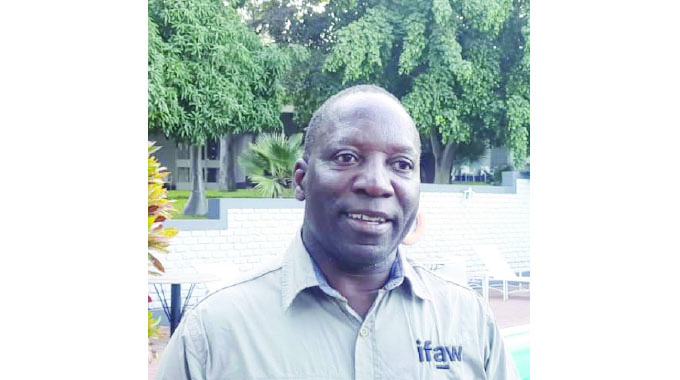
Leonard Ncube, [email protected]
THE International Fund for Animal Welfare (Ifaw) has made a further commitment to transform Hwange National Park into a wildlife tourism destination of choice capable of driving the country’s tourism.
Zimbabwe is pursuing a US$5 billion tourism industry by 2025 through the National Tourism Recovery and Growth Strategy launched by President Mnangagwa in 2020 which hinges on promoting destination Zimbabwe through various marketing strategies.
Ifaw entered into a five-year partnership with Zimbabwe Parks and Wildlife Management Authority (Zimparks) in 2019 to promote sustainable wildlife conservation and human-wildlife conflict mitigation.
The agreement has led to the building of Makona Ranger Sub-station within Hwange National Park.
The two wildlife organisations recently signed a US$50 million Memorandum of Understanding where Ifaw committed to support conservation activities for the next 25 years.
A strategic planning meeting attended by Ifaw, Zimparks and other stakeholders from local and the region was held in Hwange recently where Ifaw made the commitment to develop Zimbabwe’s largest national park. Measuring over 14 000 square kilometres, Hwange National Park is home to the world’s second biggest population of elephants after Botswana.
In an interview in Victoria Falls, Ifaw vice president for global programmes and institutional fundraising, Mr Jimmiel Mandima said the international wildlife conservation organisation strives to promote law enforcement, research, road network repair and accommodation for rangers among other activities.
“The work that we do requires longevity and to be able to demonstrate that, we recently entered into a 25-year-old MoU with Zimparks and what that means is that we will be working in Hwange for the next 25 years,” he said.
Mr Mandima said his organisation wants to make significant impact on the conic Hwange National Park to be able to demonstrate that it is the largest in the world.
“We want to make sure that it benefits local community in the Campfire areas,” he said.
Mr Mandima said in the past week, they got all rangers and stakeholders from Zimbabwe, Malawi, Kenya and Zambia to sit down and discuss on a number of issues revolving around wildlife.
He said Ifaw will build an information centre and education centre based on local culture, which will tell the story of Hwange and Zimbabwe, which will go a long way in marketing the destination.
“Water projects will be initiated within the national park to provide water to wildlife during the dry season. There are plans to engage community leaders in an effort to create corridors for animals to move freely to water sources without clashing with people,” said Mr Mandima.
“We are looking at improving the welfare of rangers through building ranger houses, equipping Zimparks for research, reducing conflict in communities and creating zones where wildlife and people are safe and co-exist.”
Mr Mandima said they want to establish sustainable water provision during the 25 years of the agreement.
“We are hoping to improve wildlife management in Hwange National Park. At the moment animals move in search of food and water and in the process there is conflict with communities. We are therefore trying to collectively create what we call room-to-roam for elephants and other species to be able to move in search of water and the only way to do so is to negotiate with landowners being chiefs, headmen, private land owners and Government to restore areas that can possibly be habitat for wildlife,”he said.

Mr Mandima said the partnership between Ifaw and Zimparks in managing wildlife in the country will have a positive impact.
He said the partnership will further enhance anti-poaching activities and capacitate ranger services.
“Through the existing deal, Zimparks has constructed a full-service ranger Makona Camp, rehabilitated roads in the park, enhanced conservation and community activities, set up a veterinary surgery at Mtshibi Camp and beefed up its vehicle fleet,” said Mr Mandima.
Hwange National Park is a key component of the Kavango-Zambezi-Transfrontier Conservation Area (KAZA TFCA), forming an integral part of IFAW’s room-to-roam initiative to secure landscapes and maintain connectivity for elephants and other wildlife.
Since 2020, no elephant has been poached in the park rubber stamping the positive fruits of the partnership. — @ncubeleon.


 Online Reporter