

 admin
admin
A few years ago African countries were known for handing a begging bowl to the West, then regarded as the world’s economic masters, seeking donations and aid for the financing of their development projects.
Now that European Union member states are swimming in debt and reeling under poor economic performance, with the US also panicking on sluggish growth and increasing unemployment, developing countries should not be mourning but look at themselves and carve their own profile.
Given its rich natural resources and abundant labour, Africa must not delay any longer. The continent must stand up, forge partnerships with willing investors and grow robust economies that will tilt the scales in its favour, reverse stereotypes and prove its former colonisers wrong.
What is of interest is that emerging economies in the East such as India and China, now the world’s second largest economy, have already realised Africa’s potential and are positioning themselves for economic partnerships with this great continent for future development.
Their growing investments in Africa are a testimony of the increasing confidence that the continent is now an attractive investment destination and future economic hub. Hundreds of people across Africa are still brimming with hopes of a major economic transformation and prosperity that would create opportunities for a majority of unemployed youths.
Meaningful economic development of Africa would no doubt invigorate the continent, place it on a pedestal and bring into fruition the joy of the hard won independence in the form of improved standards of living and social security.
Former United Nations Secretary General Mr Kofi Annan alluded to this desired economic transformation in his address to students at Oxford University in Britain in February last year.
Said Mr Annan: “Africa is once again being seen as a continent of opportunity — the last emerging investment frontier. We see this optimism in the number and diversity of businesses and countries flocking to invest in the continent”.
The former UN chief admitted this optimism was based on strong economic growth, which has however, been slowed down by the global financial crisis.
Economic experts have also indicated that Africa was indeed poised for growth and noted diverse improvement in sectors such as education, health and vital infrastructure.
Speaking during the on-going media training seminar for a group of 20 Zimbabwean journalists, Chinese officials boldly expressed confidence in Africa’s capabilities.
The seminar provides the opportunity of seeing things in a different manner and the need for Africa to begin thinking in other terms and work towards changing its destiny. Like Zimbabwe, China has adopted a model of economic development that seeks to ensure that ordinary citizens participate and directly benefit from the national economy.
The journalists visited Guangzhou province, one of China’s fastest-growing economic centres and observed how the government, through its empowerment thrust, was working with communities to bring development into remote parts of the country.
Through investments in infrastructure, agriculture, tourism, small to medium enterprises, a majority of people in the southern part of this country are gradually developing themselves into full economic masters. One such community is Lietang Village in remote Guangzhou province, which has become a huge tourism hub.
“The government helped us to transform our village into a big tourist resort by setting up this infrastructure. More tourists come here and we make a lot of money. No one is employed in any company. We are all self-employed here as a village and through our projects we are working on improving our standards of living,” said Mr Chen be-Xiang, the director of information in the area.
The increased attention in Africa heightens calls for a new economic focus on the continent and the need for it to be insightful and pro-active.
This would also entail the change of mindsets by individual citizens from the continent, who should work harder and co-operate with their governments.
The role of the media cannot be overemphasised in this area as they are the “lifeblood” of a society in such initiatives. This means the media should strive to promote and protect the set national agenda and boost citizens’ morale towards developing a sense of national responsibility and achieving a common goal.
While Zimbabwe has made great strides in effecting the total control of the country’s natural resources through the indigenisation and economic empowerment policy, a lot more still needs to be done in order to reinforce the country’s efforts for meaningful economic growth.
The entire continent must now sing in unison in forging economic partnerships and calling for equality in commerce and trade between countries across the world.
Although countries develop at different paces depending on their local circumstances, it is a fact that Africa’s fortunes have been on the turnaround in the last decade.
According to the African Development Bank, direct foreign investment to the continent has soared from $9 billion in 2000 to $52 billion in 2011.
Experts project that this momentum would continue and can be accelerated through tackling major barriers such as investment in energy and infrastructure and strengthening regional integration.
Not to be left out is the need for improved regional integration, an essential catalyst for increasing trade within Africa, which is estimated to be at just 10 percent of total trade compared to 67 percent within the EU for instance.
The International Monetary Fund also believes Africa will have as many fastest-growing economies in the world over the next decade.
Africa is the producer of a larger percentage of high-demand mineral resources such as gold chrome, platinum and diamonds and stands to reap more from these.
African governments must have a daunting challenge of building on the progress that has been made so far and formulate water-tight policies that would curb corruption and enhance accountability and transparency in this transformation phase.


 Online Reporter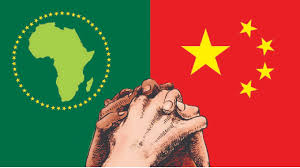
 Bongani Ndlovu