Online Reporter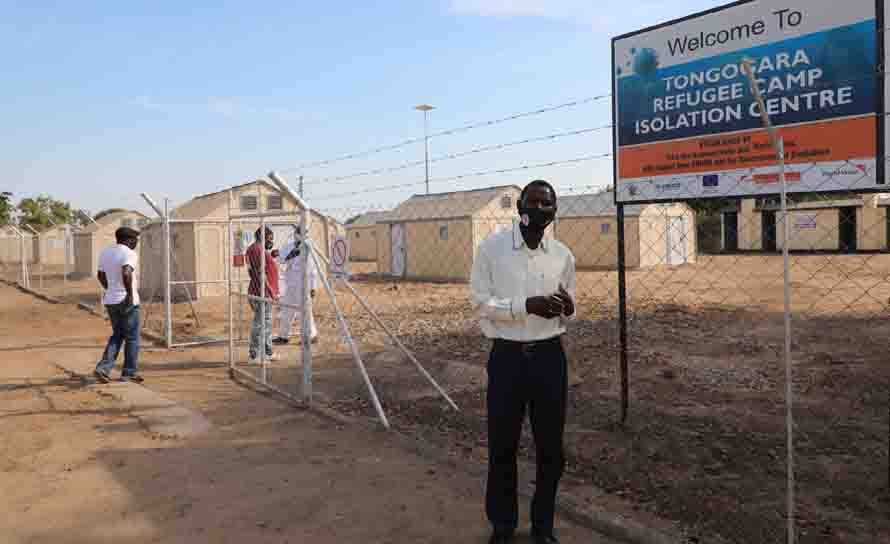
Ray Bande
Senior Reporter
FLEEING the long-running unrest in the eastern Democratic Republic of Congo, Mr Ngongo Kilengu and his wife, Ms Sango Kilengu, broke down in tears when they unexpectedly reunited at Tongogara Refugee Settlement in 2021 —10 years after being separated by war.
Each had believed the other had perished in the conflict.
Their reunion brought joy and stability, not only to them, but to their children, who finally received parental love, care, and access to donor-funded healthcare and education.
For Mr Kilengu, life at Tongogara — situated in the thickets of Chipinge South along the Save River — had been marked by hardship.
Yet the reunion gave him hope, as donor agencies ensured his family’s basic needs were met. That hope now hangs in the balance.
Fast forward to 2026, and the situation has dramatically changed.
The United States and other donor agencies have withdrawn financial support to the United Nations, particularly to programmes sustaining refugee welfare.
This decision has left thousands of displaced families, including the Kilengus, at the mercy of host nations already struggling with their own economic burdens. Refugees who had grown accustomed to food aid, medical care, and education now face the grim reality of survival without the lifeline they desperately need.
Tongogara Refugee Settlement is home to more than 13 000 refugees and asylum seekers from the Great Lakes Region and the Horn of Africa.
Their lives are already strained by climate change, and the withdrawal of donor funding threatens to push them further into destitution. Healthcare, food supplies, and schooling — all previously supported by international donors — are now in jeopardy.
The crisis is part of a wider financial meltdown facing the United Nations. Secretary-General, Mr António Guterres has warned that the UN is at risk of “imminent financial collapse” due to member states failing to honor their mandatory contributions.
In a letter to all 193 member states, Mr Guterres cautioned that funds could run out by July, jeopardising programme delivery worldwide.
He stressed that while the UN has faced financial challenges before, the current situation is “categorically different.”
The withdrawal of the United States, the UN’s largest contributor, has been particularly devastating.
Washington has refused to fund regular and peacekeeping budgets, branding several agencies as “a waste of tax payers’ money.”
At UN headquarters in Geneva, the crisis is visible: escalators are switched off, heating is reduced, and signs warning of financial strain are plastered across offices. These austerity measures reflect the desperation of an institution struggling to keep its operations afloat.
For refugees like Mr Kilengu, the implications are dire. The collapse of donor support means families who once relied on international solidarity are now left vulnerable.
The joy of reunion, once sustained by donor-funded assistance, risks being overshadowed by hunger, illness, and uncertainty.
The story of the Kilengus is not just about one family — it is emblematic of the precarious future facing millions of displaced people worldwide.
The unfolding crisis raises urgent questions about global responsibility. Refugees are among the most vulnerable populations, and their survival depends on international cooperation.
As donor nations retreat, the burden falls on host countries, many of which lack the resources to shoulder the responsibility alone. Without renewed commitment from the global community, the sanctity of human dignity and the promise of protection for refugees may be lost.
A resident at Tongogara Refugee Settlement, Mr Ansila Niyireme, who came to the settlement from strife-torn Burundi, said: “In the aftermath of the withdrawal of donor funds, the challenges faced by refugees have intensified, particularly in terms of education and health.
“Many families, who once relied on external aid, are now finding themselves in a desperate situation as they struggle to support their children’s education. Traditionally, refugee families were accustomed to free education, but now they are confronted with the reality of paying school fees for both primary and secondary education. For parents with multiple children, three in primary school and two in secondary, this sudden financial burden is overwhelming. Tragically, many secondary school students have already dropped out due to their families’ inability to afford tuition.”
Another Tongogara Refugees Settlement resident, Mr Gawaar Juich, wrote: “Now fears grow that the situation will only worsen and deepen vulnerabilities of the refugee community if healthcare, education, water and sanitation, and livelihoods crumble.
‘‘This will leave refugees more exposed to poverty, disease, exploitation, and the loss of basic protections. Lack of funding for youth-led interventions risks undoing gains in child and youth protection as youth volunteers who help run such programs retreat. Funding cuts have strangled critical community-led projects meant to curb gender-based violence, PSEA, and other essential protection programs, further endangering the refugee situation within the Settlement.”
Contacted for comment, Ministry of Public Service, Labour and Social Welfare Deputy Director Family and Social Protection, Mr Joseph Tirivavi, who is also the Commissioner for Refugees, said: “UNHCR is not spared because it is part of the UN.
They are really finding it tough, hence they are facing a series of funding challenges for most of their programmes. They are continuing to reduce their support to host nations.
The situation on the ground is that we have host governments taking over more and more responsibilities. However, these governments also have their own citizens to look after.
We still hope that they will continue to mobilise to meet the spirit of responsibility or burden sharing. So the situation on the ground, particularly for the refugees, there is some panic, there is anxiety because they do not know whether the host countries will continue to provide them shelter and their basic needs, in particular protection.
This is because for most of them their countries of origin are not yet conducive for safe and dignified return.”
Health, education, water and sanitation as well as livelihoods continue to be the areas affected mainly.
“However, the Government is doing its best to maintain these services or at least close the gap so that they do not feel the void in the absence of UNHCR. The Global Refugees Forum Pledges are very important, but we will see some of them not being fulfilled because some of them Government will have to re-prioritise what they will do for refugees mainly due to funding.
‘‘This is because the withdrawal of funding means that the Government now needs to concentrate on other key areas to meet the basic needs of refugees,” said Mr Tirivavi, adding that in this matrix, not only refugees have been affected.
“The withdrawal of funding by partners also means that a lot of local people are losing their jobs, more families are sliding down the Poverty Datum Line (PDL), something that we would not want as a country,” Mr Tirivavi said, adding that refugees at Tongogara Refugee Settlement will continue getting the support they need from Government.
Yes, Zimbabwe will continue to unlock funding for refugee programmes because this is our international obligation.
We are a hospitable nation. We are a country that continues to help, not because we have it in abundance, but because it is humane and dignified to do so. Currently we witnessed the Government assisting floods victims in Mozambique and Malawi, but we will continue assisting our own citizens.
So unlocking resources for refugees does not mean that we are going to forget our own people.
“The future of Tongogara Refugee Settlement, for us, is bright. Next week, the country will be commemorating World Radio Day in Tongogara, and as a country, we want to make sure that we set an example, not only in Africa, but worldwide. In the event that all refugees return to their home countries it will remain a service centre in Chipinge District because the plans that are in Tongogara are part of the Chipinge Rural District Council plans. So there is nothing that we do outside Government.
There is no way we can talk of developments in Tongogara without talking about developments in Chipinge,” said Mr Tirivavi.