How will new technologies reshape the labour market? What will the AI race mean for countries of the Global South? Will developing countries face a “digital raw-material model”, becoming a source of cheap labour, or will they instead use the window of opportunity to create their own technologies and platforms?
The new digital reality and the labour market
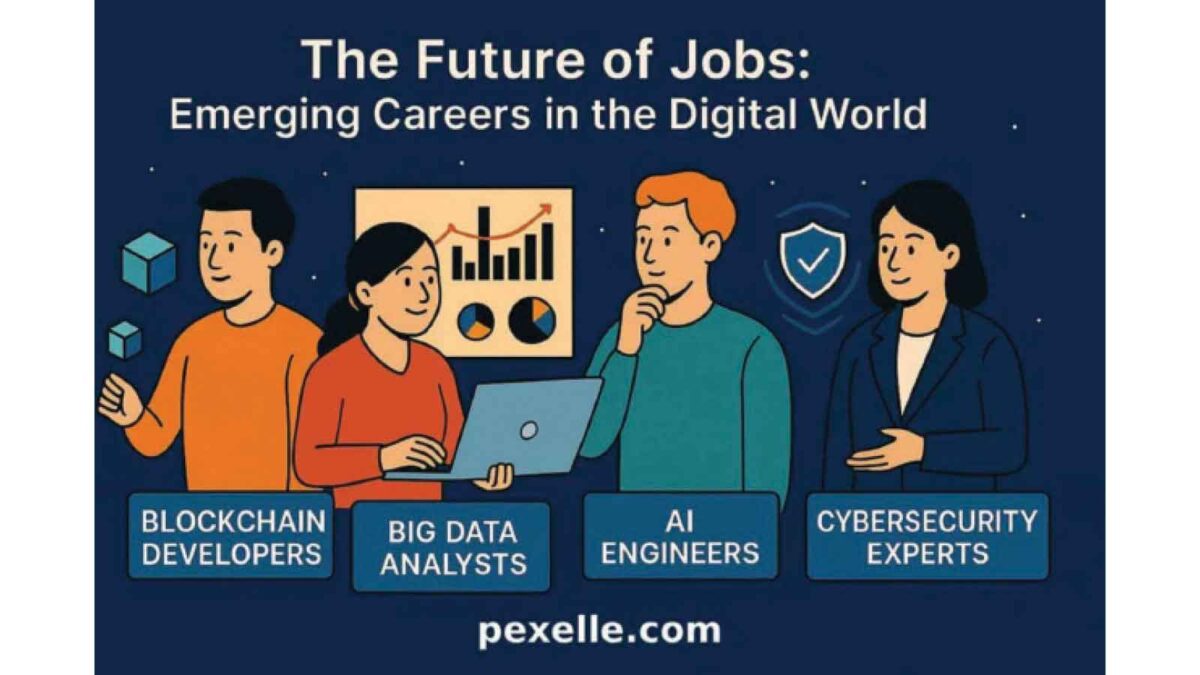
According to the World Economic Forum (WEF) report “Future of Jobs”, by 2030 digital access, artificial intelligence and automation will reshape 60 percent of businesses worldwide. Demand will grow for technology-related jobs in AI, big data and cybersecurity. These will also rank among the most sought-after professions.
Most importantly, within just four years, the global transformation of the labour market could create 170 million new jobs while displacing around 92 million.
At the same time, as Olga Ergunova, Associate Professor at the Department of Banking, Financial Markets and Insurance at Saint Petersburg State University of Economics, Candidate of Economic Sciences and expert of the Russian Academy of Sciences, notes, almost 40 percent of the professional skills used today will need to change, while 59 out of every 100 workers will require retraining and upskilling. Moreover, this situation will affect not only developed economies.
“What is particularly interesting is that the momentum is already beginning to shift towards developing economies. The World Bank notes that AI-related vacancies are now growing even faster in middle-income countries than in high-income economies,” Olga Ergunova emphasised in an interview with TV BRICS.
The number of vacancies requiring generative AI skills increased approximately ninefold between 2021 and 2024. Around one in five such vacancies is in middle-income countries. Moreover, analysts forecast that demand for new professions will continue to grow specifically in countries of the Global South.
What will be needed is not so much AI developers as specialists who know how to apply artificial intelligence within a particular industry. These include professionals in data analysis, cybersecurity, fintech and digital payments, cloud technologies, robotics and automation, agricultural technologies, digital healthcare and telemedicine, IT education, e-commerce, digital logistics and geographic information systems, as well as specialists in adapting AI to local languages and national datasets.
Training specialists in countries of the Global South
Experts are already saying that 65 percent of today’s schoolchildren will work in occupations that do not yet exist. This claim, presented in the World Economic Forum’s “Future of Jobs” report, has repeatedly been discussed at meetings of UN commissions and committees.
In essence, this represents a serious challenge for countries of the global majority, whose education systems will also have to undergo significant transformation in response to the changing labour market.
“On the one hand, traditional state institutions are not yet prepared for the emergence of new professions and the need for a complete overhaul of education standards, but on the other hand, it is countries of the global majority that often demonstrate the phenomenon of ‘leapfrogging’ stages,” commented Timofey Voronin, Deputy Director of the Research Centre for Strategic Analysis of Technological Development at the Higher School of Contemporary Social Sciences of Lomonosov Moscow State University.
The issue, the expert explains, is that the traditional academic model in most developing countries is inherently slow to change. The cycle for updating state education standards in developing economies takes an average of six to nine years. This means that by the time a new discipline is incorporated into school or university curricula, technology has already moved far ahead.
On the other hand, schools and universities do not set themselves the task of responding immediately to labour market needs. Their goal is to provide fundamental training to specialists who, amid rapidly changing technology stacks, will need not only to acquire new competencies independently but also to learn how to quickly discard outdated tools.
In other words, schools and universities in the Global South need to move from teaching a profession to teaching the ability to retrain continuously, Olga Ergunova says.
Developing economies also need to address two genuinely large-scale challenges in parallel: overcoming the shortage of qualified teachers capable of teaching generative AI, big data analysis and the use of robotic systems, and tackling the digital divide.
Alongside challenges and risks, the expert also notes the unique advantages available to countries of the Global South in the digital race. One of them is the high proportion of young people.
“The median age of the population in Africa is around 19.5 years, while in South Asia it is about 28. The data show an enormous number of young people who are socialising with a smartphone in their hands.
“There is a trend away from traditional university degrees towards specific qualifications. Developing countries were among the first to realise that a university diploma is no longer an absolute guarantee of employment,” Timofey Voronin noted.
In India, Nigeria, Indonesia and Kenya, as well as in other countries, intensive applied courses known as bootcamps are actively developing and gaining popularity, allowing participants to acquire the maximum amount of practical skills in a short period of time.
Global IT companies and EdTech platforms actively run short-term training and certification programmes designed to teach specific skills quickly. This means specialists from developing countries can now enter global markets and increase their incomes. Workers from smaller cities in Africa, India, Latin America or Southeast Asia no longer necessarily need to move to a capital city or emigrate, as they often did in the past.
“In the digital economy, a programmer, data analyst, designer, engineer, teacher or consultant can export their labour directly to the global market. And this market is already enormous. According to UNCTAD, exports of digitally deliverable services from developing economies reached approximately US$1.3 trillion in 2025. Back in 2023, the figure exceeded US$1 trillion for the first time,” Olga Ergunova noted.
The platform economy is particularly illustrative in this respect, Olga Ergunova emphasised. According to World Bank estimates, the gig economy already accounts for up to 12 per cent of the global labour market.
Low and middle-income countries account for around 40 per cent of traffic on global digital labour platforms. Moreover, in sub-Saharan Africa, the number of vacancies on the largest platform increased by 130 per cent during the period studied, compared with only 14 per cent in North America.
“Brain drain” and the digital raw-material model
The interest of corporations and major employers in specialists from developing countries can be viewed as opening up new opportunities. However, according to experts, the situation also carries significant risks. And these are not primarily about artificial intelligence displacing ordinary workers, which is most often cited when discussing the negative consequences of technological development for countries of the Global South.
“A much more important question is what place these countries will occupy in the new digital value chain – whether they will remain only suppliers of cheap digital labour or begin creating their own technologies, platforms, data and intellectual property,” Olga Ergunova told TV BRICS.
Brazilian expert on geopolitics and the technological sovereignty of BRICS and Global South countries and President of the BRICS+ Forum for Strategic Technology in Brazil Isabela Rocha-Dashicheva agrees with her Russian colleague. In her analysis, she refers to the Digital Sovereignty Index (DSI) – an analytical tool that assesses the extent to which a country is capable of independently managing its digital infrastructure, maintaining resilience and avoiding dependence on foreign technologies and solutions.
Put simply, this indicator helps determine the extent to which a state and society as a whole can independently shape their own digital trajectory, particularly under external pressure.
According to such studies, many countries of the Global South today have skilled technology users and developers, as well as well-developed regulatory institutions. At the same time, however, they remain dependent on foreign infrastructure, platforms, intellectual property and value chains. – TV BRICS.